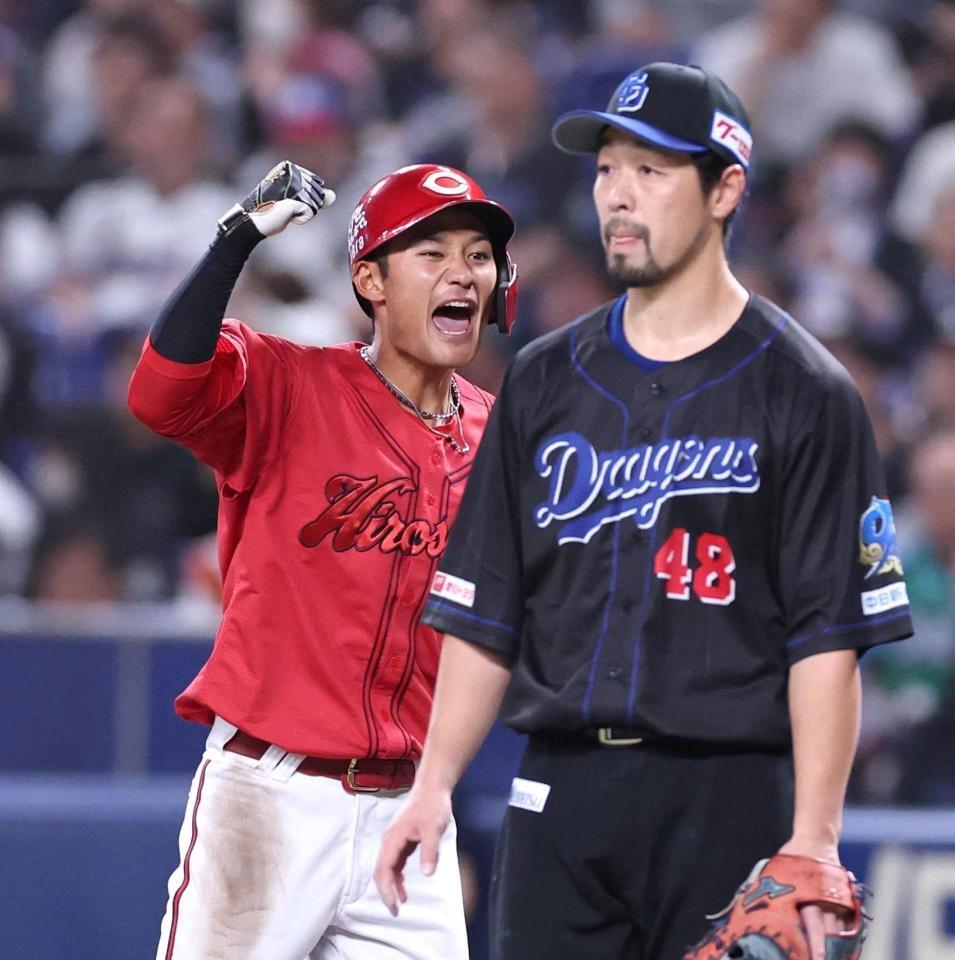
In the high-stakes environment of Nippon Professional Baseball (NPB), few narratives capture the imagination quite like the ascent of a development squad player to the top of the batting order. For the Hiroshima Toyo Carp, the recent performance of Norihiro Nahara has provided a significant talking point, as the fourth-year outfielder—a product of the team’s development system—has made an immediate impact after being promoted to the starting lineup.
Nahara, who wears the number 121, has transitioned from the developmental ranks to become a focal point for the Carp, notably securing the leadoff spot. His ability to produce consistent results at the plate—registering multi-hit games in his first two outings—has drawn attention from fans and analysts alike, who are closely watching to see if this “hidden gem” can maintain his momentum in the Central League. According to official Nippon Professional Baseball (NPB) records, the transition from a development contract to a registered professional roster spot is a rigorous process that demands both technical growth and mental resilience.
From Development Squad to Leadoff Hitter
The journey for a university graduate entering the professional ranks via a development contract is often fraught with uncertainty. Nahara, now in his fourth year with the organization, represents the success of Hiroshima’s internal player development pipeline. Being named the leadoff hitter—a role traditionally reserved for players with elite contact skills and high on-base potential—is a testament to the coaching staff’s confidence in his current form.

In his recent appearances, including the May 22 match against the Chunichi Dragons, Nahara demonstrated the poise of a veteran despite his relative inexperience at the top-tier level. His approach at the plate has been characterized by disciplined swing mechanics, which observers have noted as being technically sound, and efficient. For players transitioning from the farm system to the first team, consistency is the primary metric by which they are evaluated, and Nahara’s back-to-back multi-hit games offer a promising baseline for his professional career.
Strategic Impact on the Hiroshima Carp
The timing of Nahara’s emergence is particularly critical for the Hiroshima Carp as they navigate a challenging period in their season. The team has faced adversity, including the recent injury-related departure of key pitcher Ryoji Kuribayashi. In sports, when a core leader or a high-profile player is sidelined, the emergence of a fresh face can serve as both a tactical solution and a morale booster for the squad.
The Carp’s developmental philosophy, which emphasizes a “next man up” mentality, is designed to ensure that players like Nahara are prepared to contribute when the opportunity arises. By placing a development-squad graduate in the leadoff role, the team is signaling a commitment to rewarding performance over seniority. This strategic shift is vital, as the team looks to optimize its offensive output and stabilize its position in the league standings, which are tracked in real-time through the official NPB standings portal.
Developing Talent in the Modern NPB Era
The success of players like Nahara highlights the evolving nature of scouting and player development in Japanese baseball. With the increased reliance on data-driven training and specialized coaching, the gap between “development” players and “registered” players is narrowing. Organizations now invest heavily in comprehensive tracking technology to monitor swing speed, launch angles, and pitch recognition, allowing players to refine their skills at an accelerated pace.
For fans and followers of the Carp, Nahara represents more than just a temporary replacement; he is a potential long-term asset. His ability to “set the table” for the middle of the order—by getting on base and creating scoring opportunities—is exactly what the team requires to sustain a competitive offensive rhythm. As the season progresses, the focus will remain on whether he can adjust as opposing pitchers begin to gather more data on his tendencies and pitch preferences.
Key Takeaways for Fans
- Player Development: Norihiro Nahara’s rise underscores the efficacy of the Hiroshima Carp’s internal developmental system for university-drafted players.
- Role Transition: Moving to the leadoff position is a significant career milestone, requiring a high level of discipline and offensive consistency.
- Team Resilience: The emergence of new talent provides essential depth for the team, especially during periods of injury or roster instability.
- Upcoming Updates: Fans are encouraged to follow official team announcements and NPB box scores to track performance statistics as the season progresses.
As we look toward the remainder of the 2026 season, the performance of players like Nahara will continue to be a primary area of interest for those tracking the team’s trajectory. The Carp’s next series and official lineup changes will be available through the team’s official media channels and the NPB’s public match data. We welcome your thoughts on the team’s developmental strategy and the impact of these new starters—feel free to share your insights in the comments section below.
Worth a look