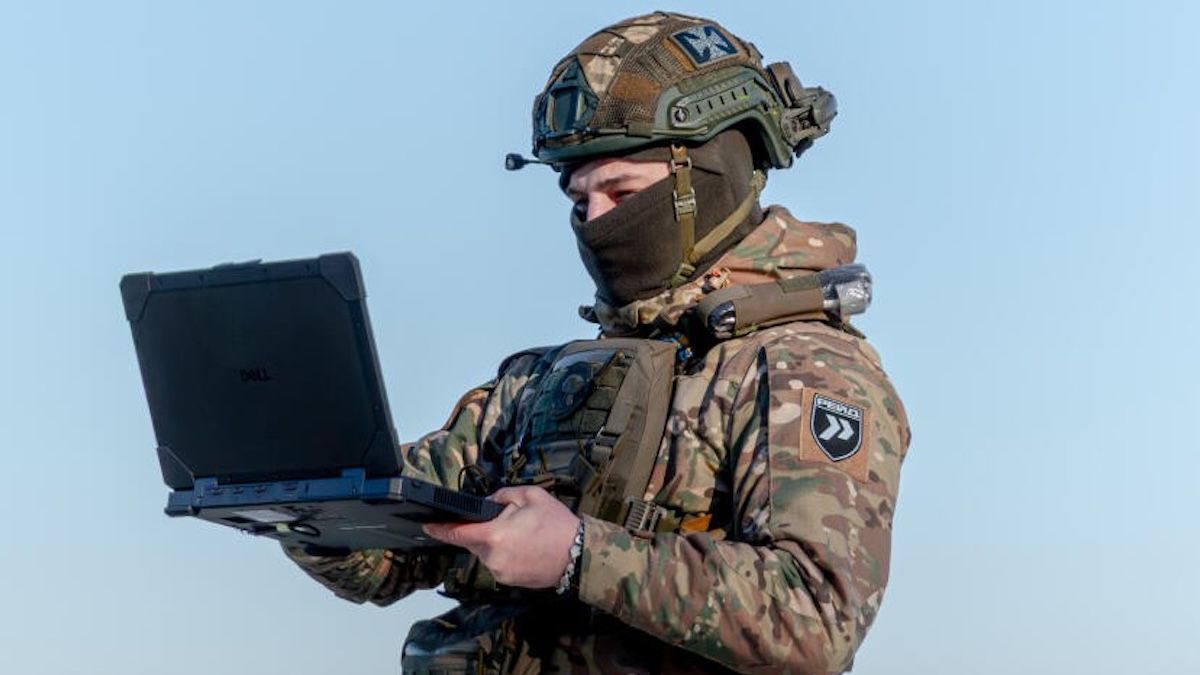
On the front lines of the conflict in Ukraine, the lifecycle of a piece of military technology has been compressed from years into mere days. A drone pilot reports a loss of signal due to a new Russian electronic warfare (EW) frequency; within forty-eight hours, a technician has modified the drone’s radio module; by the end of the week, a revised batch is flying over the trenches. Here’s the essence of Ukraine’s battlefield innovation loop—a rapid, iterative cycle of combat testing, feedback, and engineering that is fundamentally altering the nature of modern warfare.
While traditional defense procurement in many Western nations relies on multi-year development cycles and rigid testing protocols, the Ukrainian model thrives on necessity and extreme agility. This “loop” is not merely a response to crisis but has become a sophisticated ecosystem where soldiers, engineers, and data analysts work in a continuous feedback loop. As the conflict evolves into a high-tech war of attrition, understanding this mechanism is critical for global defense planners and technology investors alike.
The emergence of this decentralized innovation model marks a shift from centralized, top-down military industrialism to a more fluid, tech-driven approach. It is a system where the distinction between the “end-user” and the “developer” is increasingly blurred, creating a direct pipeline from the mud of the trenches to the workstations of software engineers in Kyiv.
The Mechanics of the Iterative Loop: From Trench to Tech
At the heart of the innovation loop is the concept of iterative design. In conventional warfare, a weapon system is designed, tested in controlled environments, deployed, and then evaluated over years of service. In Ukraine, the evaluation happens in real-time. The battlefield serves as a live, high-stakes laboratory where the efficacy of every sensor, frequency, and flight pattern is tested against active enemy countermeasures.
This process typically follows a four-stage cycle:
- Combat Deployment: A new technology, such as an FPV (First Person View) drone or a sea drone, is deployed in an active combat zone.
- Immediate Feedback: Soldiers on the ground provide granular data regarding what worked and, more importantly, what failed. This includes specific instances of electronic jamming, mechanical failure, or tactical limitations.
- Rapid Prototyping: Defense tech firms and small-scale engineering teams use this data to implement immediate hardware or software patches.
- Redeployment: The updated iteration is sent back to the front, often within a single week, to see if the fix holds against the evolving threat.
This speed is driven by a lack of bureaucratic friction. Small, agile companies and volunteer-led engineering units can pivot their entire production line to address a specific vulnerability, such as a new type of Russian signal jammer. This agility is particularly evident in the realm of electronic warfare (EW), where the “cat-and-mouse” game of frequency hopping and signal masking requires constant, near-daily updates to keep drones operational.
The Role of Specialized Analytics: Insights from the Snake Island Institute
As the volume of data from the battlefield grows, the challenge shifts from gathering feedback to processing it effectively. This is where specialized organizations like the Snake Island Institute play a pivotal role. Based in Kyiv, the institute serves as a critical bridge between the raw data of the front lines and the strategic decisions of defense developers and policymakers.
The institute, led by experts such as Catarina Buchatskiy, the co-founder and director of analytics, and Viktoriia Honcharuk, the director of defense technologies, focuses on translating battlefield observations into actionable intelligence. For the innovation loop to function at scale, it requires more than just “good ideas”; it requires rigorous analytics to ensure that technical solutions are actually meeting tactical needs.
Analytics in this context involve tracking the success rates of specific drone models, identifying the precise frequencies being used in enemy jamming operations, and mapping the effectiveness of various EW countermeasures. By quantifying these battlefield realities, the Snake Island Institute helps ensure that the “innovation” being produced is targeted and effective, rather than just a collection of reactionary fixes.
This analytical layer is what elevates the Ukrainian approach from a series of improvised fixes to a structured defense industrial strategy. It allows for the identification of systemic trends—such as a sudden increase in the effectiveness of a specific type of Russian electronic interference—allowing developers to preemptively design more resilient systems.
Bridging the Gap: Western Defense Tech and the Ukrainian Reality
For many Western defense companies, Ukraine represents an unprecedented testing ground. There is a significant interest in seeing how NATO-standard equipment and cutting-edge Western technologies perform in a high-intensity, peer-to-peer conflict. However, a disconnect often exists between the corporate desire to “test” products and the practical needs of the Ukrainian military.
While many American and allied companies have expressed interest in utilizing the conflict to gather combat data, the implementation has often been inconsistent. The primary challenge lies in the fundamental difference in operational tempo. Western defense firms are often structured around long-term contracts and predictable development timelines, whereas the Ukrainian environment demands immediate, often “good enough” solutions that can be deployed instantly.
there is the issue of integration. A Western-made sensor or communication device may be technologically superior, but if it cannot be easily repaired in a field workshop or if its software is too cumbersome for a soldier to adjust under fire, its utility is diminished. The Ukrainian innovation loop favors modularity, simplicity, and ease of maintenance—traits that are sometimes at odds with the highly complex, proprietary systems often produced by large-scale defense contractors.
For Western technology firms to truly integrate into this loop, they must move beyond a “vendor” mindset and adopt a “partner” mindset. This means being willing to engage in rapid-cycle co-development, where engineers work closely with end-users to refine products in real-time, rather than delivering a finished product and waiting for the next formal evaluation cycle.
Toward a Transatlantic Defense Industrial Partnership
The long-term goal for many Ukrainian defense leaders is the establishment of a robust, sustainable Ukraine-West defense industrial partnership. This goes beyond the mere sale of weapons; it envisions a future of joint production, technology transfer, and shared research and development (R&D).

A successful partnership would likely involve several key pillars:
- Localized Production: Moving from the shipment of finished goods to the establishment of manufacturing facilities within Ukraine. This increases supply chain resilience and reduces the logistical burden of long-distance transport.
- Co-Development Hubs: Creating centers where Western engineers and Ukrainian combat-tested developers can collaborate on next-generation technologies, such as autonomous AI-driven drones and advanced EW systems.
- Standardization and Interoperability: Ensuring that Ukrainian-developed innovations can be seamlessly integrated into NATO-standard communication and command-and-control networks.
This shift would transform Ukraine from a recipient of aid into a vital node in the global defense industrial complex. By combining Western capital, advanced manufacturing, and high-end R&D with Ukraine’s unparalleled battlefield experience and rapid iteration capabilities, a powerful new engine of military innovation could be created.
Key Takeaways for Global Defense Stakeholders
- Speed is a Strategic Asset: The ability to iterate technology in days rather than years is a decisive factor in modern high-intensity conflict.
- Data-Driven Innovation: The loop requires sophisticated analytics to turn raw battlefield feedback into effective engineering requirements.
- The Need for Modularity: Technologies that are easy to repair, modify, and update in the field will outperform more complex, rigid systems.
- Collaborative Models: Future defense partnerships must prioritize co-development and local production over traditional “vendor-buyer” relationships.
As the conflict continues, the lessons learned within Ukraine’s battlefield innovation loop will likely shape the defense procurement policies and technological development of nations worldwide. The era of the “static” weapon system is ending; the era of the “living,” evolving technology has arrived.
The next major checkpoint for these developments will be the upcoming international defense industry forums and bilateral security summits, where the frameworks for joint production and technology transfer are expected to be formally debated.
What do you think about the shift toward rapid, iterative defense technology? Should Western procurement models be more agile? Share your thoughts in the comments below and share this article with your network.
Keep reading