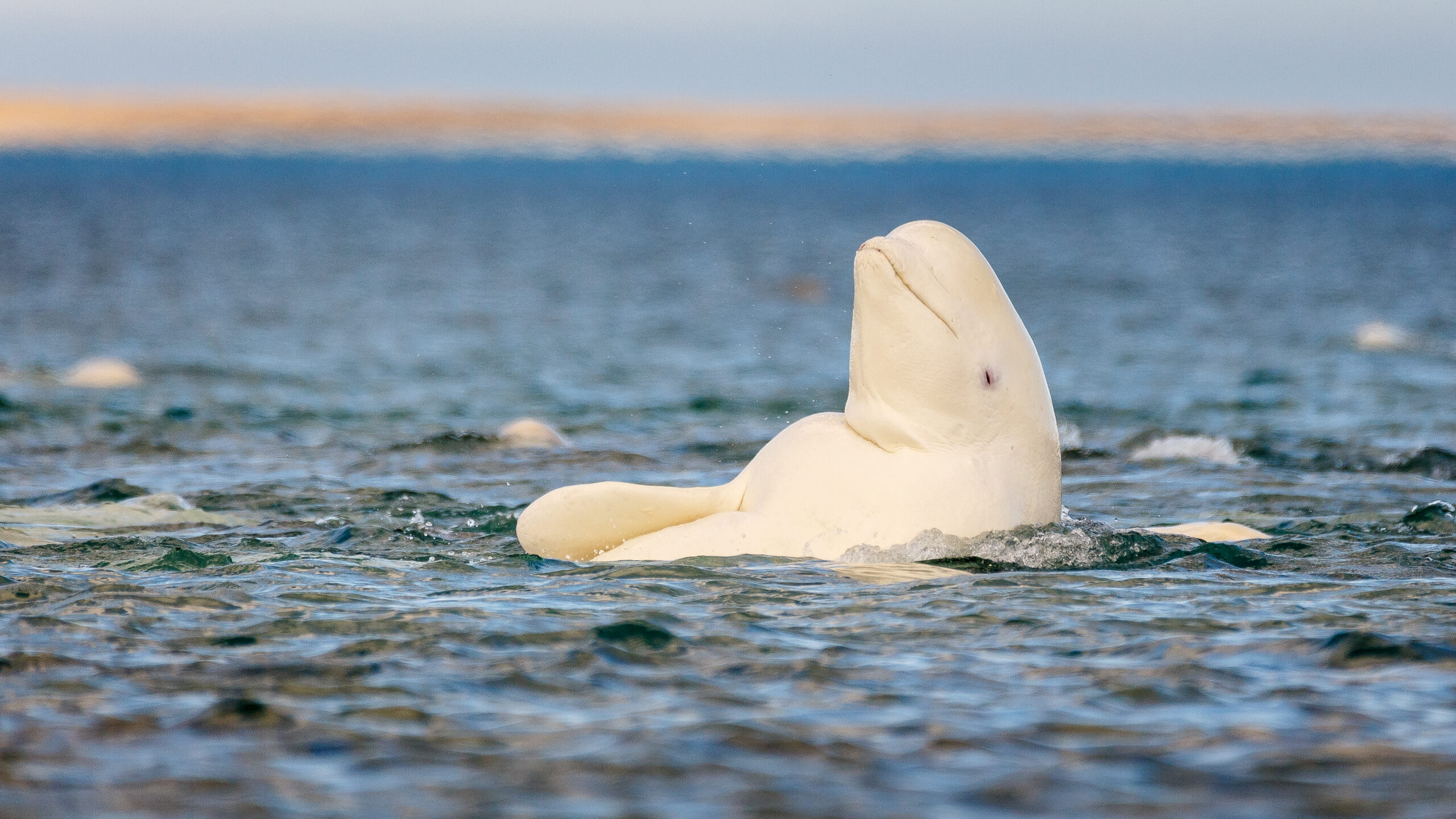
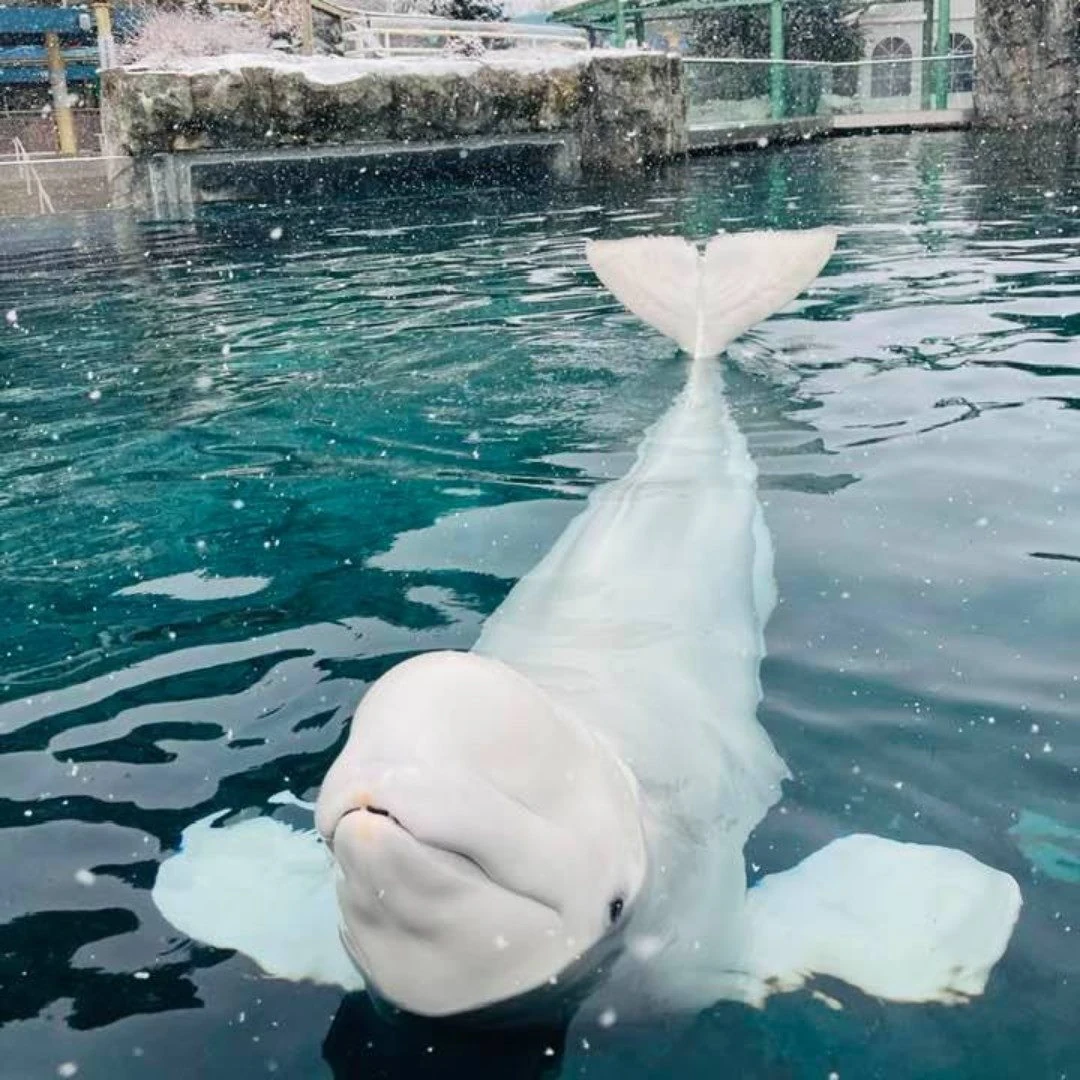
In the dim, blue-hued corridors of a New York aquarium, a beluga whale named Natasha performs a series of deliberate, almost rhythmic movements. She stretches her neck, executes a graceful pirouette and tilts her head, pausing to nod and shake in front of a two-way mirror. Nearby, her daughter, Maris, mimics these actions with similar intent. To the casual observer, it may look like simple play, but to cognitive scientists, these behaviors represent something far more profound: the unmistakable hallmarks of self-awareness.
According to a groundbreaking new study published in the journal PLOS One, these beluga whales have successfully passed the mirror self-recognition (MSR) test. This cognitive milestone, which measures an animal’s ability to recognize its own reflection as “self” rather than as another individual, has long been considered a gold standard for assessing higher-order intelligence. For the first time, this capacity has been documented in the beluga whale, a species whose complex social structures and vocalizations have long hinted at deep cognitive abilities.
The findings suggest that the cognitive landscape of the ocean is much more crowded—and much more self-aware—than previously understood. If these results are fully validated, belugas join an incredibly exclusive group of species capable of looking into a mirror and recognizing the entity staring back.
Decoding the Mirror Self-Recognition Test
The mirror self-recognition test is not merely about an animal looking at a reflection; it is about the animal using that reflection as a tool for self-inspection. In the study involving Natasha and Maris, researchers observed the whales using the mirror to examine their own bodies, performing specific movements that suggest they are checking their appearance or reacting to their own image.
In many species, a mirror is simply a source of novelty or a potential threat. Animals may approach it with curiosity or retreat in fear. However, passing the MSR test requires a level of abstraction—the ability to understand that the image in the glass is not a separate creature, but an extension of one’s own physical being. The behaviors recorded in the PLOS One study, such as the whales’ specific head movements and body rotations, provide the behavioral evidence necessary to suggest they are engaging with their own likeness.
An Exclusive Club of Intelligence
The list of animals known to pass the mirror test is remarkably short, making the beluga whale’s entry into this category a significant scientific event. For decades, the MSR test was thought to be a uniquely human trait, or at least one limited to a particularly narrow band of highly evolved organisms.
The current “short list” of species that have demonstrated mirror self-recognition includes:
- Humans: Typically demonstrating the ability between 18 months and two years of age.
- Great Apes: Including chimpanzees, bonobos, and orangutans. The inclusion of gorillas remains a subject of some scientific contention.
- Asian Elephants: Recognized for their complex social and emotional intelligence.
- Bottlenose Dolphins: Highlighting the cognitive depth of marine mammals.
- Magpies: One of the few non-mammalian species to show promise in mirror studies.
- Cleaner Wrasse: A small fish that provides a surprising example of self-awareness in a much smaller biological framework.
Notably, many species that possess high levels of social intelligence and complex behaviors have failed to pass the test. Dogs, cats, and various monkey species have been tested and have not demonstrated the same level of mirror self-recognition, underscoring how challenging this cognitive benchmark truly is to achieve.
The Implications for Marine Cognitive Science
This discovery shifts our understanding of how intelligence and self-awareness evolve. It suggests that self-awareness may not be a linear progression tied strictly to primate evolution, but rather a trait that can emerge in different lineages—such as cetaceans—through convergent evolution. When different branches of life develop similar complex brains to solve social and environmental challenges, they may also develop similar cognitive tools like self-recognition.
For researchers, the ability of beluga whales to pass the MSR test opens new doors for studying marine intelligence. It moves the conversation beyond simple communication and social bonding toward the study of individual identity, memory, and perhaps even the internal lives of these animals. As we refine our methods for testing animal cognition, the “marshmallow-nosed” belugas are proving to be much more than just iconic faces of the sea; they are sophisticated thinkers.
Key Takeaways: Beluga Self-Awareness
- New Milestone: Beluga whales (specifically Natasha and Maris) have demonstrated behavioral hallmarks of mirror self-recognition.
- Scientific Source: The findings were detailed in a study published in the journal PLOS One.
- Cognitive Significance: Passing the MSR test is a primary indicator of self-awareness in the animal kingdom.
- Exclusive Group: Belugas join a small group of species, including great apes, elephants, and dolphins, that have passed this test.
- Biological Context: The results suggest that self-awareness can emerge in diverse lineages, such as marine mammals, through complex brain development.
As the scientific community continues to review the data from the PLOS One study, researchers will likely look toward further longitudinal studies to see how these self-awareness traits manifest in different social contexts among beluga populations. We await further official updates from the research teams involved in these marine cognitive studies.

What are your thoughts on the expanding definition of animal intelligence? Do you believe the mirror test is the ultimate benchmark, or should we be looking at other cognitive markers? Let us know in the comments below and share this story with your network.
Keep reading