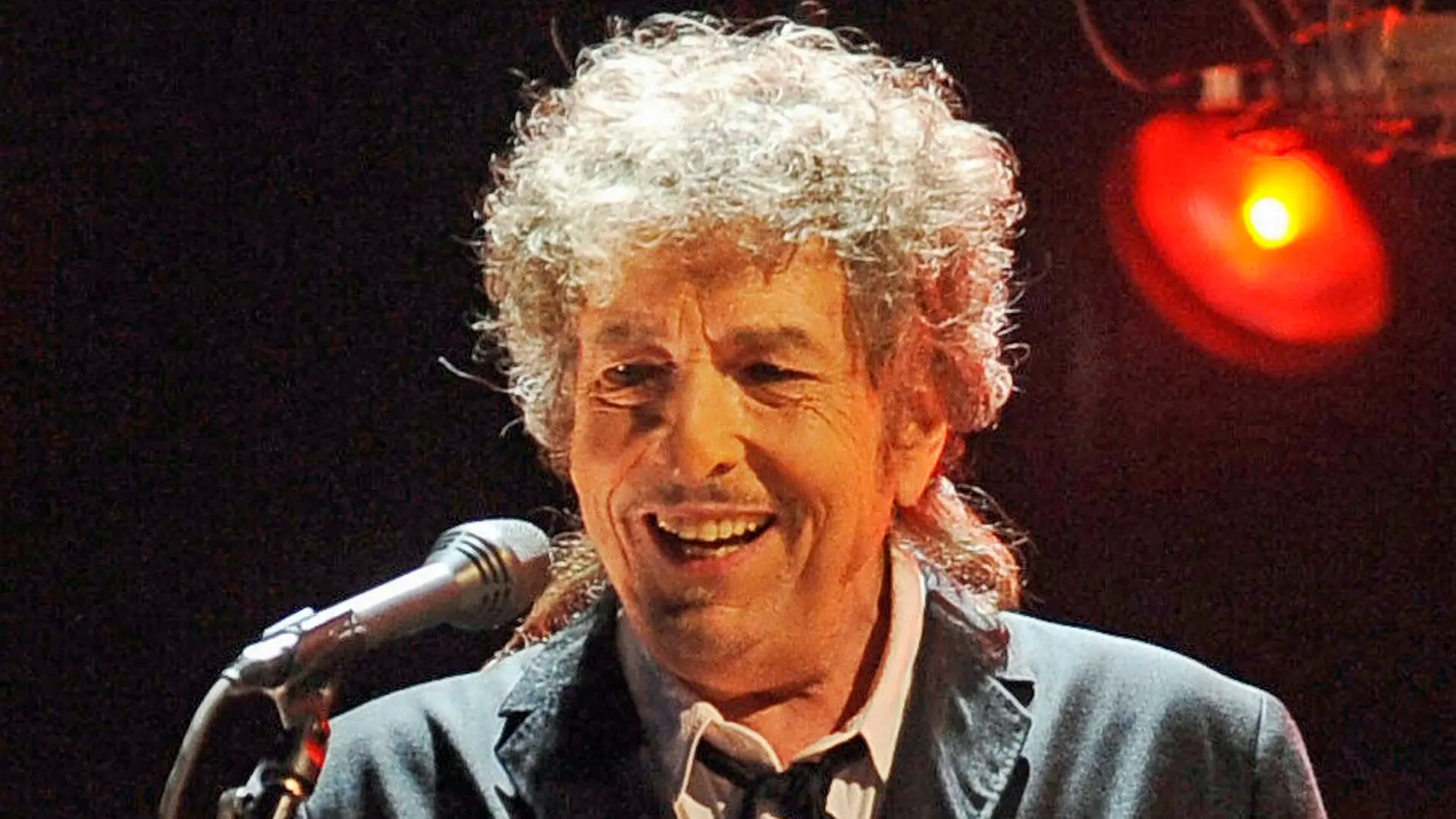
Today, May 24, 2026, the global music community pauses to recognize a milestone that feels both inevitable and extraordinary: the 85th birthday of Bob Dylan. For more than six decades, the man born Robert Allen Zimmerman has functioned not merely as a musician, but as a shifting cultural prism, refracting the complexities of the human condition through song, poetry, and a relentless refusal to remain static.
As Dylan reaches this landmark age, his legacy remains as much a subject of debate as It’s of devotion. To some, he is the definitive voice of the 1960s protest movement; to others, he is a surrealist poet who transcended the boundaries of folk and rock; and to the Swedish Academy, he is a Nobel Laureate whose lyrical depth has redefined the written word in song. Yet, perhaps the most consistent thread in his sprawling career is a fundamental demand he makes of his audience: do not simply seek to “recognize” him. Listen instead.
This philosophy—to listen to the music as it exists in the present moment rather than chasing the ghosts of past hits—has defined his approach to live performance for decades. As he celebrates 85 years, the world is left to contemplate a body of work that continues to evolve, even as the man behind the songs remains one of the most enigmatic figures in modern history.
The Art of Listening: Beyond Recognition
In the realm of legendary performers, there is often a tension between the artist and the expectations of the audience. For many icons, a concert is a nostalgic journey—a curated setlist of greatest hits designed to trigger collective memory. Bob Dylan has famously, and often controversially, rejected this model.
Throughout his “Never Ending Tour,” Dylan has frequently reimagined his most famous compositions, stripping them of their original arrangements or infusing them with entirely new textures. This approach often frustrates those looking for a literal “recognition” of the songs they grew up with. However, this refusal to perform as a museum piece is central to his artistic integrity. By forcing the listener to engage with the song as a living, breathing entity, he ensures that the music remains an active experience rather than a passive recollection.
This philosophy echoes a sentiment often associated with his live shows: the idea that one should not merely attempt to “recognize” a melody or a lyric, but should truly listen to the nuance, the improvisation, and the current emotional state of the performer. In doing so, Dylan challenges the listener to meet him in the “now,” a feat that becomes increasingly profound as he reaches his mid-80s.
A Career of Constant Reinvention
To trace the trajectory of Bob Dylan’s career is to trace the evolution of popular music in the 20th and 21st centuries. He has never been an artist who settled into a comfortable niche, instead choosing paths of significant friction and transformation.
In the early 1960s, Dylan emerged as a central figure in the American folk revival. His early work, characterized by acoustic arrangements and topical, socially conscious lyrics, positioned him as a reluctant spokesperson for a generation navigating the tensions of the Cold War and the Civil Rights Movement. However, the “voice of a generation” label was one he quickly sought to shed.
The mid-1960s marked his most seismic shift. The transition from acoustic folk to electric, rock-inflected sounds—most famously signaled by his appearance at the Newport Folk Festival—was met with both acclaim and intense criticism from folk purists. This era produced some of his most influential work, including Highway 61 Revisited and Blonde on Blonde, albums that blended poetic surrealism with a new, driving musical energy that helped define the genre of folk-rock.
Following this period, Dylan’s career became a series of stylistic explorations. He moved through country music in the late 1960s, experimented with gospel music in the late 1970s, and later embraced blues, jazz, and even more stripped-back, Americana-focused sounds. Each era brought new critical scrutiny, yet each also demonstrated his ability to master new forms while maintaining a singular, unmistakable voice.
Key Milestones in the Bob Dylan Timeline
| Period/Year | Era/Milestone | Significance |
|---|---|---|
| Early 1960s | Folk Revival Era | Established as a leading voice in topical and protest music. |
| 1965–1966 | Electric Transition | The shift to folk-rock and the release of seminal albums like Highway 61 Revisited. |
| 1970s | Stylistic Shifts | Exploration of country (Nashville Skyline) and gospel influences. |
| 1988–Present | The Never Ending Tour | A period of relentless live performance and constant musical evolution. |
| 2016 | Nobel Prize in Literature | Recognized by the Swedish Academy for having created “new poetic expressions within the great American song tradition.” |
From Folk Icon to Nobel Laureate
Perhaps the most significant validation of Dylan’s impact came in 2016, when he was awarded the Nobel Prize in Literature. This decision sparked a global conversation about the boundaries between music and literature, and the role of the songwriter in the modern canon.
The Swedish Academy’s recognition moved Dylan from the category of “pop culture icon” to “literary giant.” It acknowledged that his lyrics—often dense, elliptical, and layered with historical and mythological references—functioned with the same complexity and depth as the works of great poets and novelists. This honor underscored the idea that the “song” is a legitimate vessel for profound literary expression.
For many, the Nobel Prize was the ultimate answer to those who had long argued that Dylan’s contributions were more than just catchy melodies or catchy hooks. It solidified his status as a figure whose work demands intellectual engagement, much like the very “listening” he encourages in his audience.
The Legacy of the ‘Never Ending Tour’
While his recorded output remains a cornerstone of music history, Dylan’s enduring presence is most felt through his live performances. The “Never Ending Tour,” a moniker that has accurately described his near-constant touring schedule since the late 1980s, is a testament to his stamina and his commitment to the craft of performance.
In recent years, Dylan’s tours have often focused on revisiting his vast catalog through a contemporary lens. Rather than providing a predictable retrospective, these tours often feel like a deep dive into the textures of his songs, sometimes emphasizing the bluesy, weathered qualities of his voice, which has aged into a unique instrument of its own. This late-career phase has seen him embrace a more contemplative, albeit still musically rigorous, approach to his work.
His ability to remain a touring force at 85 is an anomaly in the music industry. It speaks to a fundamental drive that transcends the commercial pressures of the modern era. For Dylan, the stage is not a place for celebration of the past, but a laboratory for the present.
What His 85th Birthday Means for Music Today
As we mark this birthday, the influence of Bob Dylan is visible in nearly every corner of contemporary music. His impact can be seen in the lyrical depth of indie-folk artists, the genre-blurring experimentation of modern rock, and the very way songwriters approach the concept of “the album” as a cohesive piece of art.
Dylan taught the industry that an artist does not have to be a static entity. He proved that one could change directions, change sounds, and even change identities, and still remain relevant. In an era of highly curated digital personas, his commitment to mystery and constant change remains a radical act.
As he enters his 85th year, the question is no longer what Bob Dylan was to the world, but what he continues to be. As long as he is performing, as long as he is writing, and as long as he continues to demand that we “listen” rather than merely “recognize,” his journey remains as vital as ever.
Frequently Asked Questions
- When was Bob Dylan born? Bob Dylan was born on May 24, 1941.
- Why did Bob Dylan win the Nobel Prize? He was awarded the Nobel Prize in Literature in 2016 for creating new poetic expressions within the songwriting tradition.
- What is the “Never Ending Tour”? It refers to Dylan’s continuous and extensive touring schedule that has spanned several decades, characterized by evolving setlists and musical styles.
- Has Bob Dylan changed his musical style? Yes, throughout his career, he has moved through folk, rock, country, gospel, blues, and many other genres.
As of today, You’ll see no official announcements regarding upcoming tour dates or new studio releases for the immediate months following his birthday. Fans and observers will continue to monitor official channels for updates on his ongoing musical activities.
What do you think is Bob Dylan’s most influential era? We invite you to share your thoughts and favorite memories in the comments below. Don’t forget to share this article with your fellow music lovers.
Worth a look