
The Roman Catholic Church has issued a landmark formal response to the rapid rise of artificial intelligence, signaling a significant shift in how the Vatican engages with emerging technological powers. In his first encyclical, titled Magnifica humanitas (Latin for “magnificent humanity”), Pope Leo XIV addresses the ethical, social, and spiritual implications of a world increasingly shaped by machine learning and automated systems. The document, released this week, argues that while artificial intelligence is not inherently immoral, its current trajectory requires rigorous moral guardrails and democratic oversight to prevent the marginalization of human dignity.
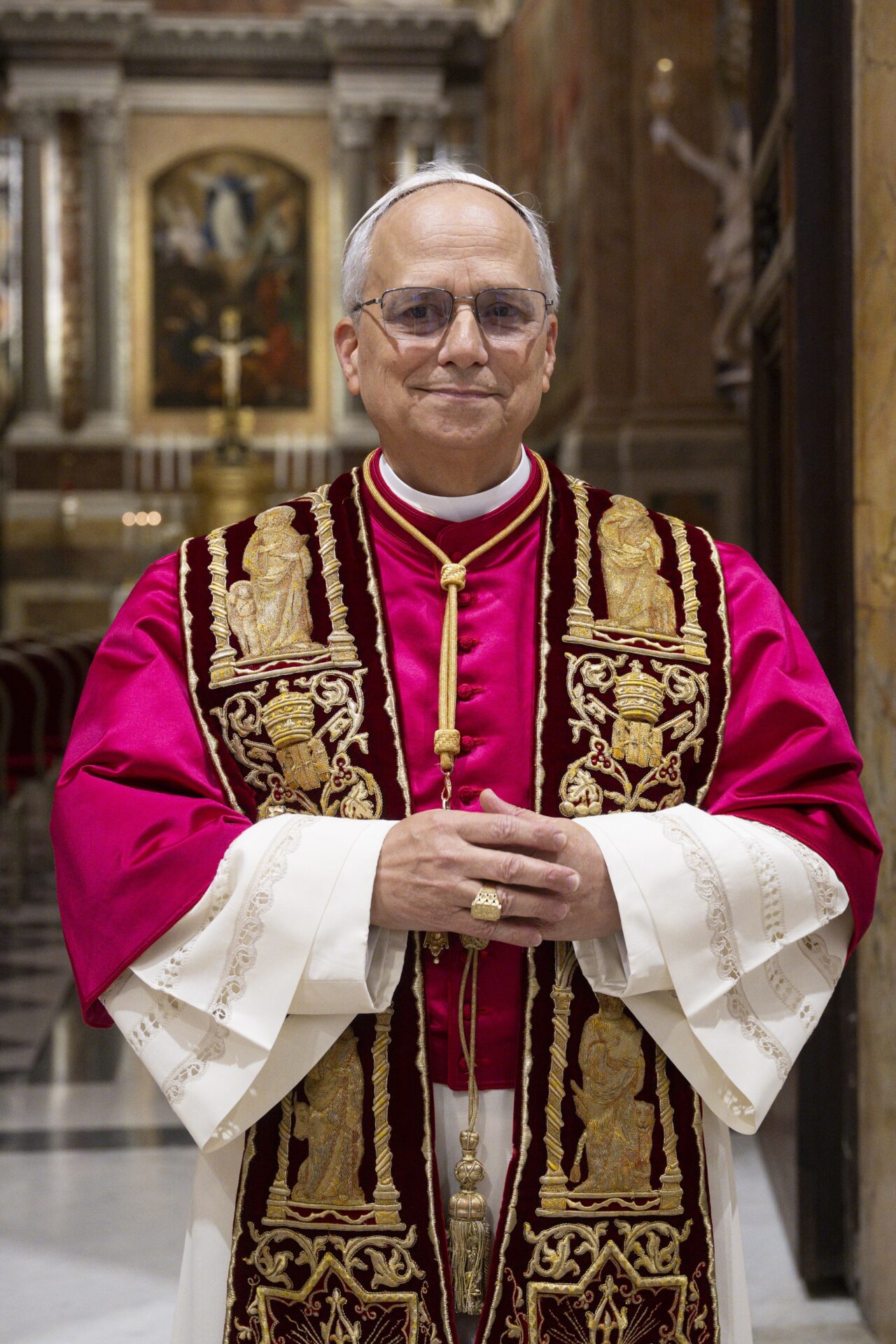
Pope Leo XIV, who was elected on May 8, 2025, during the papal conclave in Vatican City, has positioned this encyclical as a defining pillar of his pontificate Vatican News. The release of the document follows a period of intense consultation with theologians, historians, and industry experts. In a departure from traditional protocol, the Pope attended the presentation of the encyclical himself, emphasizing the urgency he attaches to the Church’s role as a moral counterweight to the unchecked influence of major technology firms.
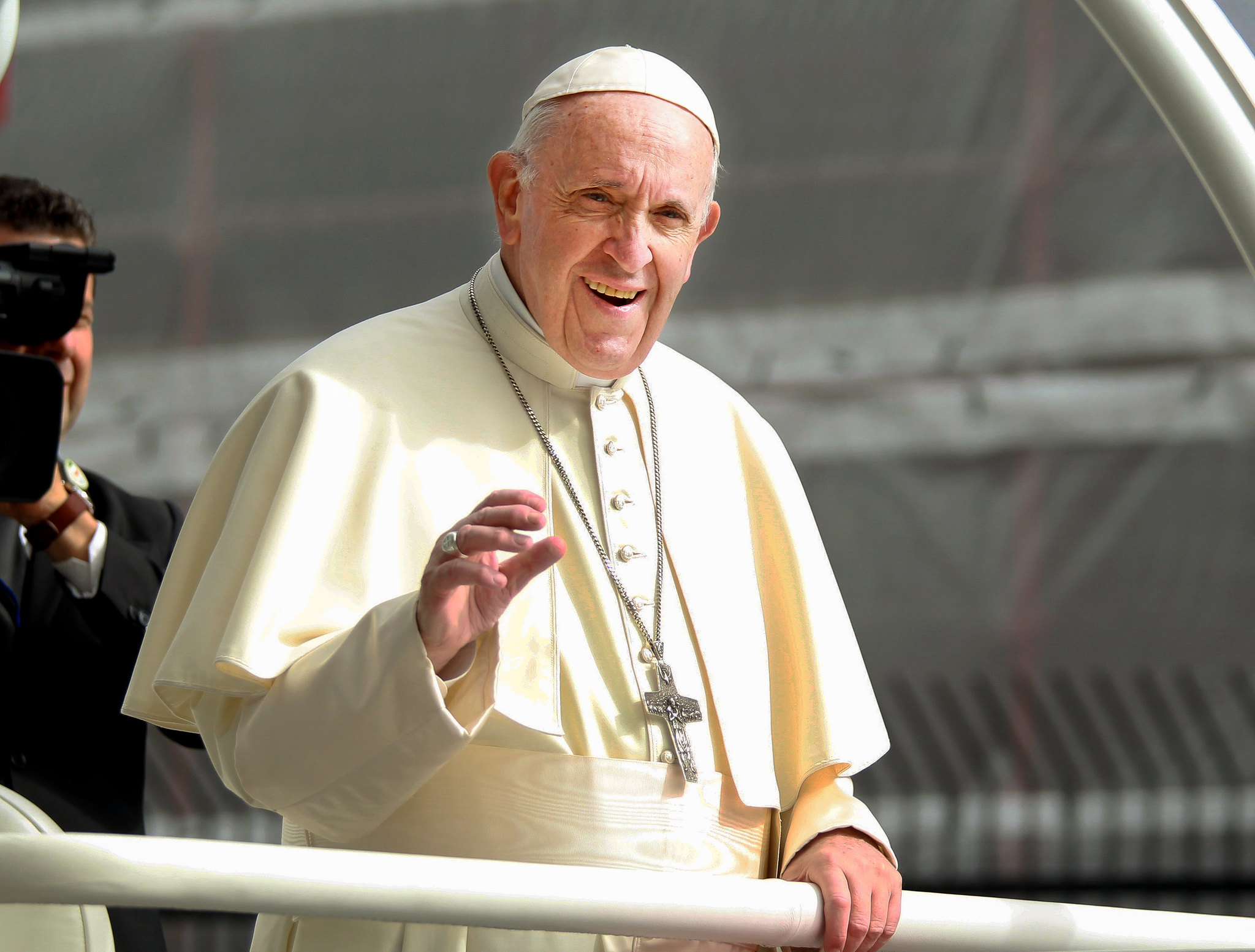
Pope Leo XIV gestures as he addresses the crowd during the weekly general audience at St Peter’s Square in the Vatican on May 20, 2026. | Tiziana Fabi/AFP via Getty Images
The Moral Framework for a Digital Age
At the core of Magnifica humanitas is the assertion that the term “intelligence” as applied to machines is a misnomer. The encyclical posits that true intelligence is a unique capacity of human persons, rooted in consciousness and moral agency—qualities that technology cannot replicate. By invoking the biblical parable of the Tower of Babel, the Pope warns against the “idolatry of profit” and the risk of building systems that prioritize technical efficiency over the welfare of the vulnerable.
The Church’s focus on this issue is deeply historical. The Pope explicitly linked his new teaching to the 135th anniversary of Rerum Novarum, the seminal 1891 encyclical by Pope Leo XIII that addressed the social upheavals of the Industrial Revolution. By drawing this parallel, the Vatican seeks to establish a consistent framework for how the Church addresses the relationship between labor, capital, and technological displacement. The Pope argues that just as the Church stood as a moral authority during the 19th-century shift toward industrialization, it must now provide guidance as the global economy faces automation-driven disruption.
Key Teachings and Practical Recommendations
The encyclical outlines specific areas where the Church believes intervention is necessary to preserve the liberal international order and human autonomy. These recommendations are designed not only for the faithful but for secular policymakers and industry leaders alike:
- Democratic Oversight: The document calls for more active public participation in the development of AI, arguing that society must retain the ability to “gradual things down” when technological acceleration outpaces the development of social safety nets.
- Economic Protection: Governments are urged to protect the dignity of human work, providing job training and redistributing the economic value generated by automation to those displaced by the technology.
- Data Sovereignty: The Pope emphasizes that personal data should not be treated as a commodity to be sold or controlled by a modest subset of tech oligarchs.
- Accountability in Warfare: The encyclical addresses the rise of automated combat, warning that current “just war” theories are being rendered obsolete. It demands an identifiable chain of responsibility for those who design, authorize, and employ AI in military contexts.
- Educational Priorities: The Church advocates for comprehensive education to protect individuals—especially the young—from disinformation, grooming, and various forms of digital exploitation.
A Continuity of Church Leadership
This encyclical builds upon the Vatican’s recent efforts to engage with the “technocratic paradigm.” In 2025, the Holy See released a teaching note titled Antiqua et nova, which established that the Church is not opposed to scientific progress, provided that such advancements honor the human image of God. The new document from Pope Leo XIV expands on these themes, moving from general principles to specific policy advocacy.

Observers note that the Pope’s inclusion of industry leaders in the consultation process—including figures like Anthropic co-founder Chris Olah—reflects a desire for the Church to maintain a seat at the table in Silicon Valley. This approach is consistent with the Vatican’s recent emphasis on synodality, a process of making decisions based on broad consensus, and dialogue. By engaging directly with developers, the Church aims to influence the design of AI systems before they become the sole determinants of how society operates.
However, the document also carries a warning regarding the spiritual risks of AI. The Church is concerned that AI could become a “middleman” between individuals and their faith, potentially usurping the role of human community and the Church in guiding ethical and moral development. The Pope expressed concern that the way some tech founders discuss the “singularity” mirrors religious devotion, potentially creating a secular religion that excludes God and reduces human relationships to data points.
What Happens Next
The release of Magnifica humanitas is expected to spark a series of international dialogues. The Vatican has indicated that it intends to use the encyclical as a basis for ongoing discussions with international bodies, governments, and labor organizations regarding the implementation of the proposed “international compact” on AI safety. For the public and the faithful, the document serves as a call to re-evaluate the role of technology in daily life and to demand greater transparency from those creating the systems that shape our modern world.
Official updates and further documentation regarding the Vatican’s ongoing engagement with technology can be tracked through the official Holy See website. We invite our readers to share their perspectives on the Church’s latest intervention in the comment section below.
Related reading