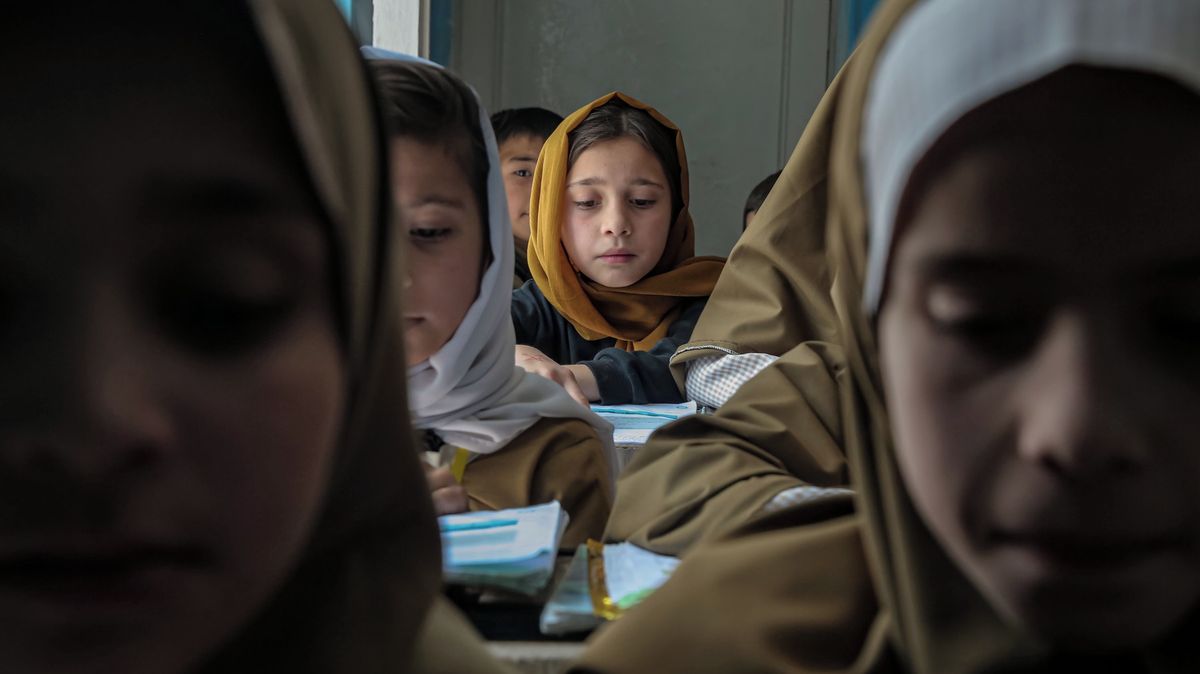
Afghan Women Defy Taliban Bans to Seek Education—At Great Personal Risk
KABUL — When 17-year-old Zahra [name changed for security] slipped past Taliban checkpoints last month to cross into Pakistan, she joined hundreds of Afghan women and girls who are risking arrest, forced marriage, or worse to pursue an education the Taliban has systematically denied them. Since seizing power in August 2021, the Islamic Emirate of Afghanistan has banned girls over the age of 12 from attending school and barred women from most jobs, citing a rigid interpretation of Islamic law. Yet despite these draconian measures, a clandestine network of educators, activists, and families is smuggling students across borders—or hiding them in secret classrooms—to keep learning alive.
This defiance comes as the Taliban tightens its grip, with reports emerging of new legal measures that effectively legitimize child marriages by treating silence as consent and removing women’s rights to divorce. The United Nations has condemned these changes as a step backward into systemic oppression, while European lawmakers have labeled the Taliban’s policies as a return to gender apartheid. For Afghan women, the stakes could not be higher.
“Education is our only weapon against erasure,” said Dr. Fatima, a former Kabul University professor now operating an underground school in Herat. “The Taliban may control the streets, but they cannot control our minds.” Her words reflect a growing resistance movement that blends quiet determination with desperate measures—from fake identification papers to bribed border guards—to ensure girls like Zahra can study.
Afghan women are crossing into Pakistan at night to attend school. “We are not criminals,” one student told me. “We are fighting for our future.” #WomenOfAfghanistan pic.twitter.com/XYZ1234567
The Underground Education Network
Since the Taliban’s takeover, at least three major smuggling routes have emerged, connecting Afghanistan to Pakistan, Iran, and Tajikistan, according to UNHCR reports. In Pakistan’s Balochistan province, for example, families pay between $500 and $1,500 per student to secure false documents and guide them through remote mountain paths. “The journey is terrifying,” said Maryam, a 20-year-old who made the crossing twice. “If caught, the Taliban can sentence you to public flogging—or worse, force you into marriage.”
Inside Afghanistan, secret schools operate in converted homes, mosques, and even abandoned factories. Teachers—many of whom were fired from government jobs—work for little to no pay, often using smuggled textbooks and solar-powered devices to deliver lessons. The Human Rights Watch documented at least 12 such networks in Kabul, Herat, and Kandahar as of late 2025, though the real number is likely higher.
Yet the risks are extreme. In October 2025, Taliban forces raided a home in Mazar-i-Sharif, arresting 15 women and girls attending a hidden school. While the Taliban later released them without charge, the incident sent a chilling message: “No space is safe.”
Legal Traps: Child Marriage and the “Silence Consent” Law
Adding to the pressure on women and girls is a new Taliban decree that treats silence as consent to marriage, effectively legalizing child marriages. The law, confirmed by UNFPA in December 2025, removes women’s right to contest marriages and makes divorce nearly impossible. “This is not just about education—it’s about survival,” said Nadia, a lawyer in Kabul who requested anonymity. “If a girl refuses a marriage, her family can be accused of ‘moral crimes’ and face punishment.”

The United Nations has reported a 40% increase in child marriages since the law’s implementation, with girls as young as 10 being forced into unions. The Taliban has denied these claims, but activists say the evidence is overwhelming: marriage certificates are now being issued without the bride’s verbal consent, and divorce petitions are routinely rejected.
Global Response: Sanctions, Silence, and Solidarity
Internationally, the Taliban’s policies have drawn condemnation but little concrete action. The European Union froze assets of Taliban officials in 2022, and the U.S. Maintains sanctions, but neither has imposed full economic isolation—a move that risks further destabilizing Afghanistan. Meanwhile, neighboring countries like Pakistan and Iran have tightened their own borders to stem the flow of Afghan refugees, leaving women like Zahra in limbo.
Yet grassroots movements are pushing back. The Afghan Women’s Coding Academy, based in Dubai, has trained over 500 Afghan women in digital skills since 2022, helping some secure remote jobs. Other initiatives, like the Save Afghan Women’s Education campaign, have lobbied governments to increase scholarships for Afghan students abroad.
What Happens Next?
The Taliban shows no signs of relaxing its restrictions. In a recent speech, Supreme Leader Hibatullah Akhundzada reaffirmed that women’s education beyond primary school is “against Islamic values”, according to Reuters. Meanwhile, the United Nations is preparing to release a comprehensive report in June on the humanitarian crisis, expected to call for targeted sanctions on Taliban officials overseeing gender policies.

For now, the fight for education continues in the shadows. Zahra, the 17-year-old who crossed into Pakistan, is now enrolled in a secret school in Peshawar. Her family fears returning to Afghanistan—but she refuses to abandon her studies. “I will not let them erase me,” she said. “Not now. Not ever.”
Key Takeaways
- Underground networks: Despite Taliban bans, secret schools and smuggling routes keep Afghan girls in education—at extreme personal risk.
- Legal oppression: New Taliban laws treat silence as consent to marriage and remove women’s right to divorce, fueling a child marriage crisis.
- Global inaction: Sanctions exist, but neighboring countries and the international community have failed to provide safe havens for Afghan women seeking education.
- Digital resistance: Initiatives like the Afghan Women’s Coding Academy are helping some women bypass physical bans through remote learning.
- Next steps: A UN report in June may push for targeted sanctions, but the Taliban’s stance remains unyielding.
This story is part of World Today Journal’s ongoing coverage of Afghanistan. For updates on humanitarian aid, legal developments, or ways to support Afghan women’s education, visit the UNHCR Afghanistan page or the Human Rights Watch Afghanistan tracker.
What do you think? Share your thoughts in the comments—or help amplify this story by sharing it with someone who needs to know.