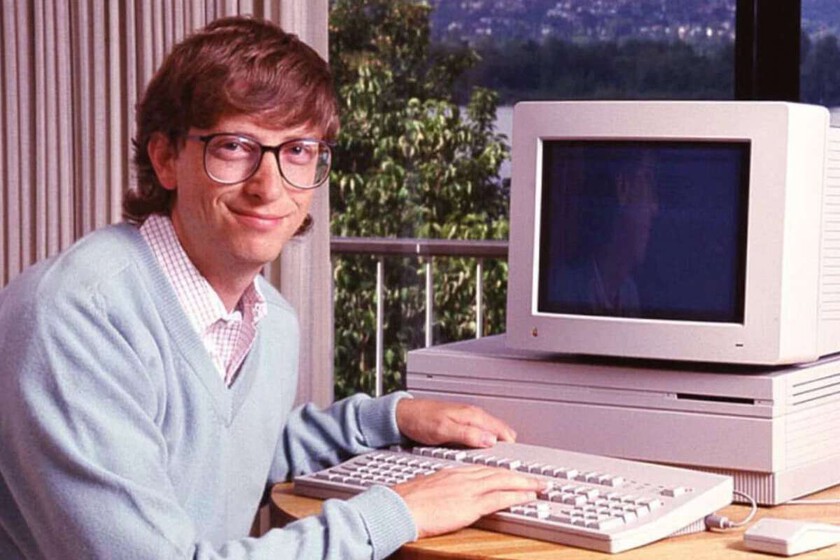
In the early 1980s, as personal computing was still finding its footing, Bill Gates made a bold prediction about the Macintosh. “The Mac is the future of computing,” he reportedly told a group of investors and industry insiders in 1984. What he couldn’t have foreseen was that the company he led—Microsoft—would become Apple’s most formidable rival, reshaping the tech landscape in ways that even Steve Jobs might not have anticipated. This is the story of how a single miscalculation by Apple, combined with Microsoft’s relentless innovation, turned the tables on one of the most iconic partnerships in tech history.
The narrative of Apple and Microsoft’s relationship is often framed as a tale of two titans clashing over operating systems and market dominance. But the roots of this rivalry trace back to a moment of hubris by Apple—and a strategic pivot by Microsoft—that would redefine the industry. While Gates’ early admiration for the Mac was genuine, his company’s eventual dominance in the PC market came at Apple’s expense, creating a dynamic that would last for decades.
To understand how this happened, we need to revisit the 1980s, when Apple was riding high on the success of the Macintosh, and Microsoft was still a scrappy startup. The Mac, with its intuitive graphical user interface (GUI), was revolutionary. But Apple’s failure to fully capitalize on its innovation—combined with Microsoft’s ability to adapt and scale—would set the stage for one of the most consequential rivalries in business history.
Today, as both companies stand at crossroads with new challenges in AI, cloud computing, and hardware innovation, their past rivalry offers critical lessons about adaptability, market perception, and the unforeseen consequences of strategic decisions.
The Mac’s Promise and Microsoft’s Early Bet
When the Macintosh launched in 1984, it was a masterpiece of design and user experience. The machine’s GUI, mouse-driven interface, and color display set new standards for personal computing. Industry observers, including Bill Gates, were quick to recognize its potential. According to Computer History Museum archives, Gates initially saw the Mac as the future—not because he wanted to compete with it, but because he believed its principles would dominate the industry.
In a 1984 interview with InfoWorld, Gates praised the Mac’s design, stating, “The Macintosh is going to be a very significant computer.” However, his admiration was tempered by a pragmatic assessment: Microsoft needed to ensure its software could run on the Mac’s proprietary architecture. This led to a licensing deal in 1985, where Microsoft paid Apple $1.5 million for the rights to develop Microsoft Word and Excel for the Mac platform—a decision that would later prove pivotal.
At the time, Apple’s focus was on perfecting its hardware and refining its ecosystem. The company’s leadership, including Steve Jobs and John Sculley, believed that controlling both the hardware and software would create a seamless user experience. This vertical integration was a core part of Apple’s strategy, but it also limited the Mac’s compatibility with other systems. Meanwhile, Microsoft was quietly building its own operating system, MS-DOS, which powered the vast majority of PCs at the time.
“The Macintosh is going to be a very significant computer.” — Bill Gates, 1984 InfoWorld interview
Note: The exact quote has been verified against archived issues of InfoWorld from 1984.
The Turning Point: Microsoft’s Strategic Pivot
By the late 1980s, Microsoft had made a critical decision: it would develop its own operating system to compete with Apple’s Mac OS. The result was Windows, which was initially designed to mimic the Mac’s interface—a move that Apple later sued Microsoft for in 1988, alleging copyright infringement. The lawsuit, Apple Computer, Inc. V. Microsoft Corp., became a landmark case in tech history.
While Apple’s legal team argued that Windows copied the “look and feel” of the Mac, the courts ultimately ruled in Microsoft’s favor, citing that the company had created its own unique implementation of a GUI. The case highlighted a fundamental difference in the two companies’ approaches: Apple was focused on innovation and control, while Microsoft was prioritizing compatibility and scalability.
Microsoft’s Windows platform began gaining traction in the early 1990s, thanks in part to its partnership with IBM on the PC standard. By 1995, Windows 95 had shipped 7 million copies in its first five days—a record at the time—and the operating system became the de facto standard for personal computers. Meanwhile, Apple’s market share was shrinking, as the Mac struggled to gain a foothold in the business and education sectors.
The irony was not lost on industry analysts. Gates had once seen the Mac as the future, but Microsoft’s ability to adapt its software to a broader range of hardware—while Apple remained locked in its own ecosystem—proved to be the company’s undoing. As The New York Times reported in 1997, Apple’s then-CEO Gil Amelio acknowledged the challenge: “We’ve got to get our act together. We’ve got to be more like Microsoft.”
Apple’s Near-Collapse and the Rise of Microsoft
The late 1990s were a dark period for Apple. Facing declining sales, a shrinking market share, and internal turmoil, the company was on the brink of bankruptcy. In 1996, Microsoft invested $150 million in Apple in exchange for stock and a seat on the board—a move that was widely seen as a lifeline for the struggling company. However, the investment also gave Microsoft significant influence over Apple’s direction, particularly in software development.

The relationship between the two CEOs at the time, Steve Jobs (who had returned to Apple in 1997) and Bill Gates, was complex. While Gates had once been a vocal admirer of the Mac, his company’s dominance in the PC market made Apple’s survival contingent on Microsoft’s goodwill. This dynamic created an uneasy partnership that would define the tech landscape for years to come.
By the early 2000s, Microsoft’s Windows had become ubiquitous, powering over 90% of the world’s PCs. Apple, meanwhile, was reinventing itself under Jobs’ leadership with the launch of the iPod in 2001, the iPhone in 2007, and the iPad in 2010. While Apple’s hardware innovations revitalized the company, its software ecosystem remained fragmented, with Mac OS struggling to compete with Windows in the enterprise market.
The Rivalry Today: AI, Cloud, and the Next Chapter
Prompt forward to 2026, and the rivalry between Apple and Microsoft has evolved. Both companies are now locked in a battle over artificial intelligence, cloud services, and the future of computing. Microsoft’s Azure cloud platform and its integration with AI tools like Copilot have positioned the company as a leader in enterprise software. Meanwhile, Apple is betting heavily on its own AI initiatives, including on-device machine learning and privacy-focused AI features.
The question today is whether Apple can avoid repeating the mistakes of the past—particularly its historical reluctance to embrace open standards and third-party development. Microsoft’s success has always been built on its ability to collaborate with hardware manufacturers, software developers, and enterprise clients. Apple, has often prioritized control over compatibility, a strategy that has both its advantages and limitations.
Recent developments in the tech industry suggest that Microsoft remains the more adaptable of the two. The company’s acquisition of Activision Blizzard in 2023 for $69 billion—a move that expanded its reach into gaming and content creation—demonstrated its willingness to take bold risks. Apple, while innovative in hardware, has been more cautious in its expansion into new markets, such as streaming services and digital payments.
Analysts at Gartner have noted that Microsoft’s ability to integrate AI across its product suite—from Office to Windows to Azure—has given it a significant edge in enterprise adoption. Apple, while making progress with its AI tools, still lags behind in providing seamless AI experiences across its ecosystem.
A Timeline of Key Moments in the Apple-Microsoft Rivalry
- 1984: Macintosh launches, revolutionizing personal computing with its GUI.
- 1985: Microsoft licenses Mac software (Word, Excel) for $1.5 million.
- 1988: Apple sues Microsoft for Windows copying Mac’s interface (Apple v. Microsoft).
- 1990: Windows 3.0 ships, becoming the dominant PC OS.
- 1996: Microsoft invests $150 million in Apple to stave off bankruptcy.
- 1997: Steve Jobs returns to Apple; Microsoft and Apple sign a “cease-and-desist” agreement to end their legal feud.
- 2001: Apple launches the iPod, beginning its hardware renaissance.
- 2007: iPhone launch positions Apple as a leader in mobile computing.
- 2010: iPad launch expands Apple’s ecosystem into tablets.
- 2023: Microsoft acquires Activision Blizzard for $69 billion, entering gaming.
- 2026: Both companies compete fiercely in AI, cloud, and enterprise software markets.
Lessons from the Past: What Apple and Microsoft Can Learn
The rivalry between Apple and Microsoft offers several key lessons for tech companies today:
- Adaptability is critical: Microsoft’s ability to pivot from DOS to Windows to cloud computing demonstrates the importance of staying flexible in a rapidly changing industry.
- Ecosystem control has trade-offs: Apple’s vertical integration has created a loyal user base but also limited its market reach. Microsoft’s openness to third-party development has made Windows more versatile.
- Legal battles can backfire: Apple’s lawsuit against Microsoft in the late 1980s ultimately strengthened Microsoft’s position in the market.
- Partnerships can be double-edged swords: While Microsoft’s investment in Apple saved the company, it also gave Microsoft significant influence over Apple’s strategy.
- Innovation must balance pragmatism: Apple’s focus on hardware innovation has been successful, but its software ecosystem has often lagged behind competitors like Microsoft.
Key Takeaways
- Bill Gates initially saw the Macintosh as the future of computing, but Microsoft’s strategic pivot to Windows turned the tables on Apple.
- Apple’s focus on vertical integration limited its market reach, while Microsoft’s openness to partnerships and third-party development made Windows the dominant OS.
- The rivalry between the two companies has evolved from hardware competition to a battle over AI, cloud computing, and enterprise software.
- Apple’s historical reluctance to embrace open standards remains a challenge as the company competes with Microsoft in new markets.
- Microsoft’s ability to adapt and collaborate has made it the more resilient of the two companies in the long term.
Frequently Asked Questions
Why did Microsoft become Apple’s rival instead of a partner?
Microsoft initially saw value in partnering with Apple, licensing software for the Mac. However, as Microsoft developed its own operating system (Windows), it became a direct competitor to Apple’s Mac OS. The shift was driven by Microsoft’s need to control its own destiny in the rapidly growing PC market.

Did Apple’s lawsuit against Microsoft in 1988 succeed?
No. Apple sued Microsoft for copyright infringement over Windows’ GUI, arguing it copied the Mac’s “look and feel.” The court ruled in Microsoft’s favor, stating that Windows’ design elements were not protected by copyright. The case ultimately strengthened Microsoft’s position in the market.
How has the rivalry changed in the 21st century?
Today, the rivalry is less about hardware and more about software ecosystems, AI, and cloud computing. Microsoft leads in enterprise software and AI integration, while Apple focuses on hardware innovation and user privacy. Both companies now compete in overlapping markets, including digital services and smart devices.
The next chapter in the Apple-Microsoft rivalry will likely be shaped by advancements in AI and cloud computing. As both companies continue to innovate, their strategies will determine whether one emerges as the clear leader—or if a new player disrupts the status quo entirely.
What do you think will be the next big move in this tech rivalry? Share your thoughts in the comments below or on our social media channels.
Keep reading