
European Central Bank (ECB) Executive Board member Isabel Schnabel has emerged as a key voice in shaping the institution’s response to the continent’s economic challenges, offering rare clarity on policy directions amid persistent inflation pressures and geopolitical uncertainty. In a wide-ranging interview, Schnabel addressed the delicate balancing act between combating price growth and avoiding an over-tightening that could stifle Europe’s fragile recovery. Her remarks, delivered against the backdrop of a volatile financial landscape, underscore the ECB’s evolving stance on interest rates, asset purchases, and the broader implications for households and businesses.
The interview, conducted exclusively by a leading financial news outlet, comes as markets digest the ECB’s latest policy signals following its May meeting. Schnabel’s comments—delivered with her characteristic precision—provide critical context for investors, policymakers, and citizens alike, as Europe navigates a period of economic transition. With inflation still above target in several member states and growth projections revised downward, her insights offer a glimpse into how the ECB plans to calibrate its tools in the months ahead.
As the ECB prepares for its next Governing Council meeting on June 6, 2026, Schnabel’s remarks carry particular weight. Her emphasis on “data dependency” and the need to avoid premature policy easing signals a cautious approach, even as some economists argue for a more aggressive pivot. The stakes are high: a misstep could reignite inflation or deepen the slowdown in sectors already under strain.
Schnabel on Inflation: “We Must Stay Vigilant”
In response to persistent price pressures, Schnabel reiterated the ECB’s commitment to bringing inflation back to its 2% target “in a timely manner.” Her remarks reflect the central bank’s dual mandate: controlling inflation while supporting employment and economic stability. “We are not in a rush to cut rates,” she stated, acknowledging that underlying inflation remains elevated in services and goods sectors. This stance aligns with recent ECB communications, where officials have stressed the need for “further evidence” of sustained disinflation before considering rate cuts.
Key Quote: “The labor market remains resilient, but wage growth is a close watch item. If second-round effects from higher prices feed into wages, we risk a more prolonged inflationary period.”
Schnabel’s warning echoes concerns raised by the ECB’s latest May 2026 Economic Bulletin, which highlighted persistent core inflation in countries like Germany and France. The bulletin noted that while headline inflation had eased slightly, services inflation—driven by labor costs—remained stubbornly high. Schnabel’s comments suggest the ECB is preparing for a prolonged period of elevated rates, potentially longer than markets currently anticipate.
Asset Purchase Program: A Tool for the Future?
One of the most closely watched aspects of the interview was Schnabel’s discussion of the ECB’s asset purchase program (APP). While the program has been scaled back significantly since its peak in 2022, Schnabel left the door open for its reinstatement under specific conditions. “We have not ruled out reactivating the APP if fragmentation in sovereign bond markets were to pose a serious risk to financial stability,” she said. This remark is significant, as it signals the ECB’s willingness to deploy unconventional tools if traditional monetary policy proves insufficient.
Market participants had previously speculated about the possibility of a “tiered reserves” system or targeted longer-term refinancing operations (TLTROs) as alternatives to outright bond purchases. Schnabel did not dismiss these options but emphasized that any decision would be “contingent on the data.” Her caution aligns with the ECB’s historical approach: avoid pre-committing to measures that could undermine credibility.
Geopolitical Risks and the Eurozone’s Outlook
Schnabel also addressed the growing impact of geopolitical tensions on Europe’s economic outlook. While she avoided specific references to recent conflicts, her remarks underscored the ECB’s awareness of supply chain disruptions and energy price volatility. “Geopolitical risks are a key factor in our forecasting,” she noted. “Any escalation could amplify inflationary pressures, particularly in energy-intensive sectors.”

This assessment aligns with the European Commission’s Autumn 2025 Economic Forecast, which warned of downside risks stemming from geopolitical instability. Schnabel’s comments suggest the ECB is factoring these risks into its policy deliberations, though she stopped short of outlining concrete contingency plans.
What Happens Next: Key Dates and Policy Watch
The ECB’s next major policy announcement is scheduled for June 6, 2026, when the Governing Council is expected to release its updated economic projections and decide on interest rates. Analysts anticipate another 25-basis-point hike, though Schnabel’s remarks suggest the committee is closely monitoring the effects of recent tightening. “We will not hesitate to adjust our stance if the data warrant it,” she said, leaving room for both hawkish and dovish interpretations.
Beyond the June meeting, the ECB’s July 25 meeting will be critical, as it coincides with the publication of revised inflation forecasts. Schnabel’s emphasis on “forward guidance” indicates that the ECB may use this opportunity to signal its long-term intentions, potentially clarifying whether rate cuts are on the horizon for late 2026.
Stakeholders React: Markets, Businesses, and Citizens
Schnabel’s interview has sparked reactions across the financial spectrum. Eurozone bond markets showed minimal movement immediately following her remarks, as traders awaited more concrete signals from the June meeting. However, equity markets in peripheral countries like Italy and Spain saw slight gains, reflecting optimism that the ECB’s cautious approach could mitigate fragmentation risks.
For businesses, the implications are mixed. Slight and medium-sized enterprises (SMEs) in sectors like manufacturing and real estate—already grappling with high borrowing costs—may face further pressure if rates remain elevated. Conversely, financial institutions stand to benefit from the ECB’s hawkish stance, as it supports the profitability of banks with large loan books.
Citizens, meanwhile, are increasingly concerned about the cost-of-living crisis. While inflation has eased from its 2022 peak, food and energy prices remain elevated in many households. Schnabel acknowledged this reality: “We understand the burden on households, but our primary mandate is price stability. The two are not mutually exclusive if we communicate clearly and act decisively.”
Expert Analysis: What Schnabel’s Remarks Tell Us
Economists and policymakers are divided on the ECB’s path forward. Some, like IMF Chief Economist Pierre-Olivier Gourinchas, argue that the ECB should proceed with caution, given the risks of overheating in services sectors. Others, such as ECB Governing Council member Frank Elderson, have advocated for a more aggressive pivot to avoid stifling growth.
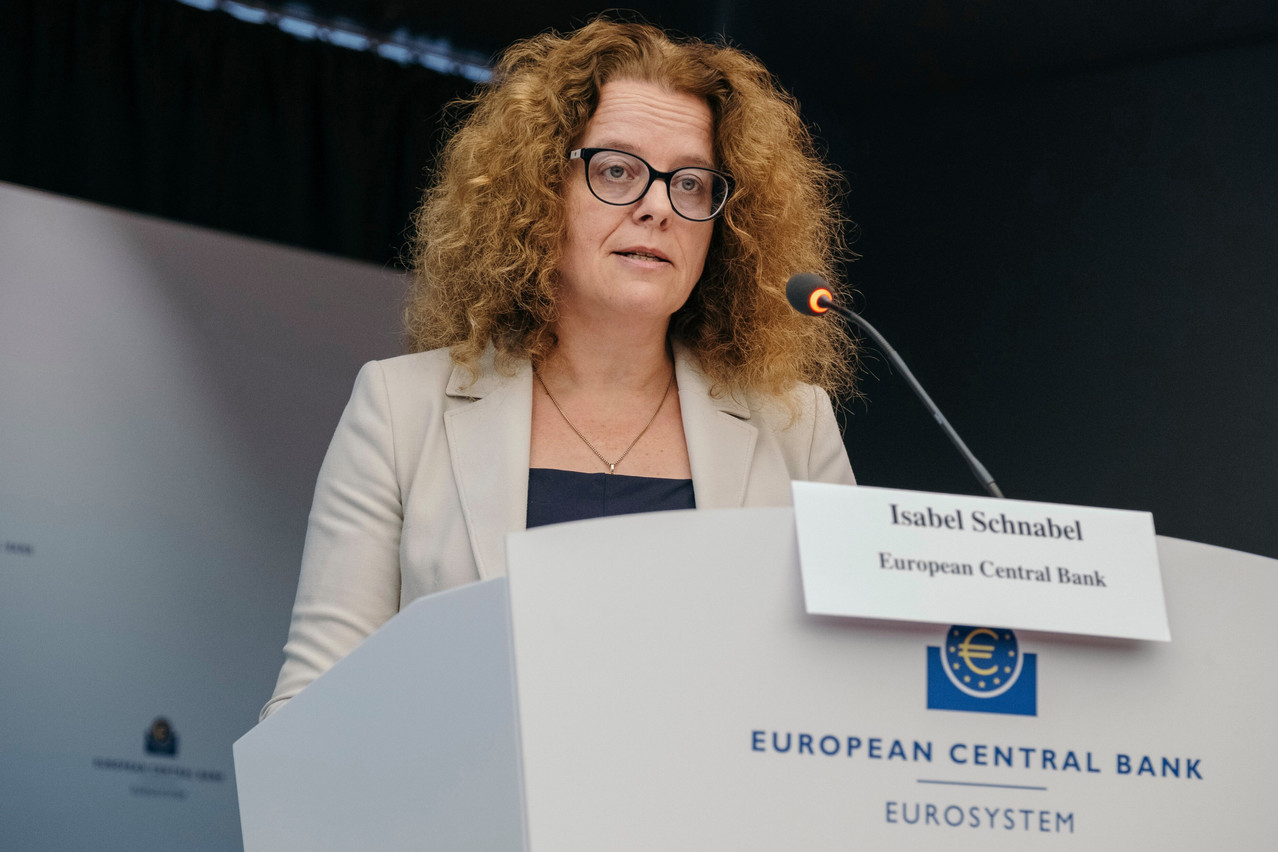
Schnabel’s remarks strike a middle ground, reflecting the ECB’s internal debates. Her emphasis on “data dependency” suggests the central bank is prioritizing flexibility over pre-emptive action. This approach aligns with historical ECB practice, where policy shifts have often been gradual and reactive rather than preemptive.
Key Takeaways
- Inflation remains the top priority: Schnabel reiterated that the ECB will not rush to cut rates, even as some member states see inflation near target.
- Asset purchases are a contingency tool: The ECB has not ruled out reactivating the APP if financial stability risks emerge, particularly in sovereign bond markets.
- Geopolitical risks are a wild card: Supply chain disruptions and energy price volatility could prolong inflationary pressures.
- June 6 meeting is critical: The ECB’s next policy announcement will set the tone for the remainder of 2026.
- Households and businesses face mixed signals: While the ECB aims to balance stability and growth, the cost-of-living crisis remains a pressing concern.
What to Watch Next
The next major checkpoint for ECB watchers is the June 6 Governing Council meeting. In the interim, keep an eye on the following developments:
- The release of May Eurozone inflation data (June 1), which could influence market expectations.
- Updates from the IMF’s World Economic Outlook (June 4), which may provide additional context on global growth risks.
- Statements from other ECB officials, including President Christine Lagarde, who may offer further clarity on the policy outlook.
For readers seeking deeper insights, the ECB’s full policy calendar and the latest Economic Bulletin provide comprehensive updates on the central bank’s activities and projections.
As Europe navigates an uncertain economic landscape, Schnabel’s interview serves as a reminder that the ECB’s decisions will shape the continent’s trajectory in the months ahead. Whether through interest rates, asset purchases, or forward guidance, the central bank’s actions will have ripple effects across households, businesses, and financial markets. The next few weeks will be telling.
What are your thoughts on the ECB’s approach? Share your perspectives in the comments below, and don’t forget to follow World Today Journal for real-time updates on this developing story.
Keep reading