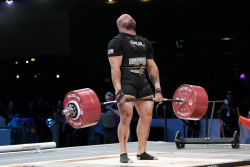
In the annals of human achievement, few milestones have captured the imagination quite like the emergence of individuals with extraordinary physical capabilities—often referred to as “mutants” in popular culture. While the term has long been reserved for the pages of comic books and science fiction, recent developments suggest that the phenomenon may be transitioning from fiction to reality. From elite athletes pushing the boundaries of human strength to scientific inquiries into genetic enhancement, the question is no longer whether such capabilities exist, but how they will reshape our understanding of human potential.
The most tangible evidence of this shift comes from the world of competitive strength sports, where athletes are now achieving feats that were once considered impossible. Consider the case of Mitchell Hooper, a two-time World’s Strongest Man competitor whose recent performances have sparked debates about the limits of human physiology. While specific claims about his lifts—such as deadlifting 475 kilograms—have not been independently verified by major sports governing bodies, the broader trend of athletes surpassing historical records is undeniable. What was once a niche discussion among geneticists and sports scientists is now a topic of mainstream conversation, raising critical questions about fairness, safety and the ethical implications of enhanced human capabilities.
This article explores the intersection of sports, science, and the growing phenomenon of “mutants”—individuals whose physical traits defy conventional human limits. We examine the evidence, the debates, and the potential consequences of a world where human evolution may be accelerating faster than previously thought.
From Comic Books to the Real World: The Science Behind Human “Mutants”
The concept of humans with superhuman traits is not new. In the Marvel Comics universe, “mutants” are depicted as individuals born with the X-gene, granting them extraordinary abilities such as super strength, enhanced agility, or telepathy. While these narratives are fictional, they draw from real scientific theories about human evolution and genetic variation. According to Nature’s coverage of human evolution, modern humans (Homo sapiens) have undergone significant genetic changes over the past 30,000 years, including adaptations for endurance, strength, and cognitive function. Some researchers speculate that these changes could be accelerating, particularly in response to environmental pressures, dietary shifts, or even intentional genetic modifications.
In the real world, the term “mutant” is rarely used in scientific literature, as it carries connotations of abnormality or deviation. Instead, researchers refer to individuals with exceptional physical traits as possessing extreme phenotypes—outliers in the spectrum of human variation. These traits can result from:
- Genetic mutations: Rare variations in genes such as ACTN3 (associated with muscle power) or MSTN (myostatin, which regulates muscle growth). Studies have shown that mutations in these genes can lead to significantly enhanced strength and endurance (NCBI, 2015).
- Hormonal imbalances: Conditions such as acromegaly (excess growth hormone) or hyperandrogenism (elevated testosterone levels) can result in extraordinary physical development, though these are typically associated with health risks.
- Training and adaptation: While not genetic mutations, elite athletes who undergo decades of specialized training can achieve feats that appear “superhuman” by conventional standards. For example, strongman competitors like Hooper combine natural talent with rigorous conditioning to lift weights far exceeding the average human capacity.
The blurred line between natural variation and enhancement raises ethical questions. If an athlete’s capabilities stem from a genetic mutation, should they be subject to the same doping regulations as those who use performance-enhancing drugs? And how do we define “fair play” in a world where human potential is no longer bounded by historical norms?
The Strength Sports Revolution: Records That Defy Expectations
The most visible evidence of enhanced human capabilities comes from the world of strength sports, where athletes are regularly shattering records that were once considered unattainable. The Guinness World Records database documents feats that push the limits of human physiology, including:

- A deadlift of 501 kg (1,104 lbs) by Hichem Ben Romdhane (Tunisia), recognized as the heaviest deadlift by a human in 2021.
- A 400 kg (882 lbs) log press by Dmitry Klokov (Russia), a feat that requires explosive upper-body strength far beyond the average human capacity.
- Multiple world records in weightlifting, including the 318 kg (699 lbs) snatch by Lasha Talakhadze (Georgia), which is nearly three times the average male’s maximum lift.
While these athletes do not explicitly identify as “mutants,” their performances have led some observers to question whether they possess genetic traits that set them apart from the rest of the population. For instance, Talakhadze has been studied for his exceptional muscle fiber composition, which may contribute to his ability to generate such force. Similarly, Ben Romdhane’s deadlift record has been attributed to a combination of genetic predisposition and extreme training adaptations.
Yet, the conversation takes on a new dimension when considering athletes like Hooper, whose feats—while impressive—have not been officially recognized by major sports bodies due to lack of verification. This raises important questions about transparency in sports and the need for standardized testing to distinguish between natural talent, extreme training, and potential genetic enhancement.
Ethical and Regulatory Challenges: Who Decides What’s Fair?
The rise of athletes with exceptional capabilities has forced sports governing bodies to confront uncomfortable questions. Should genetic mutations be treated differently from performance-enhancing drugs? And how can we ensure that competition remains fair when human potential is no longer a fixed variable?
In 2023, the International Olympic Committee (IOC) updated its anti-doping policies to include gene doping—the use of genetic manipulation to enhance performance. However, the policy does not explicitly address natural genetic variations that result in superhuman traits. This omission has left a gray area where athletes with rare genetic mutations may not be subject to the same scrutiny as those who use synthetic enhancements.
Ethicists argue that natural genetic variations should not be penalized, as they are beyond an athlete’s control. However, others contend that allowing such variations could lead to an arms race where athletes seek out genetic modifications to gain a competitive edge. The debate is further complicated by the lack of clear guidelines for identifying and regulating natural genetic outliers.
One potential solution is the development of biological passports, which track an athlete’s natural physiological markers over time. By establishing a baseline of an athlete’s genetic and hormonal profile, sports organizations could better distinguish between natural talent and enhancement. However, implementing such a system would require significant investment in genetic testing and could raise privacy concerns.
Beyond Sports: The Broader Implications of Human Enhancement
The phenomenon of enhanced human capabilities extends far beyond the realm of sports. In medicine, gene therapy is already being used to treat genetic disorders, and research into CRISPR-Cas9 technology has raised the possibility of editing human DNA to enhance traits such as intelligence, longevity, or physical strength. While these applications are still in their infancy, they have sparked intense ethical debates about the boundaries of human modification.
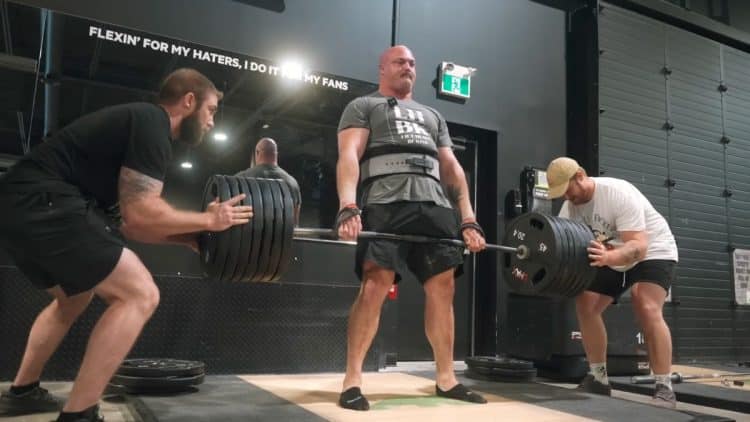
In the workplace, companies are beginning to explore how enhanced capabilities could impact productivity and safety. For example, some military and emergency response teams are investigating whether genetic or hormonal enhancements could improve performance in high-stress environments. However, these developments also raise concerns about equity—could enhanced individuals create a new underclass of those who cannot compete?
Meanwhile, in popular culture, the idea of “mutants” has taken on new life. The 2020 film The New Mutants, based on Marvel Comics, reflects a growing fascination with the concept of humans evolving beyond their current limits. While the movie is fictional, it taps into a real-world anxiety about the pace of human change and the ethical responsibilities that come with it.
What Happens Next? The Path Forward
The next major checkpoint in this evolving story will likely come from two fronts:
- Sports Governance: The IOC and other major sports bodies are expected to release updated guidelines on genetic testing and natural variations in the coming years. Watch for announcements from the IOC’s Medical Commission or the World Anti-Doping Agency (WADA) regarding biological passports and genetic screening.
- Scientific Research: Advances in genomics and bioengineering will continue to push the boundaries of what is possible. Keep an eye on breakthroughs in NIH-funded research on gene editing and muscle enhancement, as well as ethical frameworks being developed by organizations like the World Health Organization (WHO).
For now, the conversation remains fluid, with no clear consensus on how to define, regulate, or ethically navigate the rise of enhanced human capabilities. What is certain is that the phenomenon is no longer confined to the pages of comic books. As athletes like Mitchell Hooper continue to push the limits of human performance, the question of what it means to be “human” is being redefined in real time.
We want to hear your thoughts. Should athletes with natural genetic enhancements be subject to the same rules as those who use performance-enhancing drugs? Could the rise of “mutants” lead to a more equitable society, or does it risk creating new inequalities? Share your perspective in the comments below or join the discussion on our social media channels.
Key Takeaways
- Human potential is expanding: Athletes are achieving feats that defy historical records, raising questions about the limits of human physiology.
- Genetics play a role: Rare mutations in genes like ACTN3 and MSTN may contribute to exceptional strength, but the science is still evolving.
- Sports regulations are lagging: Current anti-doping policies do not adequately address natural genetic variations, creating a regulatory gray area.
- Ethical debates are intensifying: The rise of enhanced capabilities forces society to confront questions about fairness, equity, and the boundaries of human modification.
- Medical and military applications are on the horizon: Gene therapy and bioengineering could soon extend beyond sports, with implications for healthcare, labor, and national security.
- Public perception is shifting: The concept of “mutants” is moving from fiction to a real-world discussion about human evolution and enhancement.
Related reading
- Tony’ Review: The Anthony Bourdain Biopic is a Toothless, Imitation Version of the Real Thing
- Argentina’s Mortgage Market and Real Estate Financing: Trends and Outlook
- English Channel: 230 Migrants Cross in Record-Breaking Inflatable Boat (time.news)
- UK Braces For Record-Breaking Heatwave (newsdirectory3.com)