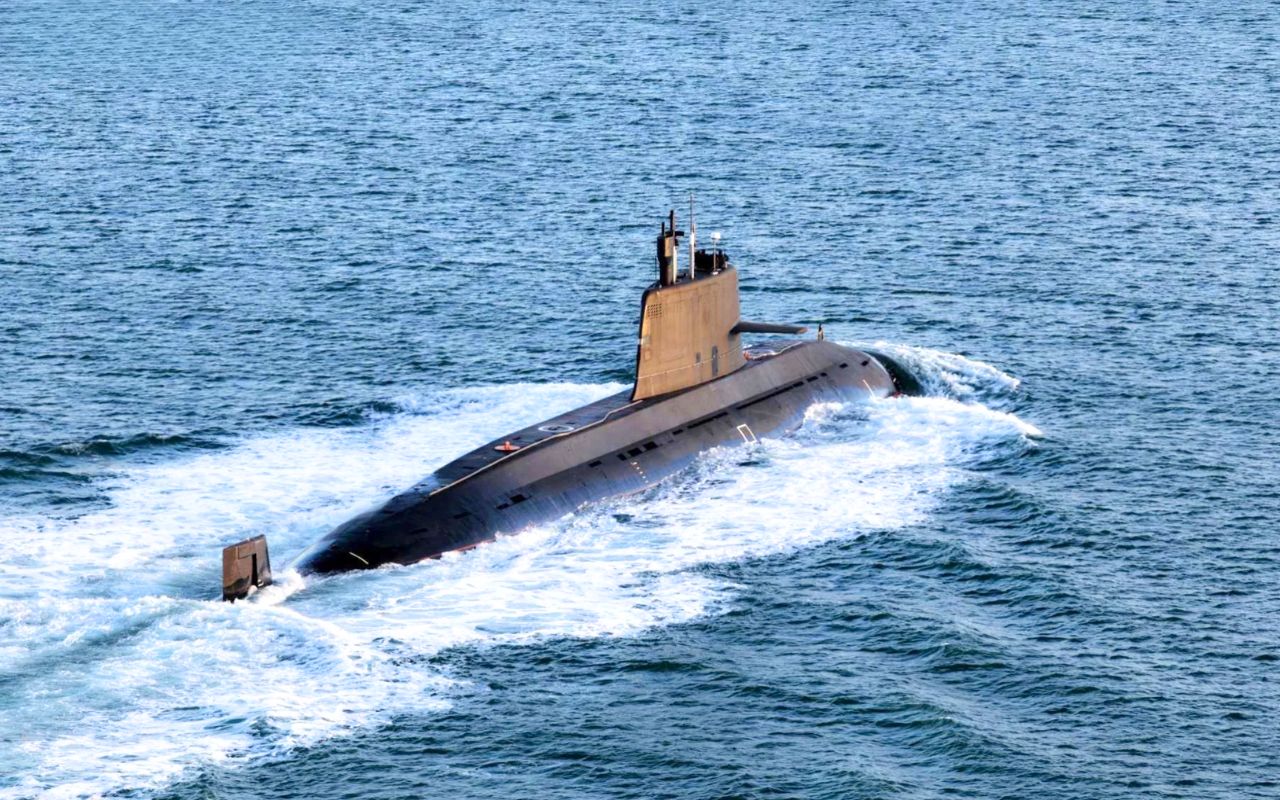
As the geopolitical landscape in the Indo-Pacific continues to evolve, military strategists and defense analysts are closely monitoring emerging technological advancements that could alter the balance of naval power. Central to these discussions is the development of advanced navigation systems designed to function in environments where traditional global positioning systems, such as GPS, are either unavailable or susceptible to disruption. The pursuit of autonomous underwater navigation, particularly through the use of high-precision timing technologies like atomic clocks, represents a sophisticated shift in maritime capabilities.
For decades, the United States Navy has maintained a significant strategic advantage through its mastery of sub-surface operations, relying on a combination of inertial navigation and periodic satellite-based recalibration. However, the maturation of alternative positioning, navigation, and timing (PNT) technologies—often referred to as “GPS-denied” navigation—is prompting a reassessment of how naval forces operate in contested waters. At the heart of this challenge is the integration of quantum-based or miniaturized atomic sensors that allow vessels to maintain precise location tracking without surfacing to receive external signals.
The Technological Shift in Maritime Navigation
At the core of these developments is the fundamental requirement for precision in deep-sea environments. Traditional inertial navigation systems (INS) suffer from “drift” over time, meaning that without an external reference point, the calculated position of a submarine becomes increasingly inaccurate. To mitigate this, modern research is increasingly focused on optical lattice clocks and cold-atom interferometry. These technologies, which rely on the stable oscillations of atoms, offer unprecedented accuracy in measuring time and acceleration, which are the building blocks of dead reckoning.

The strategic imperative for such systems is clear: a submarine that does not need to surface to synchronize its clocks or verify its position via GPS is significantly harder to detect. By reducing the electromagnetic signature emitted by a vessel, naval forces can operate with a higher degree of stealth in sensitive maritime corridors. According to the Defense Advanced Research Projects Agency (DARPA), the goal of modern PNT research is to provide robust, long-term navigation that remains unaffected by the jamming or spoofing of satellite signals.
Strategic Implications for the Indo-Pacific
The focus on these technologies is particularly acute in the Indo-Pacific, a region defined by its complex maritime geography and the high concentration of naval assets. As nations modernize their fleets, the ability to operate autonomously in the South China Sea and the Philippine Sea has become a cornerstone of regional security strategies. The shift toward “GPS-independent” navigation is not merely a technical upgrade. it is a tactical necessity in an era of electronic warfare.

Military analysts note that the integration of these sensors into unmanned underwater vehicles (UUVs) and manned submarines could fundamentally change intelligence, surveillance, and reconnaissance (ISR) missions. If a vessel can traverse vast distances with minimal reliance on external data, the traditional methods of tracking and intercepting such platforms—which often involve monitoring communication bursts or satellite connectivity—become less effective. The U.S. Department of Defense has consistently emphasized the need to maintain technological overmatch in these areas, as outlined in the National Defense Strategy, which prioritizes the development of resilient systems capable of operating in degraded environments.
Challenges and Future Outlook
Despite the promise of atomic navigation, significant engineering hurdles remain. Miniaturizing complex laboratory equipment into a ruggedized, pressure-resistant format suitable for deep-sea deployment is a monumental task. Atomic clocks and quantum sensors are notoriously sensitive to temperature fluctuations, mechanical vibrations, and magnetic interference—all of which are prevalent in the harsh environment of a submarine hull.
the reliance on these systems requires a high level of computational processing power to interpret the data in real-time. As noted by industry experts, the transition from prototype to field-ready hardware typically takes years of rigorous testing and environmental hardening. The Naval Sea Systems Command continues to oversee the integration of advanced sensors across the fleet, balancing the need for innovation with the absolute requirement for operational reliability.
Key Considerations for the Future of Sub-Surface Warfare
- Stealth Preservation: Reducing the need for surface-based signal acquisition directly correlates to a lower probability of detection.
- Resilience Against Electronic Warfare: Systems that do not rely on satellite constellations are inherently immune to GPS-jamming tactics.
- Technological Competition: The global race to master quantum-based navigation is driving significant investment in basic and applied research across several major powers.
As we move toward the latter half of the decade, the focus will likely remain on the refinement of these sensors and their integration into existing naval architectures. The ability to navigate silently and autonomously will remain a top priority for naval planners worldwide. For observers of international security, the next major update will likely come from public procurement announcements or defense budget hearings, where the allocation of funding for “next-generation PNT” will signal the pace of deployment.

We invite our readers to share their thoughts on the evolution of naval technology in the comments section below. Stay tuned to World Today Journal for further updates as we continue to track the intersection of emerging science and global geopolitics.
Keep reading