MWC Barcelona 2024: Telecom Giants Form Alliance to Develop AI-Powered Customer Service Tools
At the 2024 Mobile World Congress (MWC) in Barcelona, five of the world’s largest telecom operators announced the formation of the Global Telco AI Alliance (GTAA), a groundbreaking collaboration to develop large language models (LLMs) specifically designed for the telecom industry. The alliance—comprising Deutsche Telekom, e& Group, Singtel, SoftBank and SK Telecom—marks a pivotal shift toward AI-driven customer interactions, with plans to launch a joint venture company dedicated to training multilingual models optimized for telecom-specific use cases.
The announcement underscores a broader industry trend at MWC 2024, where AI and 5G innovations took center stage. While concept devices like AI-powered laptops and phones grabbed headlines, the GTAA’s focus on operational AI—particularly in customer service—could have a more immediate and tangible impact on millions of users worldwide. Here’s what the alliance means for telecom operators, consumers, and the future of digital assistance.
Key Takeaways:
- The GTAA aims to create telco-grade LLMs capable of handling customer queries in Korean, English, German, Arabic, and Japanese, with plans to expand to additional languages.
- The joint venture will focus on multilingual digital assistants and chatbots, designed to improve response accuracy for telecom-specific issues (e.g., billing, network troubleshooting, plan upgrades).
- Deutsche Telekom alone already handles over 100,000 AI-assisted customer service dialogues monthly in Germany, signaling early adoption of the technology.
- The alliance targets a global customer base of approximately 1.3 billion people across 50 countries, reflecting the scale of its ambition.
The Global Telco AI Alliance: Why It Matters
The GTAA’s primary goal is to address a critical pain point for telecom operators: language barriers and domain-specific knowledge gaps in AI customer service. Unlike generic LLMs (e.g., those trained on broad internet data), the alliance’s models will be fine-tuned for telecom terminology, enabling them to understand nuanced queries such as:
- “Why is my 5G signal dropping in this area?”
- “How do I upgrade my plan without losing data?”
- “What’s the status of my international roaming charge?”
“We want our customers to experience the best possible service,” a Deutsche Telekom spokesperson stated during the MWC 2024 launch. “AI helps us do that. Already today, more than 100,000 customer service dialogues a month in Germany are handled by generative AI.”
This initiative builds on recent trends at MWC, where the event’s theme, “Infinite AI,” highlighted AI’s expanding role across industries. However, the GTAA stands out by focusing on vertical-specific AI—a strategy that could set a new standard for sectoral LLMs in healthcare, finance, and beyond.
From Alliance to Action: The Joint Venture Plan
The five operators confirmed at MWC 2024 that they are in the process of establishing a joint venture company to oversee the development and deployment of the LLMs. While the exact timeline for the JV’s formation wasn’t disclosed, the partners emphasized that:
- Model training has already begun, with a focus on telecom-specific datasets.
- The goal is to launch the first commercial applications within 2024, though no specific date was provided.
- Additional languages may be added based on member consensus, with Korean, English, German, Arabic, and Japanese as the initial priority.
Why multilingual support? The telecom industry serves diverse markets where language proficiency can determine customer satisfaction. For example:
- In South Korea, SK Telecom’s AI assistant must handle Korean slang and technical terms.
- In Germany, Deutsche Telekom’s system needs to navigate complex billing regulations in German.
- In Arabic-speaking regions, e& Group’s models must account for dialectal variations.
The alliance’s scale is ambitious: with a combined customer base of 1.3 billion people across 50 countries, the JV’s success could redefine how telecom companies interact with users globally. For context, this represents roughly 16% of the world’s population, according to Worldometer’s 2024 estimates.
AI at MWC 2024: Beyond Customer Service
While the GTAA’s focus on customer service is immediate, MWC 2024 also spotlighted other AI-driven innovations in telecom, including:
- 5G-optimized AI edge computing: Reducing latency for real-time AI applications (e.g., autonomous vehicles, remote surgery).
- AI-powered network optimization: Predictive maintenance to reduce outages.
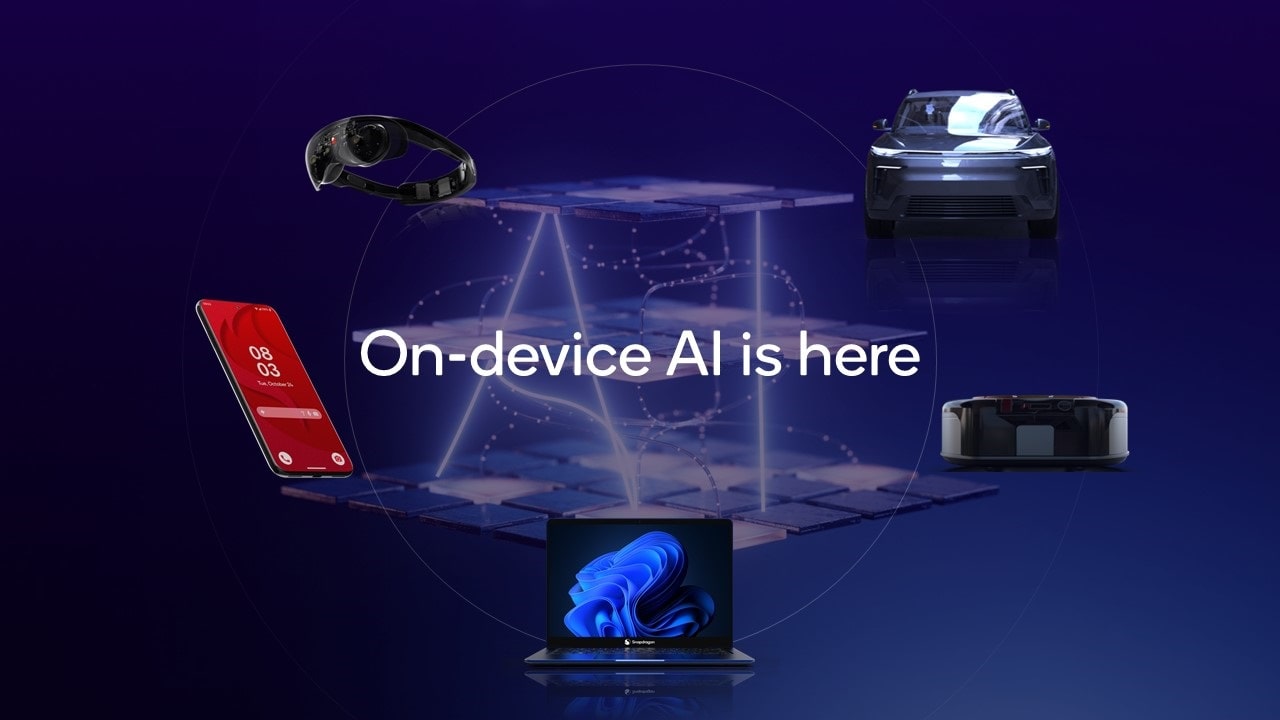
- Concept devices: Prototypes of AI-assisted smartphones and laptops (e.g., exhibits by Huawei and Samsung at MWC 2024).
The GSMA, the organization behind MWC, also announced Open Telco AI, an open-source initiative to accelerate AI development for telecom operators. This complements the GTAA’s work by providing a collaborative framework for sharing AI tools and best practices.
What’s next for the GTAA? The alliance’s roadmap includes:
- Phase 1 (2024):** Pilot deployments of multilingual chatbots in member countries.
- Phase 2 (2025–2026):** Expansion to new languages and regions, with potential partnerships with non-member operators.
- Long-term:** Integration with emerging technologies like 6G and non-terrestrial networks (NTN), as hinted by GSMA’s €100 million funding announcement for AI and 6G research.
Who Benefits—and Who Might Lag Behind?
For consumers: The GTAA’s LLMs could lead to faster, more accurate customer service—reducing wait times and improving issue resolution. Early adopters like Deutsche Telekom’s AI system already handle over 100,000 monthly dialogues, suggesting significant scalability. However, concerns remain about:
- Data privacy:** Will customer interactions with AI assistants be stored securely?
- Bias mitigation:** Can the models handle regional dialects and cultural nuances?
- Human oversight:** Will complex issues still require human agents?
For competitors: Operators not part of the GTAA—such as AT&T, Verizon, Vodafone, and China Mobile—may face pressure to accelerate their own AI investments. The alliance’s focus on multilingual, domain-specific LLMs could set a new benchmark for industry standards.
For regulators: The European Union’s AI Act and similar frameworks may influence how the GTAA’s models are deployed, particularly around transparency and accountability.
FAQ: What You Need to Know About the Global Telco AI Alliance
1. Which telecom companies are part of the GTAA?
The founding members are Deutsche Telekom, e& Group, Singtel, SoftBank, and SK Telecom. The alliance is open to additional operators in the future.
2. When will the AI-powered chatbots be available to customers?
The alliance aims to launch pilot programs in 2024, with full deployment expected in 2025–2026. Exact timelines depend on regulatory approvals and technical readiness.
3. How will this alliance affect smaller telecom providers?
Smaller operators may struggle to compete with the GTAA’s resources but could benefit from open-source tools like GSMA’s Open Telco AI or potential partnerships with the alliance.
4. Are there risks to using AI in customer service?
Yes. Potential risks include data breaches, algorithmic bias, and over-reliance on automation. The GTAA has not yet disclosed detailed safeguards, but industry standards (e.g., NIST’s AI risk management framework) may apply.
5. Can consumers opt out of AI-assisted service?
This depends on individual operators’ policies. Some companies (e.g., Deutsche Telekom) already offer human agent escalation for complex issues. The GTAA has not specified a universal opt-out mechanism.
What’s Next for the Global Telco AI Alliance?
The next major milestone for the GTAA is the official formation of its joint venture company, expected to be completed in 2024. Consumers can expect updates from participating operators (e.g., Deutsche Telekom, Singtel) as pilot programs roll out.
For deeper insights, follow:
- The GSMA’s official updates on Open Telco AI.
- Participating operators’ press releases (e.g., RCR Wireless for alliance news).
- Regulatory developments from the EU AI Act and U.S. FTC guidelines.
How will AI transform your telecom experience? Share your thoughts in the comments below—or let us know if you’ve already interacted with an AI customer service tool. Don’t forget to share this article with colleagues in tech and telecom!
Worth a look