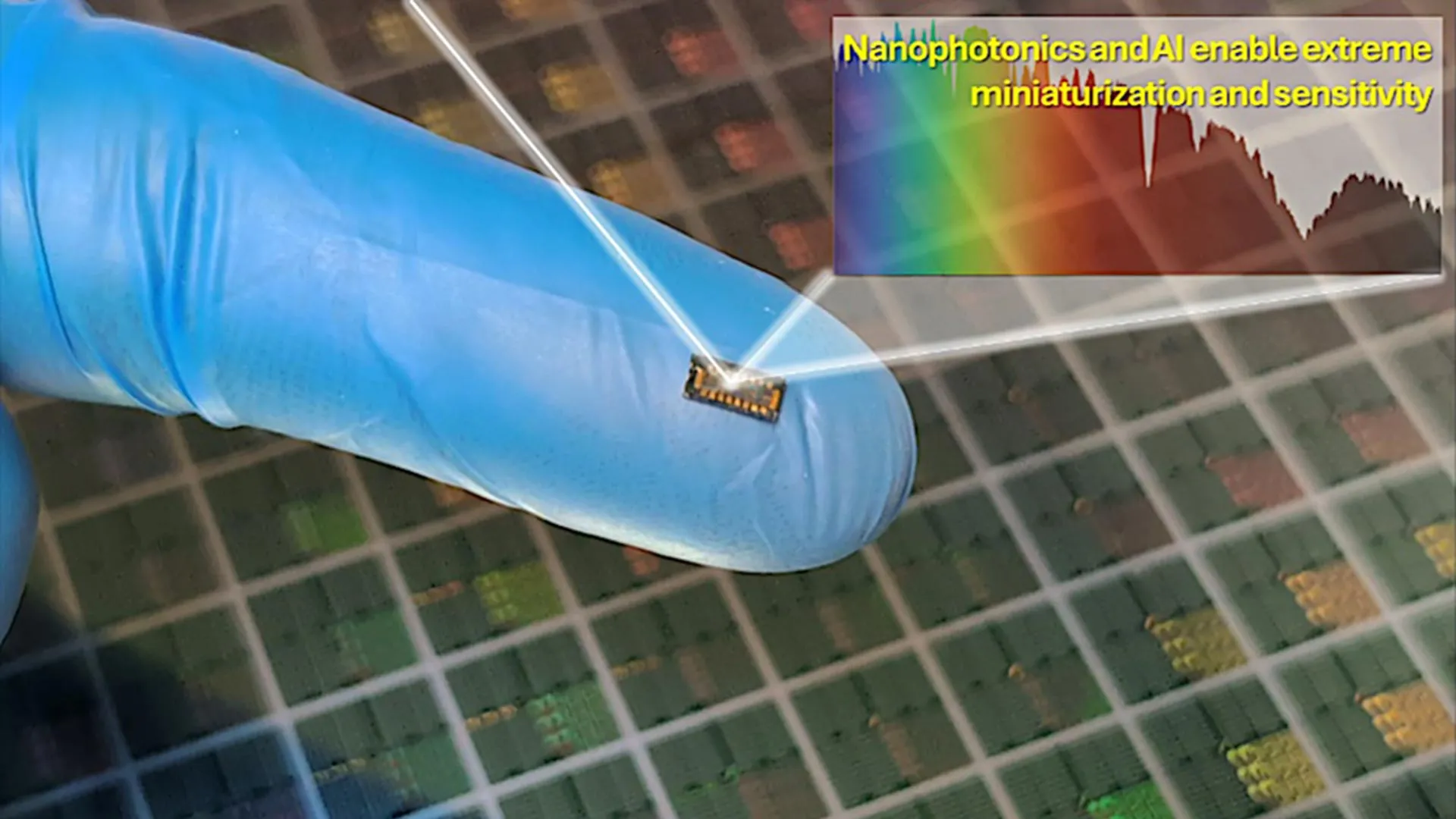
In a significant leap for portable diagnostic technology, researchers at the University of California, Davis, have developed a new AI-powered spectrometer chip that promises to shrink high-end laboratory analysis tools to the size of a grain of sand. By integrating advanced silicon photonics with machine learning algorithms, the team has created a system capable of performing precise spectral analysis—a task typically reserved for bulky, benchtop equipment—using a device that can fit into the palm of a hand or be embedded into everyday consumer electronics.
Spectral analysis is a fundamental method used across various scientific disciplines, from identifying the chemical composition of unknown substances to monitoring environmental health and food safety. Traditionally, spectrometers—the instruments that measure the interaction between light and matter—are large, delicate, and expensive. The new approach from UC Davis researchers seeks to democratize this capability, potentially bringing lab-grade chemical and light analysis to the field, the home, or even a smartphone interface.
Shrinking the Laboratory: The Role of Silicon Photonics
The core innovation lies in the miniaturization of optical components. While traditional spectrometers rely on prisms or diffraction gratings to separate light into its component wavelengths, the UC Davis team utilized a silicon-on-insulator platform. This approach allows the researchers to etch complex optical circuits onto a tiny chip, mimicking the function of large-scale hardware using integrated photonics. According to research published in Nature Communications, this architectural shift is critical for maintaining high resolution in a footprint that measures only a few square millimeters.
By shrinking the physical hardware, the researchers faced a classic engineering hurdle: signal degradation. As components become smaller, the ability to capture and process light accurately often diminishes. This is where machine learning integration becomes the primary driver of the device’s efficacy. The AI component is trained to interpret the raw spectral data, effectively “cleaning” the signal and reconstructing the chemical signature with high fidelity, even when the underlying hardware is significantly reduced in scale.
Why This Matters for Global Tech Trends
The implications of this technology extend far beyond the laboratory. In the realm of consumer electronics, such a sensor could eventually allow users to scan food for allergens, check the purity of water, or monitor personal health metrics in real-time. For industries, this means “lab-on-a-chip” applications could revolutionize supply chain quality control, allowing inspectors to perform on-the-spot testing without the need to send samples to external facilities.
The integration of artificial intelligence into sensor hardware is a growing trend in the semiconductor industry. As noted in recent industry analyses, the move toward “smart” sensors that process data at the edge—meaning on the device itself rather than in the cloud—is essential for reducing latency and power consumption. By offloading the complex analytical work to a neural network embedded within the silicon, the UC Davis team has demonstrated a viable path toward making sophisticated spectroscopy accessible for daily use.
Key Takeaways: Understanding the Impact
- Miniaturization: The device compresses traditional spectroscopic hardware into a chip-scale format, removing the need for traditional, bulky laboratory equipment.
- AI-Driven Accuracy: Machine learning algorithms are used to compensate for the physical limitations of smaller sensors, ensuring the output remains accurate and actionable.
- Versatility: Potential applications range from environmental monitoring and food safety to portable medical diagnostics and industrial quality control.
- Accessibility: The technology aims to lower the barrier to entry for chemical analysis, moving it out of specialized labs and into the hands of field researchers and potentially consumers.
The Road Ahead: Scaling and Integration
While the initial results are promising, the transition from a laboratory prototype to a mass-produced consumer component is a complex process. The researchers are currently focusing on improving the fabrication yields to ensure that these chips can be manufactured at scale and at a cost point suitable for integration into portable electronics. The University of California, Davis, continues to lead in the development of these advanced integrated systems, and the team is now looking toward potential collaborations with industry partners to refine the software-hardware interface.


As we look toward the next phase of development, the research community is keeping a close watch on future filings and peer-reviewed updates regarding the chip’s stability in various environmental conditions. For tech enthusiasts and industry professionals alike, this development represents a fundamental change in how we interact with the invisible chemical world around us.
What are your thoughts on the future of portable diagnostics? Join the conversation in the comments section below, and stay tuned to World Today Journal for further updates on this developing story as more technical milestones are reached.