
In everyday conversation, the terms “weather” and “climate” are often tossed around as if they were interchangeable. You might hear someone complain about the “climate” being particularly rainy this morning, or remark that the “weather” in a specific region is always tropical. While these linguistic slips are common, in the realms of meteorology and atmospheric science, the distinction between the two is not merely academic—it is fundamental to how we understand, predict, and respond to the changing state of our planet.
Confusing these two concepts can lead to significant misunderstandings, particularly in the heated public discourse surrounding environmental shifts. To understand the mechanics of our atmosphere, one must first master the divide between the immediate, transient state of the air and the long-term statistical patterns that define a region’s character.
Defining Weather: The Atmosphere in the Moment
Weather refers to the short-term state of the atmosphere at a specific place and time. It is the immediate condition of the air around us—the phenomena we experience when we step outside our doors. Weather is highly dynamic, characterized by rapid fluctuations that can occur over minutes, hours, or days.
When meteorologists track the weather, they are measuring a specific set of variables at a single point in time or over a incredibly brief period. These variables include:
- Temperature: The degree of heat or cold in the atmosphere.
- Precipitation: Any form of water—rain, snow, sleet, or hail—falling from the sky.
- Humidity: The amount of water vapor present in the air.
- Atmospheric Pressure: The force exerted by the weight of the air above a given point.
- Wind Speed and Direction: The movement of air masses across the landscape.
- Cloud Cover: The fraction of the sky obscured by clouds.
Because weather is driven by complex, chaotic interactions between these variables, it is inherently difficult to predict with absolute certainty beyond a few days. A sudden thunderstorm, a heatwave, or a localized blizzard are all expressions of weather. As NOAA explains, weather is what you get when you look out your window; it is the immediate, localized, and temporary state of the atmosphere.
Defining Climate: The Long-Term Statistical Baseline
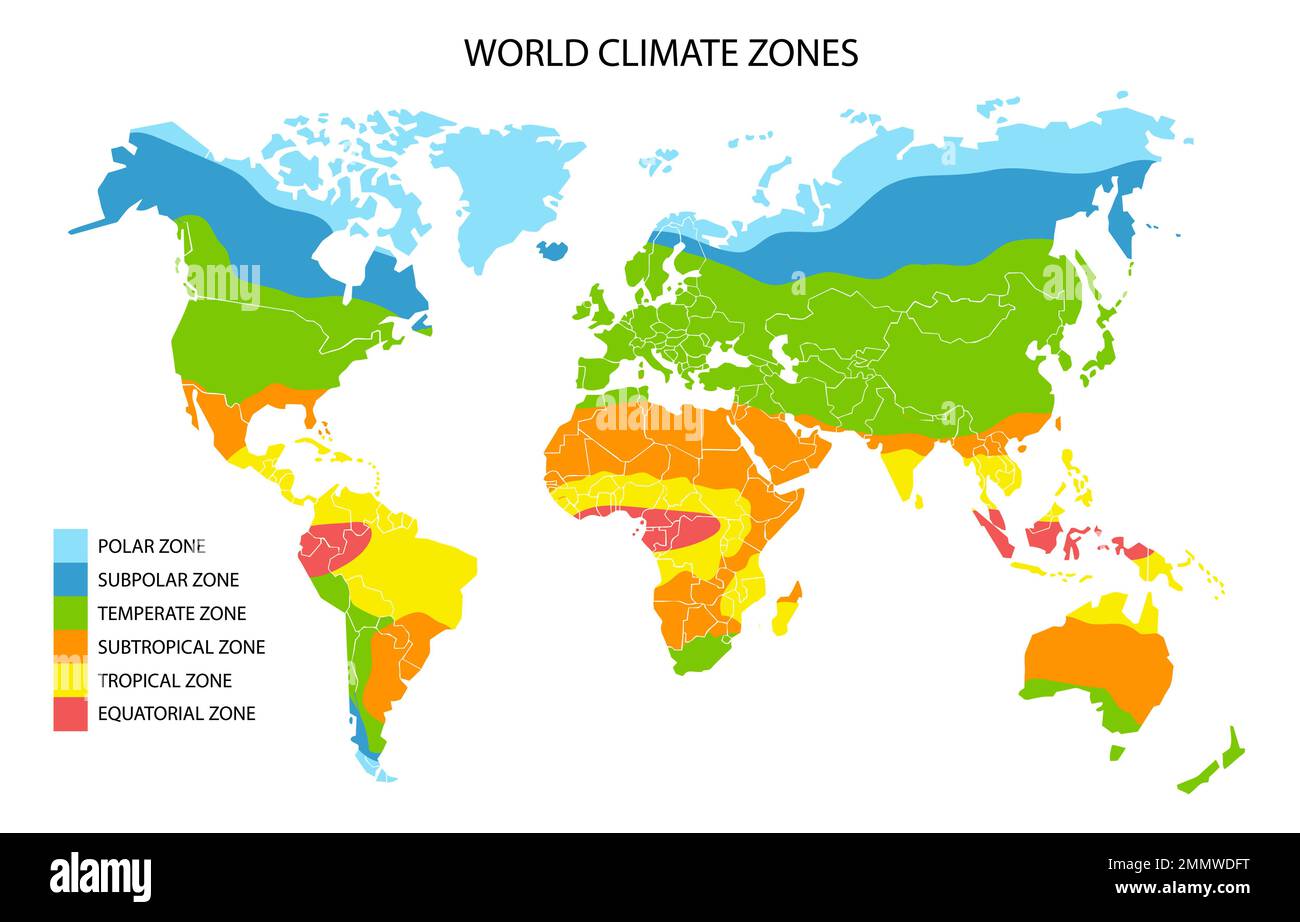
Climate, by contrast, is the long-term pattern of weather in a particular area. It is not a single event, but rather the statistical average of weather conditions over an extended period. While weather tells you what is happening right now, climate tells you what is “normal” for a specific location.
To establish a reliable climate profile, scientists do not look at a single season or even a single year. According to standards maintained by the World Meteorological Organization (WMO), a climate is typically defined by observing weather patterns over a minimum of 30 years. This multi-decade window allows researchers to filter out the “noise” of temporary weather anomalies and identify the underlying trends.
Climate encompasses the averages and extremes of various atmospheric elements. For example, a desert climate is defined not by a single day of heat, but by the long-term trend of low precipitation and high average temperatures. Similarly, a maritime climate is characterized by the consistent influence of the ocean, leading to moderated temperatures and specific humidity patterns over decades.
If weather is the individual player’s performance in a single game, climate is the player’s career batting average. One poor game (a cold snap) does not change the player’s overall standing (their climate), just as one hot day does not change the climate of a temperate region.
The Wardrobe Analogy: A Simple Way to Remember
To bridge the gap between these two scientific concepts, educators often use a simple analogy involving clothing. It is perhaps the most effective way to internalize the difference for a general audience.
Weather is your outfit: On any given day, you choose what to wear based on the immediate conditions. If it is raining, you grab an umbrella; if it is hot, you wear shorts. Your outfit is a response to the current, temporary state of the environment.
Climate is your wardrobe: Your wardrobe is the collection of all the clothes you own, which reflects the environment you live in. If you live in the Arctic, your wardrobe will consist mostly of heavy coats and thermal gear. If you live in the tropics, your wardrobe will be dominated by light, breathable fabrics. You don’t buy a parka because it’s snowing today; you own a parka because the climate dictates that snow is a regular occurrence.
Why the Distinction Matters: Addressing Climate Change Misconceptions
The distinction between weather and climate is perhaps most critical when discussing global warming and climate change. One of the most persistent fallacies in public debate is the use of short-term weather events to argue against long-term climatic shifts.
A common argument follows this logic: “How can the planet be warming if we just had the coldest winter on record in this city?” This reasoning is fundamentally flawed because it treats a single weather anomaly as a contradiction of a long-term trend. A record-breaking cold snap is a weather event; the steady rise in global average temperatures over the last century is a climate trend.
As NASA notes, even as the global climate warms, we will still experience extreme weather, including cold spells. However, a warming climate changes the frequency, intensity, and duration of these weather events. For instance, a warmer atmosphere can hold more moisture, which may lead to more intense precipitation events, or it can alter jet stream patterns, causing prolonged heatwaves or unusual cold snaps in unexpected places.
Understanding this distinction is vital for policy-making, urban planning, and disaster preparedness. We build sea walls based on climate projections (sea-level rise), but we issue evacuation orders based on weather forecasts (a specific hurricane’s path).
Comparison Summary: Weather vs. Climate
| Feature | Weather | Climate |
|---|---|---|
| Timeframe | Short-term (minutes to days) | Long-term (decades, typically 30+ years) |
| Focus | Immediate atmospheric conditions | Statistical averages and patterns |
| Variability | Highly volatile and rapidly changing | Relatively stable with gradual shifts |
| Predictability | Difficult beyond a week or two | Predictable trends and seasonal cycles |
| Example | “It is snowing right now.” | “This region has mild winters.” |
Frequently Asked Questions
Can weather change the climate?
While individual weather events are too brief to change a climate, the cumulative effect of weather patterns over long periods is what defines and shifts the climate. Large-scale changes in the atmosphere (such as increased greenhouse gas concentrations) alter the energy balance of the planet, which in turn shifts the long-term weather patterns, effectively changing the climate.

Is “Global Warming” the same as “Climate Change”?
They are related but not identical. Global warming refers specifically to the long-term increase in Earth’s average surface temperature due to rising levels of greenhouse gases. Climate change is a broader term that encompasses global warming but also includes all other changes occurring to our planet, such as melting glaciers, shifting precipitation patterns, and more frequent extreme weather events.
Why do we need 30 years to define climate?
Meteorological data is subject to significant year-to-year variability caused by phenomena like El Niño and La Niña. A single year might be unusually dry or wet due to these cycles. By using a 30-year average, scientists can smooth out these annual fluctuations to see the true underlying climatic signal.
As scientific monitoring of our atmosphere becomes more sophisticated, the ability to distinguish between a passing storm and a permanent shift in our environment becomes increasingly vital for the survival of global ecosystems and human infrastructure. The next major milestone in climate science will involve the integration of real-time weather data with increasingly granular long-term climate models to better predict how our changing world will behave.
What are your thoughts on the impact of climate shifts in your region? We invite you to share your observations and join the discussion in the comments below.
Worth a look