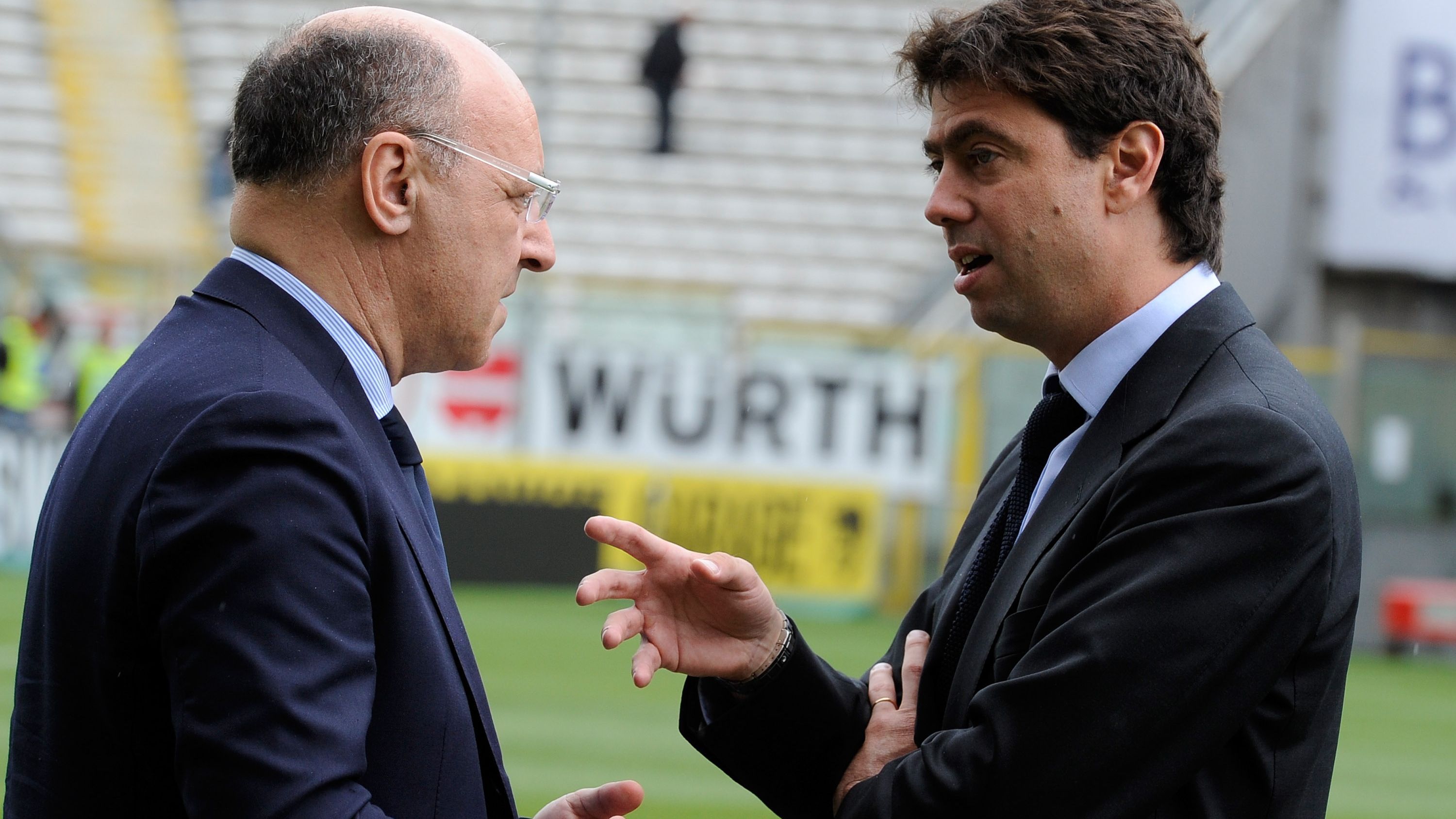
In the high-stakes world of Italian football management, few figures command as much influence or carry as much history as Giuseppe Marotta. Having navigated the corridors of power at both Juventus and Inter Milan, his perspective on the shifting landscapes of Serie A is uniquely authoritative. Recently, the Inter president addressed long-standing questions regarding his departure from Turin, moving to clarify the narrative that his exit was primarily driven by the arrival of Cristiano Ronaldo in 2018.
For years, the footballing press and supporters alike have speculated that the high-profile signing of the Portuguese superstar created an irreparable rift between the executive and the club’s leadership. However, in recent discussions, Marotta has offered a more nuanced explanation, suggesting that the decision was rooted in a broader strategic shift within the Bianconeri’s boardroom. According to his account, the then-president Andrea Agnelli sought to implement a generational change in management and redefine roles, leading to a natural conclusion of their professional partnership.
The transition of Giuseppe Marotta from Juventus to Inter Milan stands as one of the most significant administrative shifts in modern European football. Since joining the Nerazzurri in 2018, Marotta has been instrumental in reshaping the club’s financial and sporting identity, culminating in their recent domestic successes. His ability to navigate complex transfer markets while maintaining fiscal discipline has become a hallmark of his tenure, earning him widespread respect across the International Sports Press Association and beyond.
Reframing the Juventus Departure
The departure of Marotta from Juventus in September 2018 marked the end of an era that saw the club secure seven consecutive Scudetto titles. While the narrative of a clash over the Ronaldo investment persists, Marotta has consistently pointed toward the organizational restructuring desired by ownership as the primary catalyst. As noted in reports detailing his transition, the club aimed to prioritize a new vision that required different leadership dynamics, a standard procedure in top-tier professional sports management where long-term strategic alignment is paramount.
Understanding the internal politics of a club as storied as Juventus requires looking at the broader context of the 2018 season. The club was aiming to solidify its status as a permanent fixture in the elite tier of the UEFA Champions League, an ambition that necessitated massive capital expenditure. The official confirmation of the Cristiano Ronaldo transfer highlights the scale of the commitment Juventus made during that period, involving a €100 million fee paid over two financial years, excluding additional costs. This era represented a gamble on immediate European success, a strategy that differed from the incremental growth model Marotta had previously championed.
Building a New Legacy at Inter
Since taking the helm at Inter Milan, Marotta has focused on sustainable growth and competitive excellence. His leadership has been defined by a pragmatic approach to the transfer market, often securing high-value talent through free agency or strategic loan agreements. This approach was central to the club’s recent Scudetto victory, a milestone that Marotta has described as a deeply emotional achievement. It serves as a testament to the stability he has brought to a club that had spent years searching for a consistent identity in the post-Treble era.

Current discussions regarding the squad’s future, specifically concerning key players like Alessandro Bastoni, reflect Marotta’s desire to maintain a core group of talent. He has been clear in his public statements that there is no intent to dismantle the foundation of the current team. Regarding the transfer rumors surrounding Bastoni, Marotta has emphasized that the defender is central to the project, noting that no formal requests for a departure have been made by the player. This commitment to continuity is a critical component of his strategy to push for deeper runs in the UEFA Champions League, a trophy that remains a primary objective for his tenure at San Siro.
The Champions League Ambition
The pursuit of European glory remains the ultimate benchmark for any elite club manager. Marotta’s experience in the Champions League—having guided Juventus to two finals—informs his current strategy at Inter. He emphasizes that winning in Europe requires more than just talent; it requires a culture of excellence and the ability to manage the immense pressure that comes with knockout football. His focus remains on bolstering the technical staff and ensuring that the squad is equipped to handle the rigorous demands of a condensed European calendar.
As the club looks toward the next season, the integration of new talent and the retention of established stars like Bastoni remain the priorities. Marotta’s vision for Inter is one of sustained competitiveness, where the club is not merely a participant in the Champions League but a consistent contender. His recent remarks, as documented by official UEFA competition data, suggest that the focus is on building a robust, resilient team capable of competing on multiple fronts without compromising the club’s long-term financial health.
Key Takeaways
- Strategic Alignment: Marotta’s departure from Juventus was driven by a fundamental change in club strategy and leadership roles, rather than a single personality conflict.
- Inter’s Stability: Under Marotta’s management, Inter has focused on a sustainable model that balances competitive success with fiscal responsibility.
- Player Retention: The club is committed to keeping core assets like Alessandro Bastoni to ensure continuity and performance stability.
- European Focus: The primary objective for the coming seasons is to elevate Inter’s standing in the UEFA Champions League through consistent, high-level squad management.
Looking Ahead
As Serie A enters its next phase, the administrative decisions made in the boardroom will continue to shape the on-field results. Marotta’s tenure at Inter continues to be a case study in effective sports management. For fans and analysts, the next major checkpoint will be the upcoming summer transfer window, where the club is expected to refine its squad to meet the demands of the expanded Champions League format. Official updates regarding squad movements and contractual renewals will be available through the club’s official institutional channels as they become finalized.

The landscape of Italian football is evolving, and leaders like Marotta are at the heart of that transformation. Whether his strategies will lead Inter to the pinnacle of European football remains the most compelling narrative in Serie A. We invite our readers to share their thoughts on these developments in the comments section below, as we continue to track the progress of the Nerazzurri and the broader implications for the sport.
Keep reading
- MLB 2026 Home Run Derby: Live Updates, Participants, and Longest Home Runs
- Since the provided content contains only an image link and the phrase “OH MY GOODNESS!”, there is no specific subject matter to optimize for. However, assuming this is a sports-related reaction piece (given the “sportingnews.com” source), here is the most effective high-CTR, SEO-friendly title format: Unbelievable! The Most Shocking Moment in Sports History That Left Fans Speechless
- Super Funds Face Scrutiny After Mystery Shopping Reveals Poor Service (archyworldys.com)