
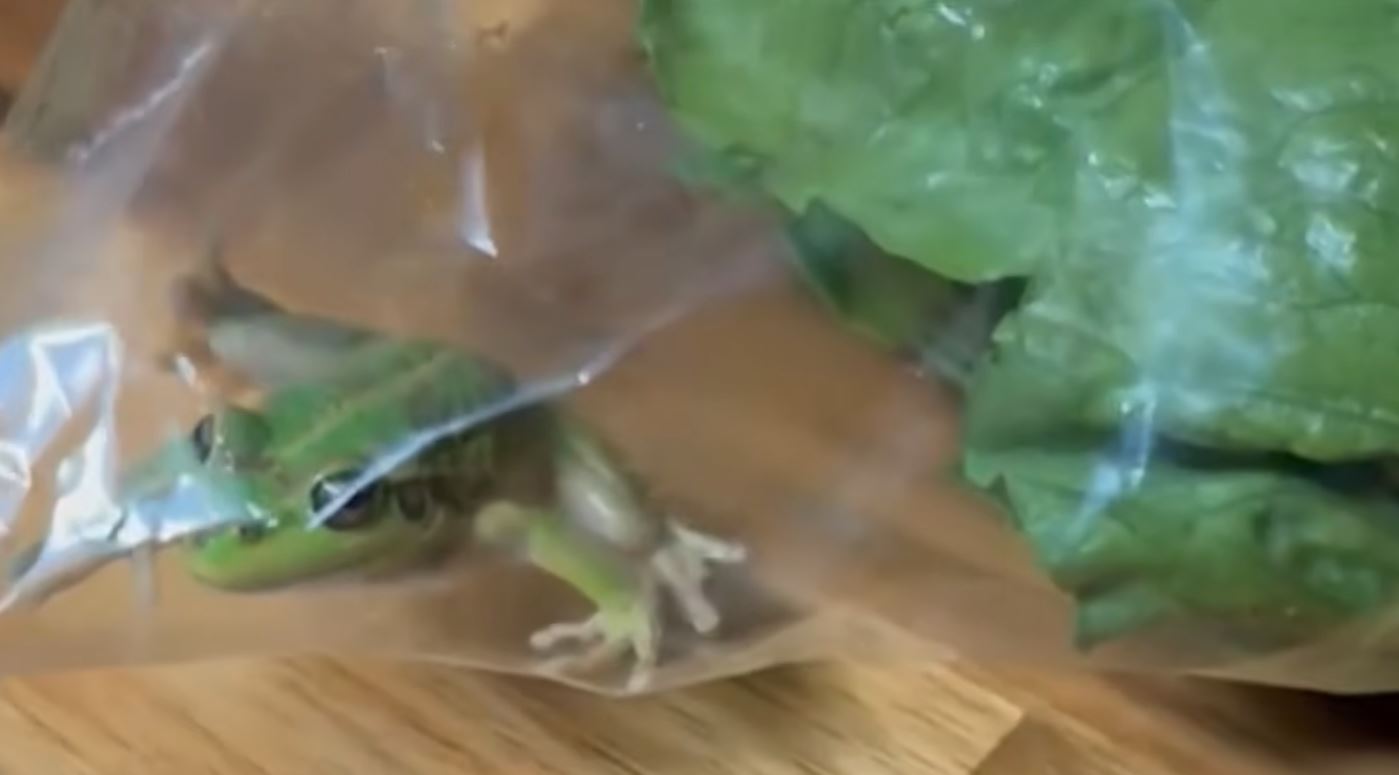
When we reach for a bag of pre-washed greens at the grocery store, we are paying for convenience and the assumption of rigorous quality control. However, a series of recent reports from consumers discovering live amphibians—specifically frogs—in their bagged salad products has sparked a broader conversation about agricultural supply chain transparency and the limitations of automated food processing systems.
While the image of a live frog in a salad bag might seem like an anomaly, these incidents, often reported in regions across Europe and North America, highlight the complexities of large-scale produce harvesting. For the average consumer, finding a stowaway in their dinner is a jarring experience that raises immediate questions regarding food safety protocols and the efficacy of modern optical sorting technology.
The Reality of Modern Produce Harvesting
To understand why these incidents occur, one must look at how field-grown vegetables are processed. Large-scale agriculture often utilizes mechanical harvesters that sweep across vast fields, collecting crops in a rapid, continuous motion. In this environment, organic matter—including insects, minor reptiles, and amphibians—can occasionally be swept up alongside leafy greens. According to the U.S. Food and Drug Administration (FDA), while stringent Good Agricultural Practices (GAPs) are designed to minimize physical hazards, the sheer scale of mechanical harvesting makes the total exclusion of field-dwelling creatures a significant logistical challenge.

Once the produce is collected, it undergoes a series of washes and optical sorting processes. These machines use high-speed cameras and sensors to identify and remove foreign objects. However, technology is not infallible. A frog that is similar in color and size to a clump of kale or spinach can sometimes evade detection, leading to the unfortunate scenarios reported by shoppers. Industry standards, such as those outlined by the Food Industry Association (FMI), emphasize that while these events are rare, they are treated as significant quality control failures by retailers and producers alike.
Consumer Safety and Potential Risks
Beyond the “yuck factor,” the presence of a live animal in a sealed bag of produce presents legitimate health concerns. Amphibians are known carriers of various bacteria, including Salmonella. The Centers for Disease Control and Prevention (CDC) notes that contact with amphibians or their environment can lead to human infection, which is why food safety experts urge consumers to exercise caution if a foreign object is found in their food.

If you discover a live animal in your produce, the recommended course of action is standardized across most food safety agencies:
- Do not consume the product.
- Document the incident by taking clear photos of the animal, the product label, the lot number, and the “best by” date.
- Keep the original packaging and the foreign object, as the manufacturer will often require these for their internal investigation.
- Contact the retailer where the product was purchased and the manufacturer directly using the customer service information provided on the packaging.
- Report the incident to your local food safety authority or the relevant national health department.
The Role of Technology in Prevention
As a technology editor, I often look at how innovation can solve these types of supply chain issues. The industry is currently moving toward more advanced hyperspectral imaging. Unlike standard cameras, hyperspectral sensors can detect the chemical “fingerprint” of an object, allowing machines to differentiate between the chlorophyll signature of a leaf and the skin of an amphibian or reptile. This technology is becoming a standard in high-end processing facilities, though its adoption remains an ongoing capital investment for many agricultural firms.
blockchain-based traceability is being explored to provide consumers with more insight into exactly when and where their food was harvested. By scanning a QR code on a package, shoppers could theoretically access data regarding the facility where the product was processed and the specific safety audits performed on that lot. While this does not replace the need for physical inspections, it provides a layer of accountability that was previously unavailable to the public.
Looking Ahead
Retailers are increasingly sensitive to these reports, as social media has amplified the visibility of such incidents. When a customer posts a photo of a frog in a salad bag, it can cause immediate reputational damage. We are seeing a trend toward more frequent “spot checks” and the implementation of stricter penalties for suppliers who fail to meet rigorous foreign-object exclusion standards.

For now, the best defense for the consumer remains the “look and wash” method. Despite the “triple-washed” labeling on many bags, a quick inspection by the consumer before serving is a prudent step. As the industry continues to refine its sorting algorithms and harvesting techniques, the frequency of these incidents will likely decrease, but for the time being, they serve as a stark reminder of the distance between the field and our dinner tables.
The next major update regarding food safety standards for fresh produce is expected in the upcoming regulatory review cycle by national food agencies, where discussions on automated detection technology are slated for further development. We will continue to monitor these developments closely. Have you ever encountered an unexpected surprise in your groceries? Share your experiences and thoughts in the comments section below.