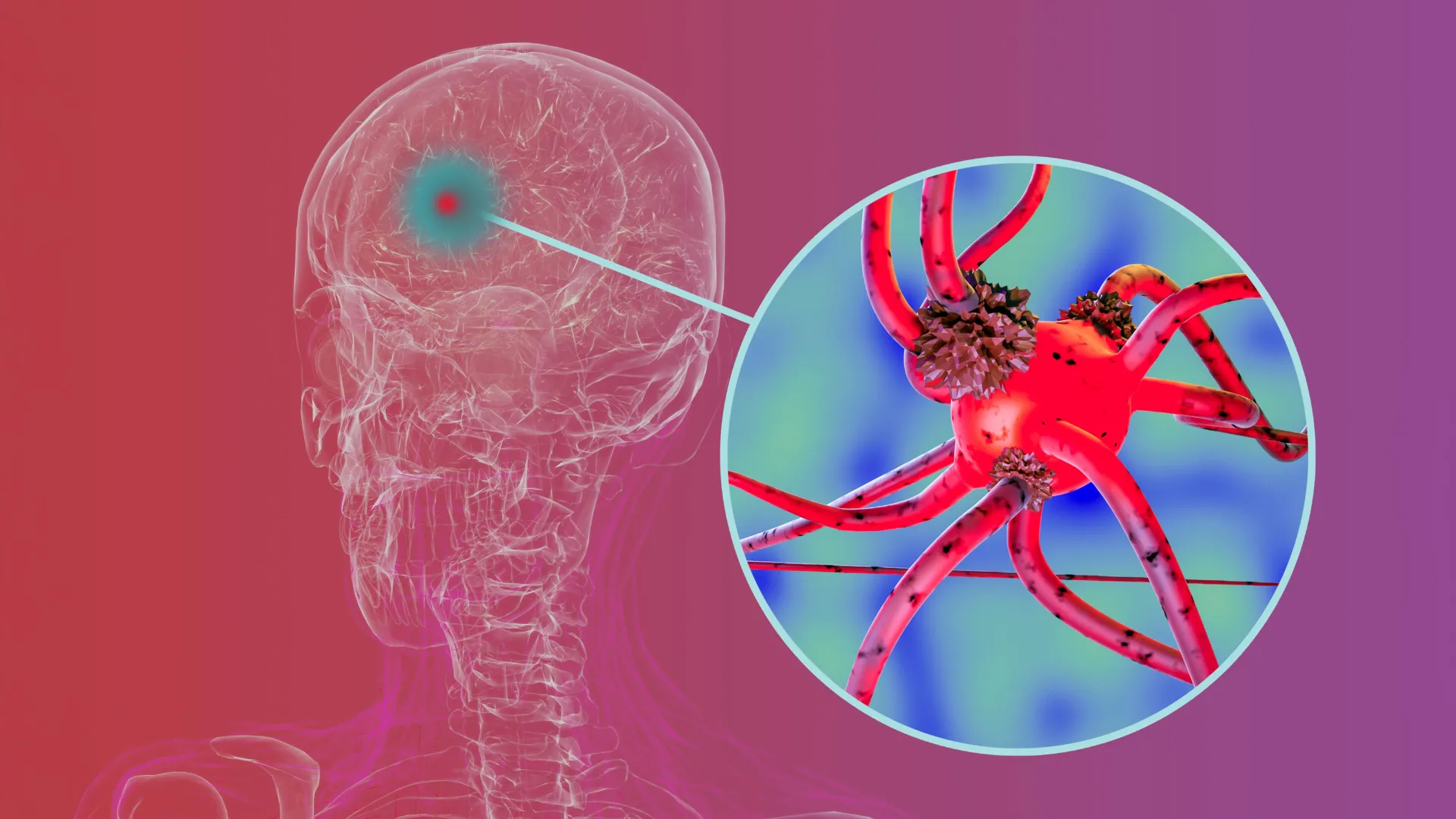
For decades, the central challenge in the fight against Parkinson’s disease has not been merely managing its debilitating symptoms, but halting its relentless, progressive march through the brain. While current therapies like Levodopa can effectively replenish dopamine to ease tremors and rigidity, they do nothing to stop the underlying destruction of neurons. However, a significant breakthrough in neurobiological research may have finally identified a critical mechanism that drives this spread, offering a new frontier for disease-modifying therapies.
Researchers have identified a specific protein, known as GPNMB (Glycoprotein Non-metastatic B), that appears to act as a facilitator in the progression of Parkinson’s. In a discovery that shifts our understanding of neurodegeneration, evidence suggests that this protein is released by the brain’s own immune cells in response to cellular damage, inadvertently creating a “vicious cycle” that accelerates the spread of toxic protein aggregates.
The implications of this finding are profound. If the spread of Parkinson’s is not just an inevitable consequence of aging or genetics, but a process mediated by a specific biological pathway, then that pathway can be targeted. Early experimental models have already demonstrated that using antibodies to block GPNMB can interrupt this toxic transmission, potentially slowing or even halting the degeneration of healthy brain cells.
The Vicious Cycle: How GPNMB Fuels Neurodegeneration
To understand why the discovery of GPNMB is so pivotal, one must first understand the “prion-like” nature of Parkinson’s disease. The hallmark of the condition is the accumulation of misfolded alpha-synuclein proteins. These proteins clump together into structures called Lewy bodies, which are toxic to dopaminergic neurons—the cells responsible for producing the dopamine that controls movement.
Current scientific consensus suggests that these toxic alpha-synuclein aggregates do not stay confined to a single area. Instead, they can “seed” themselves into neighboring healthy neurons, causing them to misfold and spread throughout the brain’s architecture. This spreading mechanism is what transforms a localized neurological issue into a systemic, progressive disease.
The newly identified role of GPNMB adds a complex layer to this process. When neurons are damaged by alpha-synuclein, the brain’s resident immune cells, known as microglia, are activated to clean up the debris. However, in the context of Parkinson’s, this immune response may backfire. As microglia respond to the damage, they release GPNMB. Rather than simply cleaning up the site, this protein appears to facilitate the movement of toxic alpha-synuclein from one cell to another.
This creates a feedback loop: damaged neurons trigger microglia to release GPNMB, and the presence of GPNMB then makes it easier for the disease to infect more neurons, leading to further damage and even more GPNMB release. This cycle of neuroinflammation and protein spreading is a primary target for researchers looking to move beyond symptom management toward true neuroprotection.
Targeting the Spread: The Promise of Antibody Therapy
The most promising aspect of this research lies in the potential for immunological intervention. In early-stage laboratory experiments, scientists have utilized monoclonal antibodies designed to bind to and neutralize the GPNMB protein. By “mopping up” the protein before it can facilitate the movement of alpha-synuclein, researchers were able to significantly reduce the rate at which the pathology spread between cells.
This approach is conceptually similar to how modern treatments address other protein-misfolding diseases, such as certain types of Alzheimer’s. However, targeting the mechanism of spread rather than just the protein aggregates themselves represents a more nuanced strategy. By addressing the “bridge” that allows the disease to travel, clinicians may be able to preserve much larger areas of healthy brain tissue for much longer periods.
However, translating these results from the lab to the clinic involves significant hurdles. One of the most daunting challenges in neuropharmacology is the blood-brain barrier (BBB). This highly selective semipermeable border protects the brain from toxins and pathogens, but it also acts as a formidable shield against large molecules like antibodies. For a GPNMB-blocking therapy to be effective, it must be able to cross this barrier in sufficient quantities to reach the microglia and the interstitial spaces where the protein operates.
Key Scientific Concepts in Parkinson’s Research
- Alpha-synuclein: The primary protein associated with Parkinson’s; its misfolding and aggregation are central to the disease’s pathology.
- Microglia: The specialized immune cells of the central nervous system that play a dual role in protecting the brain and driving neuroinflammation.
- Neuroinflammation: A chronic inflammatory response in the brain that can exacerbate neuronal death and facilitate protein spreading.
- Monoclonal Antibodies: Laboratory-produced molecules engineered to serve as substitute antibodies that can restore, mimic, or enhance the immune system’s attack on specific targets.
The Broader Context: A Shift Toward Disease Modification
For the millions of people living with Parkinson’s, the distinction between “symptomatic treatment” and “disease-modifying therapy” is everything. Historically, the medical community has focused on the former. Drugs like carbidopa-levodopa are life-changing in terms of mobility and quality of life, but they are essentially “band-aids” on a progressing wound.
The focus of global research, supported by organizations such as the Michael J. Fox Foundation, has shifted heavily toward finding ways to alter the course of the disease. The discovery of the GPNMB pathway fits perfectly into this paradigm. If researchers can identify the specific “tipping points” where inflammation turns from protective to destructive, they can intervene at the exact moment the disease begins to accelerate.
this research underscores the importance of the neuro-immune axis. We are learning that Parkinson’s is not just a disease of “broken neurons,” but a disease of a “dysregulated immune system” within the brain. This realization is opening doors to therapies that don’t just target the proteins themselves, but also the cellular environment that allows those proteins to thrive.
What Happens Next? The Path to Clinical Application
While the results regarding GPNMB are encouraging, It’s vital to maintain a perspective of cautious optimism. The transition from successful animal or cellular models to human clinical trials is notoriously difficult in the field of neurology. Many therapies that show “miracle” results in mice fail to show the same efficacy in the much more complex human brain.
The next critical steps for this research include:
- Validation in Human Tissue: Confirming that the GPNMB levels observed in experimental models correlate accurately with disease progression in human patients.
- Delivery Optimization: Developing advanced delivery systems—such as nanoparticle carriers or specialized BBB-crossing antibodies—to ensure the treatment reaches the target site.
- Biomarker Development: Identifying whether GPNMB levels in cerebrospinal fluid or blood can serve as a reliable biomarker to track disease progression or response to treatment.
- Safety Profiling: Ensuring that blocking GPNMB does not inadvertently impair the brain’s ability to perform other essential immune functions, such as clearing actual pathogens.
As of now, there are no approved GPNMB-targeted therapies available for clinical use, and this research remains in the preclinical stage. However, the roadmap for future drug development is becoming clearer with every discovery of this nature.
Frequently Asked Questions
Is there a cure for Parkinson’s disease?
Currently, there is no cure for Parkinson’s. Existing treatments focus on managing symptoms by managing dopamine levels, but they do not stop the underlying neurodegeneration.
What is GPNMB?
GPNMB is a protein that is released by immune cells (microglia) in the brain. Recent research suggests it may facilitate the spread of toxic alpha-synuclein proteins between neurons.
How do antibodies work in this context?
In experimental settings, antibodies are used to bind to the GPNMB protein, preventing it from interacting with other cells and thereby slowing the spread of the disease’s toxic elements.
When will these treatments be available to patients?
Because this research is in the early, preclinical stages, it may be several years before any GPNMB-targeted therapy enters human clinical trials, and even longer before it reaches the market.
Can neuroinflammation be reversed?
While the goal is to modulate and control neuroinflammation, “reversing” it is complex. The aim is to shift the immune response from a state that promotes damage to a state that supports neuronal health.
The scientific community continues to monitor these developments closely. The next major milestone will be the publication of longitudinal studies that further define the relationship between GPNMB and human neurodegenerative progression. We will continue to provide updates as peer-reviewed data from clinical trials becomes available.
Do you or a loved one live with Parkinson’s? We invite you to share your thoughts or questions in the comments below. For the most accurate and up-to-date health news, please share this article with your network.
Worth a look