
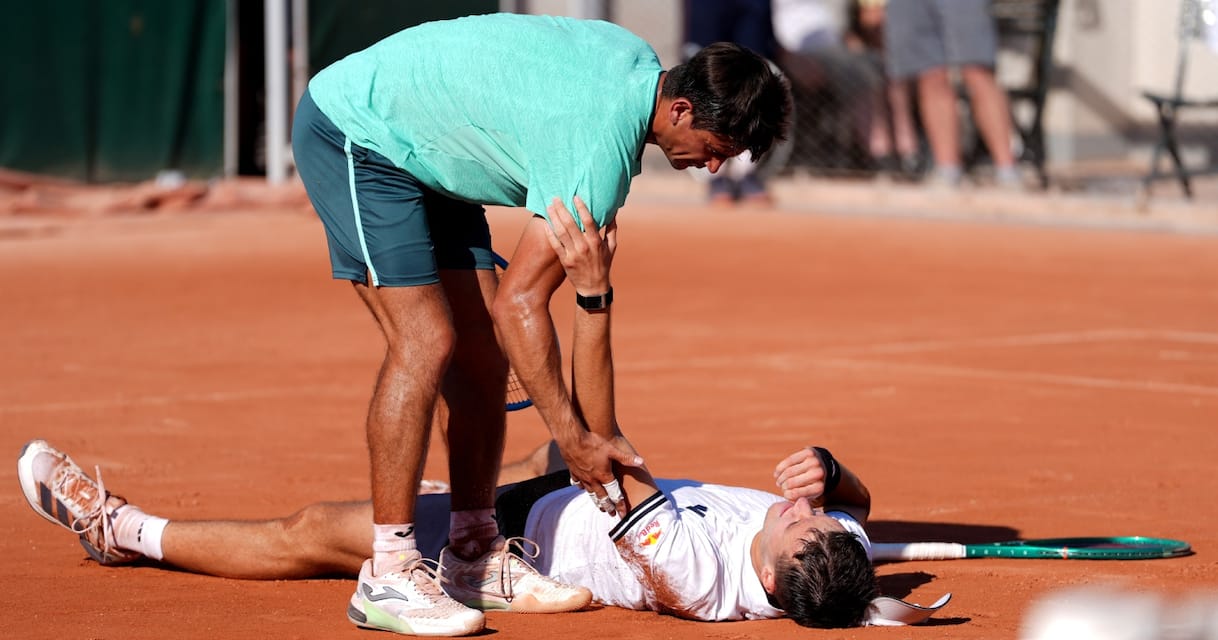
The intensity of the professional tennis circuit, particularly during the grueling atmosphere of a Grand Slam, was brought into sharp focus this week at the Roland Garros stadium in Paris. The physical demands placed on athletes during high-stakes matches have once again ignited conversations regarding player welfare and the environmental conditions under which these elite competitors are expected to perform.
Jakub Mensik, the young Czech talent, found himself at the center of this dialogue following a taxing second-round encounter against Mariano Navone. The match, which extended to nearly five hours, pushed both players to their absolute physical limits. As the contest reached its final stages, the toll of the prolonged exertion and the ambient heat became visibly apparent, culminating in a moment of significant concern for spectators and officials alike.
The incident has prompted a broader discussion among tennis professionals and the international sports community regarding the protocols governing match play during extreme weather. As the tournament continues, the focus remains on recovery, athlete safety, and the ongoing debate over how to balance the tradition of best-of-five-set tennis with the physiological realities of modern professional play.
A Test of Endurance at Roland Garros
The match between Jakub Mensik and Mariano Navone served as a stark reminder of the extreme physical conditioning required at the highest level of the ATP Tour. Over the course of nearly five hours, the two players engaged in a tactical and physical battle that tested their stamina, mental fortitude, and ability to manage muscle fatigue under pressure. The Roland Garros tournament, known for its challenging clay surface, often demands longer rallies and more sustained effort compared to faster court surfaces, which can compound the physical strain during extended matches.

As the match neared its conclusion, Mensik began to show clear signs of physical distress. Following the final point of the contest, which resulted in his advancement to the third round, the athlete experienced a collapse on the court. This moment of apprehension saw medical staff quickly attend to the player, highlighting the immediate responsiveness required when athletes reach their physiological breaking point. The ability of players to recover from such intense exertion is a critical component of their preparation, yet incidents of this nature often lead to calls for a review of match scheduling and environmental mitigation strategies.
Player Welfare and Environmental Concerns
The narrative surrounding the match has moved beyond the court itself, centering on the conditions that contributed to the intensity of the struggle. Concerns regarding heat management and the physical toll of sustained play are recurring themes in professional tennis. The International Tennis Federation and tournament organizers maintain various protocols, including heat stress policies, designed to monitor and mitigate risks to player health. These policies typically include provisions for mandatory breaks, the availability of cooling equipment, and, in extreme circumstances, the suspension of play.
For athletes like Mensik, the experience underscores the necessity of these safeguards. The debate often pits the traditional structure of Grand Slam matches—which remain unique in the sport for their best-of-five-set format in the men’s draw—against the increasing demands of modern, high-intensity tennis. While these long, dramatic matches are a hallmark of the sport’s history, the focus on player health has become paramount in recent years, with stakeholders constantly evaluating how to ensure that the spectacle of tennis does not come at the cost of the athletes’ well-being.
Looking Ahead: The Path Forward
As the tournament progresses, the focus for all participants shifts toward recovery and preparation for the subsequent rounds. The professional circuit provides a rigorous schedule, and the ability to bounce back from physically demanding matches is a defining trait of the world’s top players. Official updates regarding the health status of players are managed through tournament medical teams and the respective player camps. For fans and observers, the official ATP Tour website remains the primary source for match results, scheduling updates, and official statements regarding player participation.

The incident at Roland Garros serves as a poignant reminder of the dedication displayed by professional athletes. As the competition continues, the conversation regarding player safety will undoubtedly persist, ensuring that the sport continues to evolve in a way that respects the history of the game while prioritizing the health of those who define it. We invite our readers to share their thoughts on these challenges in the comments section below, as we continue to provide updates on the latest developments from the tournament.