As we cross the threshold of our 60s, the physiological landscape of our bodies begins to shift in ways that are often subtle at first, then increasingly profound. One of the most significant changes is the gradual decline in lean muscle mass, a biological process known as sarcopenia. While it is a natural part of aging, it does not have to be an inevitable precursor to frailty. Maintaining muscle tone is not merely an aesthetic pursuit; it is a fundamental requirement for metabolic health, bone density, and functional independence.
Many people believe that the only way to combat this decline is to join a high-intensity gym class or follow a rigid, instructor-led regimen. However, for many adults over 60, the logistical “friction” of the gym—commuting, rigid scheduling, and the pressure to keep pace with a group—can actually become a barrier to the very consistency required for results. The reality is that muscle restoration and maintenance can be achieved with remarkable efficiency within the sanctuary of your own home.
By focusing on targeted resistance training, controlled movements, and proper nutritional support, you can stimulate muscle protein synthesis and improve your body composition without ever stepping foot in a commercial fitness center. This guide explores six highly effective home exercises designed to restore muscle tone, improve posture, and bolster functional strength, allowing you to move through the world with greater confidence and ease.
The Biological Imperative: Understanding Sarcopenia and Muscle Tone
To understand why these exercises are necessary, we must first look at what is happening beneath the skin. Sarcopenia—the age-related loss of skeletal muscle mass and strength—can significantly impact a person’s ability to perform daily tasks, from climbing stairs to carrying groceries. Research indicates that without intervention, muscle mass can decline significantly as we age, which in turn affects our metabolic rate and increases the risk of falls and fractures.
Achieving “muscle tone” after 60 is a two-part equation. First, you must engage in resistance training to build or preserve the actual muscle fibers. Second, you must manage overall body fat levels, as muscle definition becomes more apparent as subcutaneous fat decreases. It is a common misconception that you can “spot train” fat away from a specific area; true body recomposition requires a systemic approach involving full-body movement and metabolic consistency.
The goal of a home-based routine is to provide enough stimulus to trigger hypertrophy (muscle growth) or at least prevent atrophy, without overtaxing the joints or the central nervous system. By utilizing resistance bands, dumbbells, and your own body weight, you can create a professional-grade stimulus that is entirely customizable to your current fitness level.
The Home Advantage: Why Consistency Trumps Intensity
In the realm of geriatric health and long-term wellness, consistency is the most powerful variable. A moderate workout performed four times a week at home is significantly more effective than a grueling gym session performed once every two weeks. Home training removes the psychological and physical hurdles of “getting ready” for the gym, making it easier to integrate strength work into your daily life.
home training allows for a focus on “time under tension.” In many group fitness settings, the priority is often on speed and keeping up with the music. For those over 60, speed is often the enemy of form. Training at home allows you to unhurried down the tempo, focus on the mind-muscle connection, and ensure that every repetition is performed with the precision required to protect your joints and maximize muscle engagement.
6 Essential Home Exercises for Muscle Restoration
The following exercises have been selected because they target major muscle groups, promote postural alignment, and can be performed with minimal equipment. For best results, prioritize form over the amount of weight or resistance used.
1. Standing Band Rows: Reclaiming Posture
As we age, many of us fall into a “forward-slumping” posture due to increased seated time or changes in spinal mobility. The standing band row is a powerhouse move for reversing this trend by strengthening the posterior chain.

- Muscles Trained: Upper back (latissimus dorsi), rhomboids, rear deltoids, biceps, and core.
- How to Perform: Anchor a resistance band at chest height (using a door anchor or a sturdy post). Stand tall with feet hip-width apart, holding one end of the band in each hand. Step back until there is light tension. Brace your core, keep your chest lifted, and pull your elbows back toward your ribs. Focus on squeezing your shoulder blades together at the peak of the movement, then return to the start with slow, controlled tension.
- Recommended Sets and Reps: 3 sets of 10 to 15 reps. Rest for 45 seconds between sets.
- Pro-Tip: Avoid shrugging your shoulders toward your ears. Keep your neck long and pull through your elbows, not your hands.
2. Band Pull-Aparts: Shoulder Stability and Upper Body Definition
This simple movement is often overlooked, yet it is vital for maintaining the stability of the shoulder girdle, which is essential for reaching, lifting, and overhead movements.
- Muscles Trained: Rear deltoids, upper back (rhomboids), and core.
- How to Perform: Stand tall and hold a resistance band in front of you at chest height, with your hands slightly wider than shoulder-width apart. Keeping your arms relatively straight with a soft bend in the elbows, pull the band apart by moving your hands out to your sides. Squeeze your shoulder blades together firmly before slowly returning to the starting position.
- Recommended Sets and Reps: 3 sets of 12 to 15 reps. Rest for 30 to 45 seconds between sets.
- Pro-Tip: Keep your ribs tucked down; do not allow your lower back to arch as you pull the band apart.
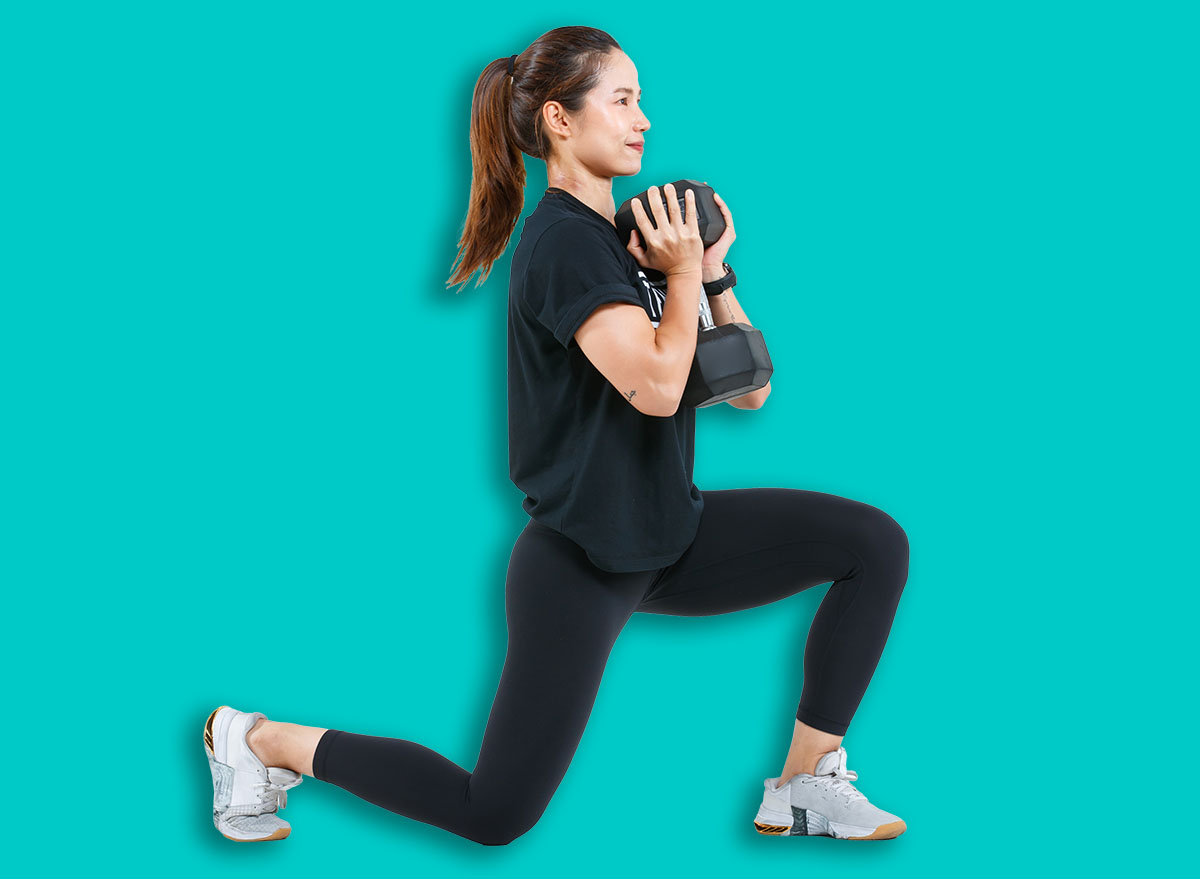
3. Goblet Hold Lunges: Lower Body Power and Balance
Leg strength is perhaps the most critical predictor of longevity and mobility in older adults. Lunges are a functional movement that mimics the action of standing up from a chair or stepping over an obstacle.

- Muscles Trained: Quadriceps, glutes, hamstrings, and core.
- How to Perform: Hold a single dumbbell or kettlebell against your chest, gripping it just below the chin (the “goblet” position). Stand with feet hip-width apart. Step one foot forward and lower your hips until both knees are bent at approximately a 90-degree angle. Ensure your front knee stays aligned over your ankle. Press through your front heel to return to the starting position.
- Recommended Sets and Reps: 3 sets of 8 to 10 reps per leg. Rest for 60 seconds between sets.
- Pro-Tip: If balance is an issue, perform these near a wall or a sturdy chair for light support.
4. Flutter Kicks: Deep Core and Hip Stability
A strong core is the foundation of all movement. Flutter kicks target the lower abdominal region and the hip flexors, which are essential for maintaining an upright gait and protecting the lumbar spine.
- Muscles Trained: Lower abdominals, hip flexors, and deep core stabilizers.
- How to Perform: Lie flat on your back on a mat. Place your hands under your hips for extra lumbar support if needed. Press your lower back firmly into the floor—What we have is crucial to prevent injury. Lift your legs just a few inches off the ground and perform small, rapid, controlled up-and-down kicks.
- Recommended Sets and Reps: 3 sets of 20 to 30 seconds. Rest for 30 seconds between sets.
- Pro-Tip: If you feel your lower back arching, lift your legs higher or reduce the range of motion. The goal is stability, not speed.
5. Wall Push-Ups: Upper Body Strength Without the Strain
Traditional floor push-ups can be taxing on the wrists and shoulders. Wall push-ups provide a scalable alternative that builds the chest and triceps while remaining accessible to those with varying levels of upper-body strength.
- Muscles Trained: Pectorals (chest), anterior deltoids (shoulders), and triceps.
- How to Perform: Stand facing a wall, a step or two away. Place your hands on the wall at shoulder height and slightly wider than shoulder-width. Keeping your body in a straight line from head to heels, bend your elbows to lower your chest toward the wall. Press through your palms to push yourself back to the starting position.
- Recommended Sets and Reps: 3 sets of 10 to 15 reps. Rest for 45 seconds between sets.
- Pro-Tip: As you get stronger, move your feet further away from the wall to increase the resistance.
6. Banded Glute Bridges: Posterior Chain and Hip Health
Gluteal strength is the “engine” of the lower body. Strong glutes support the hips and lower back, reducing the likelihood of chronic back pain and improving walking mechanics.

- Muscles Trained: Gluteus maximus, hamstrings, and hip stabilizers.
- How to Perform: Place a mini resistance band around your thighs, just above your knees. Lie on your back with knees bent and feet flat on the floor. Press your knees slightly outward against the band to maintain tension. Drive through your heels to lift your hips toward the ceiling, squeezing your glutes hard at the top. Lower back down with control.
- Recommended Sets and Reps: 3 sets of 12 to 15 reps. Rest for 45 seconds between sets.
- Pro-Tip: Do not over-arch your lower back at the top of the movement; the lift should come from your hips, not your spine.
Fueling the Transformation: The Role of Nutrition
Exercise is the stimulus, but nutrition is the building block. You cannot “out-train” a lack of protein, especially after age 60. As we age, our bodies experience what scientists call “anabolic resistance,” meaning we require a higher concentration of amino acids—specifically leucine—to trigger the same muscle-building response that a younger person might achieve with less food.
To support your new home routine, aim to distribute your protein intake evenly throughout the day. Rather than consuming one large protein-heavy meal at dinner, try to include a high-quality protein source (such as Greek yogurt, eggs, lean poultry, beans, or tofu) in every meal. This ensures a steady supply of amino acids to your muscles, facilitating repair and growth following your strength sessions.
Key Takeaways for Success
- Prioritize Form Over Load: In your 60s, the quality of a repetition is far more essential than the weight being lifted.
- Respect the Recovery: Muscle is built during rest, not during the workout. Ensure you are getting adequate sleep and rest days between strength sessions.
- Progressive Overload: To continue seeing results, you must gradually increase the challenge. This can mean adding more reps, using a thicker resistance band, or slowing down the movement even further.
- Stay Hydrated and Fueled: Muscle tissue is highly sensitive to hydration levels and nutrient availability.
Building muscle and restoring tone is a marathon, not a sprint. By embracing these functional, home-based movements, you are investing in your future self—ensuring that your later years are defined by strength, mobility, and vitality rather than limitation.
For more expert analysis on longevity and medical innovation, subscribe to our newsletter or share this article with someone looking to reclaim their strength.
Keep reading