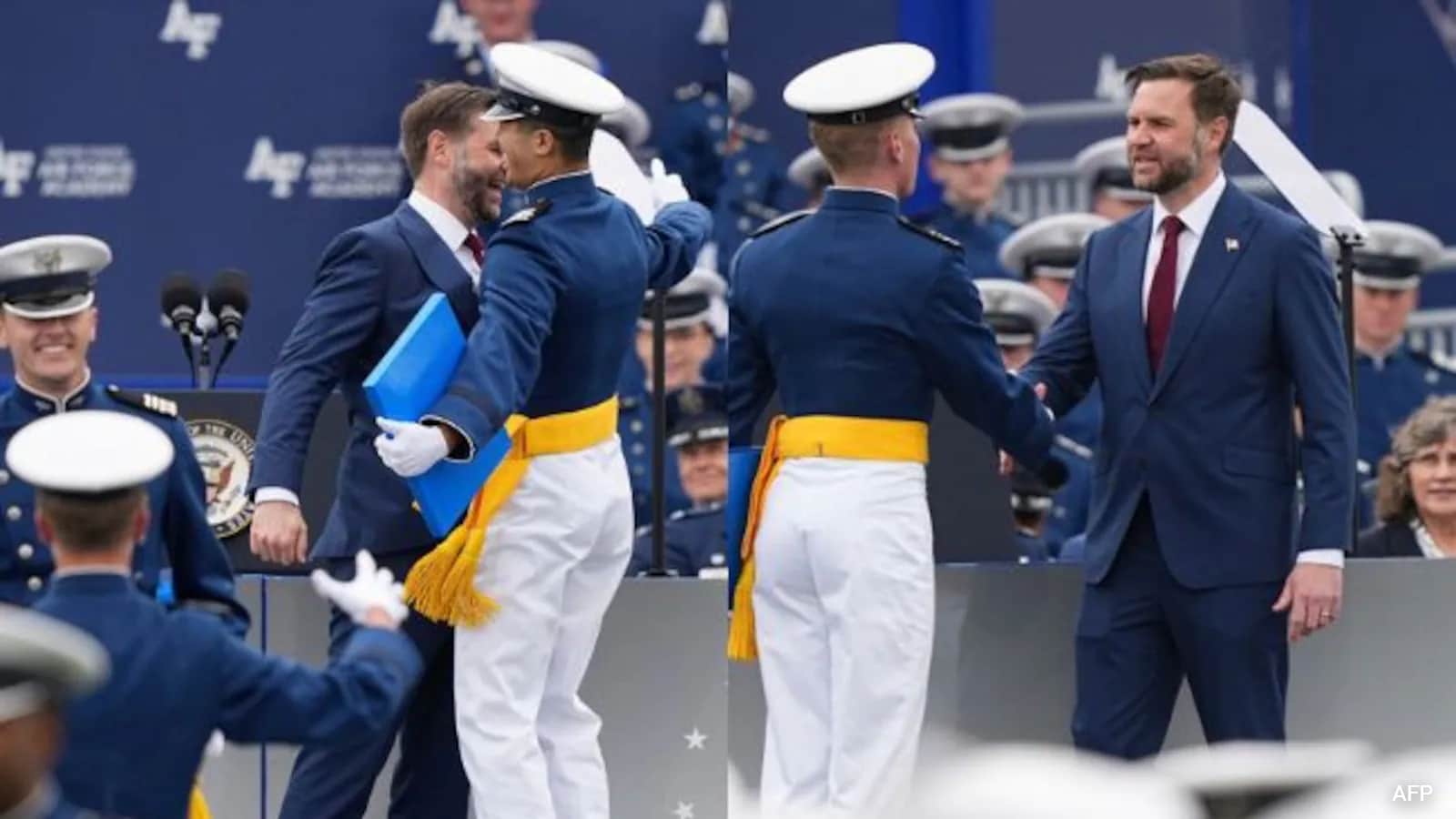
As the political landscape in the United States continues to evolve, public appearances by high-ranking officials are often scrutinized for their departure from traditional formality. Recently, Vice President JD Vance participated in a commencement ceremony where a lighthearted interaction with a graduating cadet drew significant attention across social media platforms. The moment, which saw a spontaneous physical gesture between the Vice President and a member of the graduating class, highlights the intersection of modern political optics and the long-standing traditions of military service academies.
The incident occurred during the post-speech proceedings of a military graduation, a setting typically governed by rigid protocol and ceremony. As JD Vance moved through the greeting line, one cadet initiated a playful chest bump—a gesture more commonly associated with collegiate sports or informal social settings than with formal government events. The interaction was captured on video and subsequently circulated widely, sparking a broader conversation about the changing nature of interactions between political figures and the next generation of military officers.
For those tracking the public image of the current administration, such moments serve as a reminder of how quickly unscripted encounters can define a public figure’s narrative. While the gesture appeared to be received with decent humor, it has prompted a flurry of online commentary regarding the decorum expected at such high-profile military institutions. The Vice President, who assumed office following the inauguration of the current administration, frequently engages in public diplomacy that balances traditional executive duties with more accessible, often spontaneous, public interactions.
The Context of Military Commencement Protocols
Military graduation ceremonies, such as those held at the United States Military Academy at West Point or the United States Air Force Academy, are steeped in centuries of tradition. These events are designed to instill discipline, honor and a sense of gravity as cadets transition into commissioned officers. The participation of a sitting Vice President or President is intended to underscore the civilian oversight of the military, a core tenet of the United States Constitution.


When a civilian leader enters this environment, they are expected to navigate a delicate balance. While the primary objective is to honor the graduates, these events also provide a stage for the executive branch to communicate its policy priorities. The intrusion of informal gestures into such a controlled environment often triggers debate. Critics might argue that such displays undermine the solemnity of the occasion, while proponents often view these interactions as a sign of authenticity and a bridge between the political establishment and the younger generation of service members.
In this instance, the cadet’s choice to initiate a chest bump was an outlier in an otherwise structured event. According to standard operating procedures at military academies, interactions between cadets and high-ranking guests are typically limited to handshakes and brief, formal salutations. The deviation from this norm has led to discussions among military analysts regarding the evolving culture within the armed forces, where younger generations may prioritize personal rapport over traditional formalities.
Public Perception and the Role of Viral Moments
The rapid spread of this video on social media underscores the influence of digital platforms in shaping modern political discourse. In the current media ecosystem, a few seconds of footage can often overshadow the substantive content of an entire commencement speech. For a figure like JD Vance, who has navigated a unique path from private sector success to national political office, these viral moments are frequently analyzed for what they reveal about his broader political strategy.
Public relations experts often suggest that such moments can humanize a political figure, potentially softening their image among younger demographics. However, they also carry the risk of being perceived as unprofessional or pandering. The “note to self” sentiment often expressed by viewers—referring to the internal reflection on how one should behave in high-pressure, formal environments—suggests that the public is highly attuned to the nuances of political behavior.
As we examine this event, It’s crucial to remain grounded in the fact that it was an isolated, brief encounter. There have been no reports of disciplinary action or official reprimands regarding the cadet’s behavior. The military’s leadership continues to focus on the broader mission of professional development, and while this moment provided a brief diversion, it remains a footnote in the larger, more consequential work of the Department of Defense, which you can track through their official news releases.
What This Means for Future Engagements
The question of how political figures should interact with the public at formal events is unlikely to be resolved by a single viral video. Instead, it reflects a broader shift in how we perceive authority and professional relationships. As the administration continues its term, we can expect to see further scrutiny of these public interactions, particularly as the Vice President continues to fulfill his duties in representing the executive branch at various national and international forums.
Looking ahead, the next major milestones for the administration will involve upcoming legislative sessions and scheduled diplomatic summits. These events will offer more opportunities to observe how the Vice President balances the demands of his office with the desire to connect with the American public in an increasingly digital, informal world. For readers interested in following these developments, the official White House Briefing Room remains the most reliable source for verified schedules and official statements regarding the administration’s activities.
We invite our readers to share their thoughts on this development. Does the modern political environment necessitate a departure from traditional formality, or should the sanctity of military events be strictly preserved? Join the conversation in the comments section below, and stay tuned to World Today Journal for ongoing coverage of the issues that matter most.
Keep reading