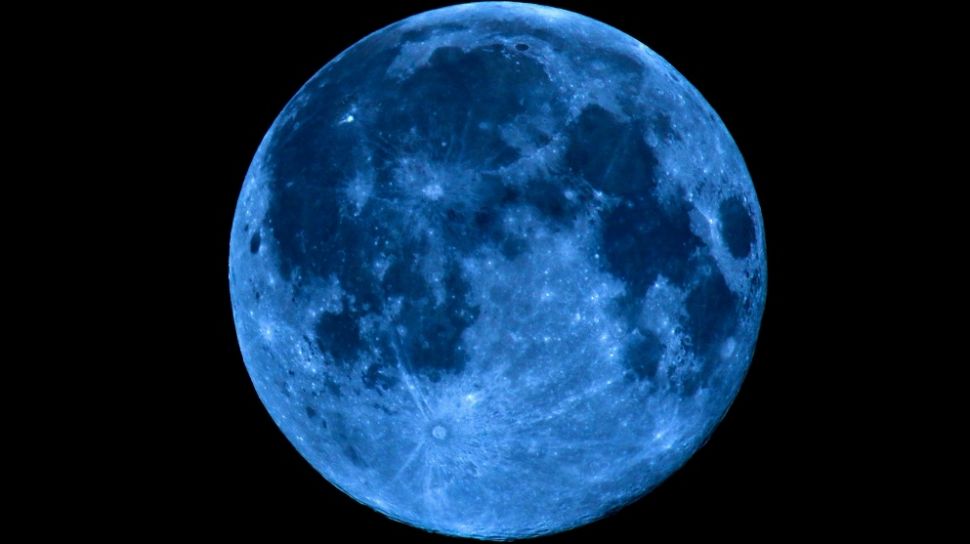
As we approach the end of May 2026, skywatchers around the globe are turning their eyes upward for a celestial event that has captured the public imagination for centuries: the Blue Moon. While the term may evoke images of a lunar surface bathed in sapphire light, the reality of this astronomical occurrence is rooted in the mechanics of our calendar rather than a change in the moon’s physical appearance.
A Blue Moon is set to peak on May 31, 2026, marking the second full moon to occur within a single calendar month. This phenomenon is a byproduct of the discrepancy between our 30-to-31-day Gregorian calendar and the lunar cycle, which spans approximately 29.5 days. Because the lunar cycle is shorter than most months, an occasional “extra” full moon is required to keep our calendars aligned with the phases of the moon, an event that typically occurs once every two to three years as noted by NASA.
Understanding the Mechanics of the Blue Moon
To understand why we see two full moons in May 2026, one must look at the timing of the lunar cycle. The first full moon of the month, often referred to in folklore as the Flower Moon, occurred on the first day of May. Because the time elapsed between one full moon and the next is roughly 29.5 days, a second full moon naturally falls on the final day of the month. This specific timing—a full moon on the first and the thirty-first—is what defines this particular Blue Moon.


It is important for observers to manage their expectations regarding the visual appearance of the moon. Despite the evocative name, the moon will not appear blue. The term itself is a historical idiom. according to the Encyclopedia Britannica, the phrase “the moon is blue” was used as early as the 16th century to describe things that seemed impossible or highly unlikely. Over time, the label was repurposed to describe this specific calendar anomaly.
For those interested in the precise timing of this month’s event, the Farmer’s Almanac reports that the moon is expected to reach its peak illumination at 4:45 a.m. ET on Sunday, May 31, 2026. While the peak occurs early Sunday morning, the moon will appear full to the casual observer for several days surrounding that date.
A Micromoon Coincidence
Adding to the intrigue of the May 2026 lunar cycle is the fact that this Blue Moon coincides with a micromoon. A micromoon occurs when the moon reaches its apogee—the point in its orbit where it is farthest from the Earth—during its full phase. According to data tracked by NASA, the moon may be approximately 251,000 miles away from our planet during this time. Because of this increased distance, the moon may appear slightly smaller in the night sky than a typical full moon, a subtle contrast that provides a unique opportunity for amateur astronomers to observe changes in lunar size and distance.
Beyond the Name: The Science of Color and Light
While the Blue Moon of May 31 will not be blue, the science of how we perceive color in the sky remains a fascinating field of study. The perception of blue in our atmosphere is largely governed by Rayleigh scattering, an optical phenomenon where sunlight interacts with the molecules in Earth’s atmosphere. Shorter wavelengths of light—those in the blue end of the spectrum—are scattered more strongly than longer wavelengths, which is why the sky appears blue during the day.
In contrast, the moon’s appearance is usually dictated by the light reflected from the sun and the presence of particles in our atmosphere. While it is rare for the moon to appear blue—typically only occurring if We find specific types of dust or smoke particles in the atmosphere capable of filtering out red light—the upcoming event is purely a matter of scheduling and lunar orbital mechanics.
How to Observe the Event
Observing the Blue Moon requires no specialized equipment. As long as the sky is clear, the moon will be visible to the naked eye. For those hoping to capture images or observe the subtle size difference associated with the micromoon, a standard camera with a telephoto lens or a pair of binoculars may enhance the experience. Because the moon will remain in a “near-full” state for several days before and after the peak on May 31, viewers have a generous window of opportunity to witness the event.
Looking ahead, the lunar calendar continues its steady rhythm. Following the May Blue Moon, the next major lunar event scheduled is the Strawberry Moon, which is expected to reach its peak on June 29, 2026, at 7:57 p.m. ET, according to the Farmer’s Almanac. These recurring cycles serve as a reminder of the consistent, predictable nature of our solar system, even when they carry names as whimsical as the Blue Moon.
We invite our readers to share their observations and photos of the May 31 lunar event in the comments section below. Have you managed to spot the difference in size during this month’s micromoon? Join the conversation and let us know your thoughts on this month’s celestial display.
Related reading