
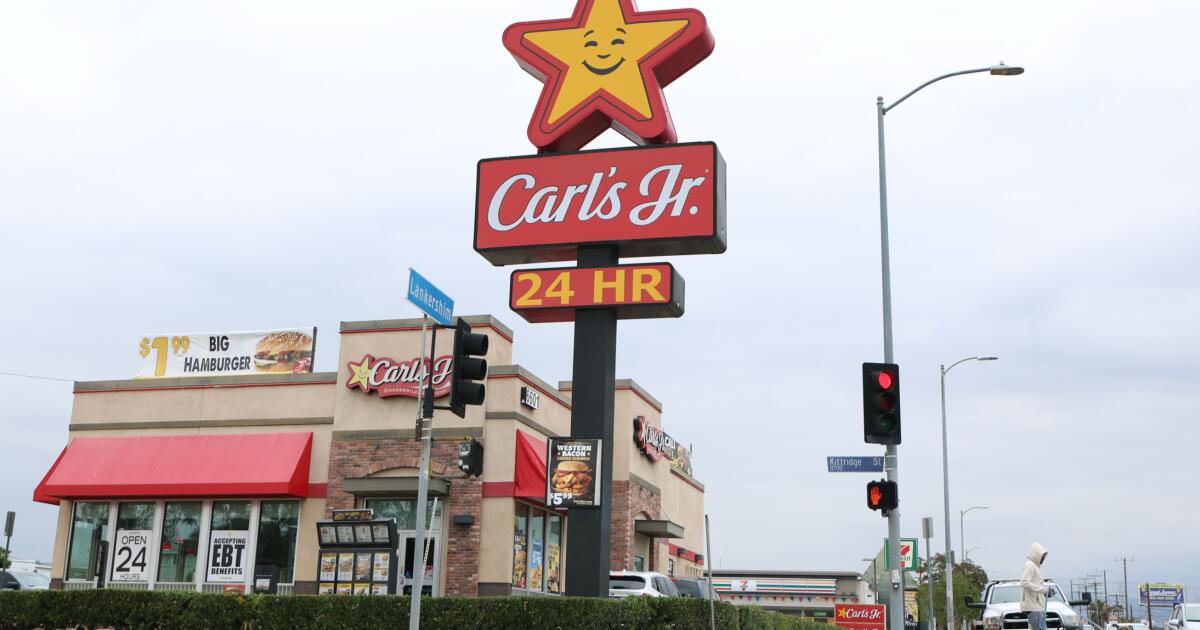
The landscape of the Southern California fast-food industry is undergoing a notable shift as a significant franchisee associated with the Carl’s Jr. Brand moves to restructure its regional footprint. Reports confirmed this week indicate that a major operator managing dozens of locations across the state has initiated a plan to sell 49 of its restaurants, while concurrently finalizing the closure of 10 additional sites. This development highlights the ongoing challenges facing quick-service restaurant (QSR) operators in a region defined by high operational costs and evolving consumer habits.
For those tracking the broader economic health of the hospitality sector, the decision to sell 49 California locations serves as a barometer for current market pressures. The move, centered on a substantial portfolio within the Carl’s Jr. Franchise network, underscores the complexities of managing high-volume food service chains in a post-pandemic economic environment. As of late 2024, California’s fast-food industry has been navigating significant legislative changes, most notably the implementation of Assembly Bill 1228, which mandated a $20 hourly minimum wage for fast-food workers in the state effective April 1, 2024, as noted by the California Department of Industrial Relations.
Understanding the Shift in Franchise Operations
The restructuring effort involves a significant reduction in the operational scale of the franchisee in question. While large restaurant groups often adjust their holdings to optimize profitability, the closure of 10 locations alongside the divestment of 49 others represents a major contraction. For the parent company, CKE Restaurants—the entity that owns both Carl’s Jr. And Hardee’s—such moves are often part of a broader strategy to ensure that franchise partners remain financially viable and aligned with brand standards.
Industry analysts have pointed to a “perfect storm” of economic factors impacting the sector. Beyond the mandated wage increases, operators are grappling with persistent inflationary pressures on food and paper costs, as well as shifting traffic patterns in major metropolitan hubs. According to data from the National Restaurant Association, rising prime costs—which combine labor and cost of goods sold—have forced many operators to re-evaluate their geographic presence to maintain thin profit margins.
The Impact of Legislative and Economic Pressures
The decision to consolidate operations is not occurring in a vacuum. Since the introduction of the Fast Food Council, which oversees industry standards in California, many franchisees have been forced to rethink their business models. The $20 wage floor, while providing relief to employees, has shifted the cost structure for operators who rely on high-volume, low-margin transactions. This has led to a divergence in how different franchises handle their California assets, with some choosing to divest while others pivot toward automation or menu restructuring.
While the specific franchisee has not publicly detailed the exact timeline for the closure of the 10 locations, such transitions typically involve a phased approach to minimize disruption to local communities. The sale of the 49 units suggests a desire to transfer these assets to operators who may be better positioned to integrate them into their existing infrastructures or who possess different capital resources to absorb the current cost environment.
Key Factors Influencing Restaurant Closures
- Labor Costs: The mandate under AB 1228 has significantly increased payroll expenses for QSR operators across California.
- Inflationary Trends: Sustained increases in the price of raw ingredients and supply chain logistics continue to impact bottom-line profitability.
- Market Saturation: In some Southern California regions, the density of QSR options has led to diluted sales figures per unit.
- Operational Efficiency: Larger operators are increasingly focused on consolidating assets to improve management oversight and reduce overhead.
What Which means for the Consumer and Local Markets
For the average customer, these changes may result in the temporary or permanent loss of neighborhood locations. However, the sale of 49 units to new ownership often implies that those restaurants will remain open under new management, potentially leading to renovations or updated service standards. This proves standard industry practice for franchisors to vet potential buyers to ensure the continuity of the brand’s presence in key markets.

As the industry continues to monitor these developments, stakeholders are looking toward the next quarterly financial disclosures from major QSR parent companies to gauge the full extent of the contraction. The Bureau of Labor Statistics continues to track employment shifts within the food services sector, providing a broader view of how these corporate decisions translate into regional job market fluctuations.
Looking Ahead: The Path Forward
The next checkpoint for this situation will likely be the formal transition of the 49 sold locations to their new operators, a process that usually requires approval from the parent company and the transfer of franchise agreements. Consumers in Southern California are encouraged to check local listings or the official brand website for updates regarding specific store hours or potential closures in their immediate area. As this story develops, further filings with the California Employment Development Department regarding potential workforce reductions will provide more clarity on the human impact of these closures.
I will continue to monitor the situation as official statements are released by CKE Restaurants and as local regulatory filings become public. If you have insights or observations regarding how these changes are affecting your local community, please feel free to contribute to the discussion in the comments section below. Your engagement helps us maintain a comprehensive view of how these significant economic shifts are unfolding on the ground.