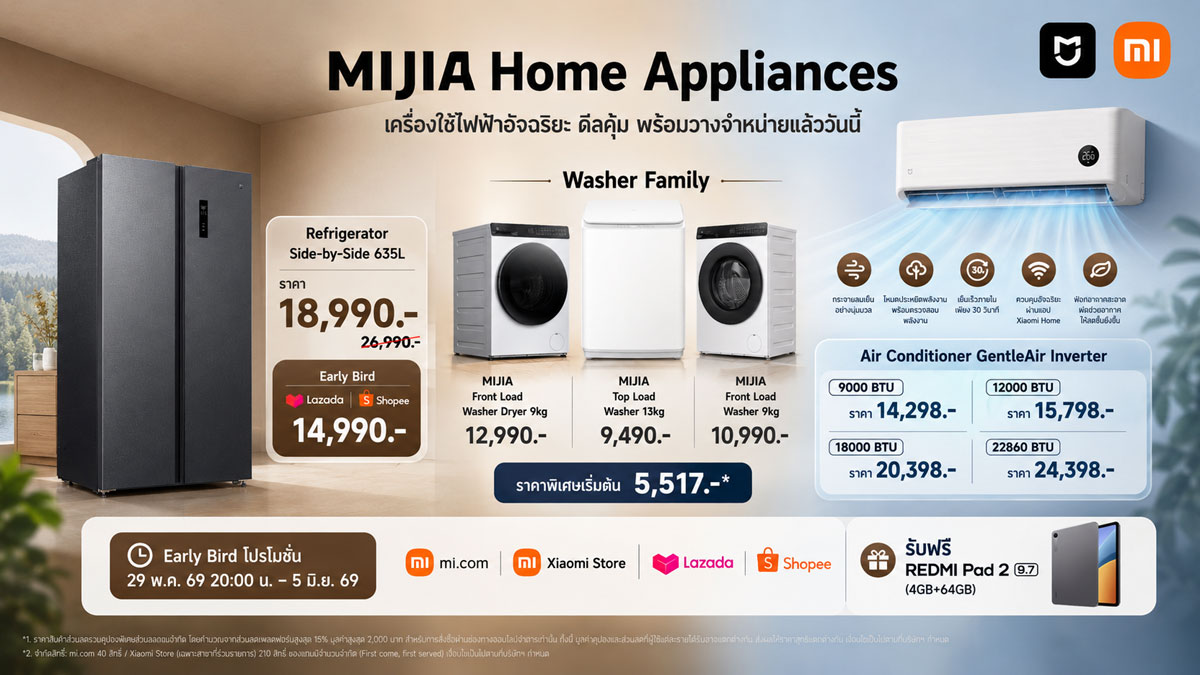
Xiaomi has officially expanded its footprint in the Southeast Asian market, bringing a comprehensive suite of its Mijia-branded smart home appliances to Thailand. This strategic move aims to solidify the company’s Xiaomi Home ecosystem, allowing users to integrate climate control, refrigeration, and laundry management into a single, unified digital interface. As someone who has spent years analyzing the intersection of software development and consumer hardware, I see this as a significant pivot for the brand, moving beyond its roots in smartphones to become a dominant player in the connected home sector.
The rollout includes a variety of high-demand household essentials, such as smart air conditioners, refrigerators, and washing machines. By leveraging the Xiaomi Home application, the company is attempting to lower the barrier to entry for consumers interested in IoT (Internet of Things) integration. This initiative is part of a broader global strategy to harmonize hardware and software, ensuring that appliance management is as intuitive as checking your mobile notifications.
Expanding the Smart Home Ecosystem
The core of this launch is the seamless connectivity offered by the Xiaomi Home app. In my experience testing smart home hardware, the most significant friction point is usually the setup process and the lack of interoperability between different appliances. By bringing a wide range of Mijia products under one roof, Xiaomi is addressing the need for a cohesive user experience. The current lineup in Thailand is designed to cater to modern households that prioritize energy efficiency and remote management.
For instance, the new range of smart air conditioners is built with inverter technology, which is designed to optimize power consumption while maintaining consistent indoor temperatures. According to official product specifications, these units prioritize quiet operation and high-efficiency cooling, which are critical features for urban dwellers in tropical climates like Thailand. The ability to monitor energy usage and adjust settings remotely via a smartphone is not just a convenience; it is a tool for long-term cost management.
Key Features of the Mijia Appliance Lineup
Beyond air conditioning, the introduction of smart refrigerators and washing machines marks a shift toward “intelligent” home maintenance. The new washing machine models, for example, feature automated detergent dispensing and cycle optimization based on load weight—a standard that is increasingly expected in the premium appliance market. Xiaomi’s approach here is to provide these “pro-level” features at a more accessible price point, a hallmark of their consumer electronics strategy.

Verification of these features is essential for consumers. The Xiaomi Home app support documentation outlines the protocols required for device pairing, emphasizing that stable Wi-Fi connectivity is the backbone of this ecosystem. For potential buyers, it is important to ensure that their home network infrastructure can support multiple concurrent connected devices, as the latency of an IoT network can directly impact the responsiveness of these appliances.
The Future of Connected Living
What happens next for Xiaomi in the region will likely depend on the adoption rate of these appliances and the reliability of their localized software support. As companies like Samsung and LG continue to dominate the premium appliance segment, Xiaomi’s success will hinge on its ability to offer a “smart” experience that is both reliable and affordable. The company has stated that it plans to continue iterating on its Smart Home roadmap, focusing on AI-driven diagnostics that could eventually alert users to maintenance needs before a breakdown occurs.
For those interested in adopting this technology, I recommend keeping a close watch on the official Xiaomi Thailand website for firmware updates and expansion of the product catalog. These updates are vital, as they often include security patches and feature enhancements that ensure your smart home remains secure and functional.
Key Takeaways for Consumers
- Unified Control: All new Mijia appliances are compatible with the Xiaomi Home app, centralizing control for the user.
- Energy Efficiency: New models, particularly air conditioners, focus on inverter technology to reduce long-term electricity costs.
- Regional Expansion: The launch signals a commitment to the Thai market, with local support services likely to follow the hardware rollout.
- Connectivity Requirements: A stable 2.4GHz or 5GHz Wi-Fi connection is required to utilize the full range of smart features.
As we see more of these ecosystems enter the global market, the definition of a “modern home” is shifting rapidly. Whether you are a tech enthusiast or simply looking to upgrade your household appliances, the key is to prioritize devices that offer long-term software support and clear privacy policies. I will continue to track the performance of these devices as they make their way into homes across Thailand. Have you integrated smart appliances into your living space yet? Share your experiences in the comments below—I am particularly interested in how you are managing device interoperability.

Related reading