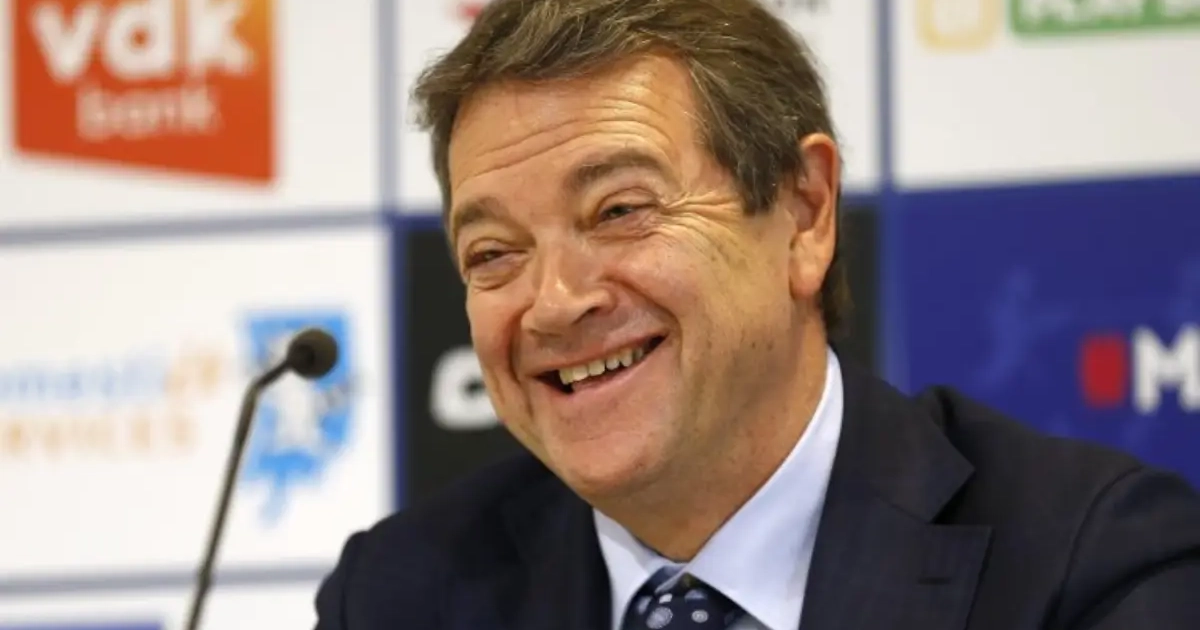
In the landscape of modern Belgian football, the discourse surrounding club management and fan expectations has rarely been more polarized. Michel Louwagie, a central figure in the history of KAA Gent, has recently offered a candid assessment of his club’s standing in the Jupiler Pro League, challenging the financial realities facing perennial contenders like Royal Antwerp FC and RSC Anderlecht. His remarks, which emphasize the constraints of organic growth versus external capital, have ignited a conversation about the sustainability of competitive football in the current European market.
As the sports editor here at World Today Journal, I have spent over a decade observing the ebb and flow of club dynamics across Europe. The tension between historical identity and the pressure to secure immediate results is a hallmark of the sport. Louwagie, who has transitioned into an advisory role at KAA Gent after a multi-decade tenure as general manager, argues that without what he characterizes as “financial doping”—a term often used to describe significant capital injections from external investors—clubs cannot realistically accelerate their competitive trajectory beyond current levels of performance.
The Financial Reality of the Jupiler Pro League
The core of Louwagie’s argument rests on the disparity between clubs that rely on self-sustaining revenue models and those bolstered by significant ownership investment. In the competitive environment of the Belgian top flight, the financial gap between the traditional “Big Three” and the rest of the league has narrowed, but the mechanisms of that growth remain a point of contention. According to recent financial transparency reports from the Pro League, clubs are increasingly navigating the fine line between ambitious spending and long-term solvency.
For KAA Gent, a club that has historically punched above its weight with a league title in 2015 and consistent European campaigns, the challenge is maintaining that relevance. Louwagie suggests that for Gent to surpass rivals like Antwerp or Anderlecht, the club would require a fundamental shift in its economic structure. This perspective highlights a broader trend in football: the transition from community-based stewardship to capital-intensive business models. When clubs like Anderlecht undergo ownership changes or Antwerp benefits from significant private investment, the pressure on clubs like Gent to justify their own fiscal prudence becomes immense.
Addressing the Fan Experience
Perhaps the most controversial aspect of Louwagie’s recent public commentary has been his critique of the KAA Gent fanbase. Having navigated the highs of the 2015 championship and the lows of subsequent lean years, the veteran administrator expressed frustration with what he perceives as an overly critical atmosphere within the Ghelamco Arena. He noted that the intensity of criticism directed at the technical staff and management has become, in his view, difficult to reconcile with the club’s actual achievements.
This dynamic—the relationship between passionate supporters and club leadership—is universal. Yet, in Belgium, where local identity is deeply tied to club culture, such friction is particularly palpable. Supporters often view themselves as the ultimate stakeholders, while management focuses on the cold metrics of profitability and sustainable scouting. The official club communications from KAA Gent often emphasize the need for patience during transitional seasons, a sentiment that frequently clashes with the immediate demands of modern supporters who expect trophy-contending rosters year after year.
Comparative Analysis: Growth vs. Investment
To understand why these comments carry such weight, one must look at the recent trajectories of the clubs involved:
- KAA Gent: Historically focused on a “sold-to-reinvest” model, relying on scouting networks and talent development to maintain a high level of play.
- Royal Antwerp FC: Has seen a transformation in recent years driven by significant investment, leading to a league title in 2023, as detailed in official UEFA association profiles.
- RSC Anderlecht: A club currently engaged in a massive restructuring process under new ownership, aiming to return to the summit of domestic football through both financial restructuring and youth development.
The “financial doping” argument, while provocative, touches upon a legitimate concern regarding the integrity of the competitive balance. When clubs are able to bypass traditional revenue growth cycles through external funding, it inevitably changes the baseline for what constitutes a “successful” season for everyone else. For a club like Gent, which prides itself on stability, this creates a psychological and strategic hurdle that is difficult to clear without compromising their core business model.
What Lies Ahead for KAA Gent
As KAA Gent moves through the current season, the focus remains on the pitch. The club’s ability to integrate new talent while managing the expectations of its vocal supporters will be the defining narrative of their campaign. The technical staff is currently tasked with balancing the books while remaining competitive in both the league and European qualifiers. Fans seeking the latest updates on squad developments and official club policy can continue to monitor the official KAA Gent portal, which remains the primary source for verified club news.
The conversation initiated by Louwagie is not merely about one club; it is a reflection of the struggle for identity in a sport that is becoming increasingly dominated by financial might. Whether or not his view on the necessity of external capital is universally accepted, it serves as a stark reminder of the pressures facing traditional clubs in the 21st century. As we look toward the next round of league fixtures and the subsequent financial disclosures at the end of the fiscal year, it will be fascinating to see how the leadership at Gent adapts to these shifting tides.
What are your thoughts on the balance between financial investment and organic growth in professional football? Join the conversation in the comments section below and share this analysis with fellow football enthusiasts.
Related reading