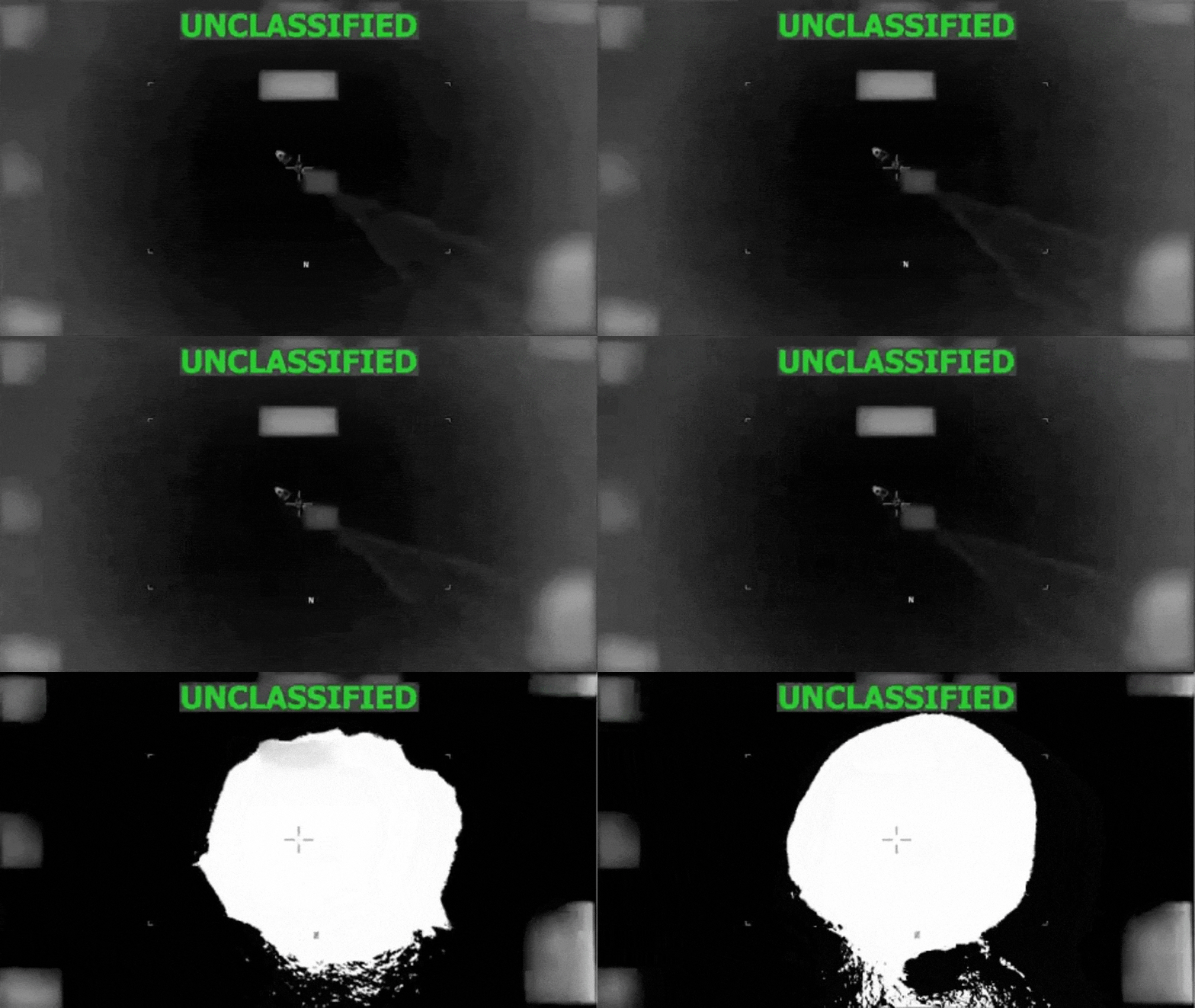
The U.S. Military’s interdiction efforts in the eastern Pacific have long been a cornerstone of international counternarcotics strategy, but recent operations have highlighted the escalating risks inherent in patrolling these volatile maritime corridors. While the U.S. Coast Guard and Navy frequently engage in drug interdiction, reports of lethal force against suspected smuggling vessels—often referred to as “go-fast” boats—underscore the intense, high-stakes nature of these missions aimed at curbing the flow of illicit substances toward North American markets.
The operational reality of maritime interdiction involves a complex intersection of international law, tactical enforcement, and the persistent challenge of transnational criminal organizations. As the U.S. Continues its maritime drug interdiction operations, the focus remains on dismantling the logistical networks that support the trafficking of cocaine and other narcotics, a mission that frequently necessitates coordination with partner nations in Latin America and the Caribbean under the framework of the U.S. Southern Command (SOUTHCOM).
The Operational Context of Maritime Interdiction
The U.S. Military, primarily through the efforts of the U.S. Coast Guard and the U.S. Navy, maintains a robust presence in the eastern Pacific and the Caribbean Basin to identify and disrupt the flow of illegal narcotics. According to the U.S. Southern Command, these operations are designed not only to seize contraband but to gather intelligence that can weaken the operational capacity of cartels. The use of force in these environments is governed by strict rules of engagement, which authorize the use of necessary force when smugglers pose a threat to personnel or refuse to comply with lawful orders to heave to for boarding.
When vessels suspected of drug trafficking are encountered, the standard procedure involves multiple warnings and attempts to de-escalate. However, the presence of armed security aboard smuggling vessels has, on occasion, led to fatal confrontations. These incidents are meticulously reviewed by military legal authorities to ensure compliance with both domestic law and international maritime protocols, including the United Nations Convention against Illicit Traffic in Narcotic Drugs and Psychotropic Substances.
Understanding the “Go-Fast” Vessel Threat
The vessels typically intercepted in these routes, often described as “go-fast” boats or low-profile vessels, are specifically engineered to evade radar detection and maximize speed. The Government Accountability Office (GAO) has documented the persistent challenges the U.S. Coast Guard faces in addressing these threats, noting that limited assets often struggle to cover the vast expanses of the eastern Pacific. The strategic importance of these waters cannot be overstated; they serve as a primary transit corridor for narcotics destined for the United States, making them a focal point for federal enforcement agencies.

The impact of these trafficking routes extends beyond the borders of the U.S., fueling violence and instability in transit countries. By disrupting these supply lines, U.S. Forces aim to create a “cost-prohibitive” environment for cartels. Yet, the tactical reality remains dangerous. Interdiction teams often operate in total darkness, contending with high-speed maneuvers that turn routine boardings into high-intensity security events. When fatalities occur during these operations, they are often the result of defensive fire after smugglers attempt to flee or engage in aggressive maneuvers that threaten the safety of the boarding team.
Legal Frameworks and Accountability
Any use of lethal force by U.S. Military personnel during counternarcotics operations is subject to rigorous internal investigation. These investigations typically involve a review of the tactical decision-making process, the adherence to established rules of engagement, and the specific circumstances surrounding the escalation of force. The Department of Justice and the Department of Defense maintain that all such operations are conducted in accordance with international law and bilateral maritime agreements with regional partners.
For observers of global geopolitics and human rights, the transparency of these investigations is critical. The balance between aggressive enforcement and the protection of life remains a subject of ongoing debate among international legal experts. While the U.S. Maintains that these actions are essential to public safety and the reduction of drug-related violence, the human cost of the “war on drugs” at sea remains a complex issue that requires careful, evidence-based oversight.
Key Takeaways on Maritime Security Operations
- Strategic Objective: The primary goal of U.S. Maritime interdiction is the disruption of transnational criminal organizations and the seizure of illegal narcotics before they reach North American soil.
- Tactical Challenges: Interdiction teams operate in high-risk environments, often facing smugglers who utilize high-speed vessels and, in some cases, armed resistance.
- Regulatory Oversight: All lethal incidents are subject to comprehensive military and, where applicable, federal legal reviews to ensure compliance with rules of engagement and international maritime law.
- Regional Cooperation: Effective interdiction relies heavily on intelligence sharing and operational support from partner nations in the Eastern Pacific and Caribbean regions.
As we continue to monitor these developments, it is essential for the public to look toward official statements from the U.S. Department of Defense and the U.S. Coast Guard for confirmed details regarding ongoing operations. Future updates on these specific incidents are expected to be released through official military press channels as investigations conclude. We encourage our readers to engage with this topic by sharing their perspectives on the balance between security enforcement and maritime safety in the comments section below.

Related reading