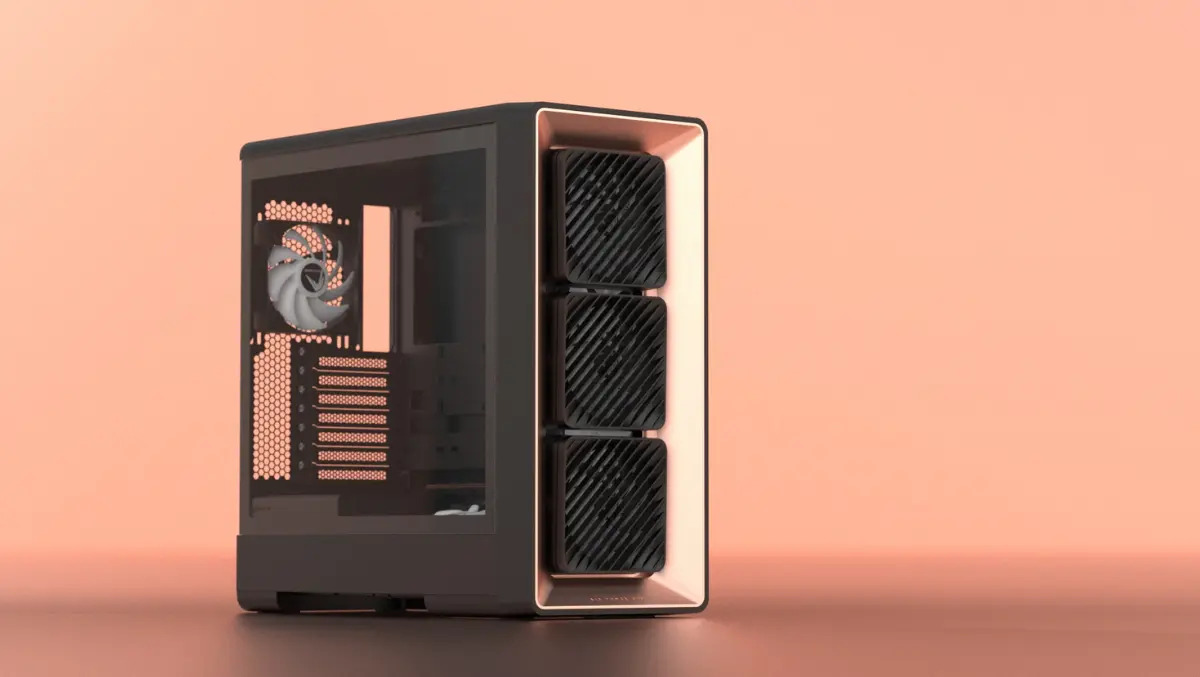
As the landscape of PC gaming hardware continues to evolve, thermal management has moved to the forefront of chassis design. For enthusiasts and high-performance builders, the ability to direct airflow precisely where it is needed most is no longer just a luxury—it is a necessity for maintaining system stability under heavy computational loads. The latest development in this space, the Formula V Line Air Power G10, aims to address these cooling demands through a modular, adjustable-airflow approach that marks a distinct shift from static case designs.
In my years of covering consumer electronics and hardware innovation, I have seen countless iterations of the traditional tower case. However, the Air Power G10 introduces a unique mechanical configuration: the three front-mounted intake fans are designed to be angled independently. This functionality allows users to focus concentrated streams of air directly onto critical heat-generating components, specifically the central processing unit (CPU) or the graphics processing unit (GPU). By moving beyond fixed-position ventilation, the design seeks to mitigate the common problem of “dead zones” within a case where stagnant hot air can collect.
Thermal Engineering and Airflow Dynamics
The core concept behind the Formula V Line Air Power G10 is the optimization of static pressure and directional airflow. In a standard PC chassis, airflow is typically dictated by the intake-to-exhaust ratio and the positioning of fans relative to the motherboard. By allowing the front intake fans to pivot, the G10 allows builders to customize their thermal pathing. This is particularly relevant for high-TDP (Thermal Design Power) components that require consistent, high-velocity airflow to prevent thermal throttling.
When airflow is directed specifically at the GPU, it can significantly lower the temperature of the backplate and the heatsink assembly, which in turn can lead to higher sustained clock speeds. Similarly, angling a fan toward the CPU socket area helps clear heat away from the VRMs (Voltage Regulator Modules), which are often overlooked in standard cooling setups. This level of granular control is a sophisticated addition to the enthusiast market, providing a practical tool for those pushing their hardware to the limit.
Building for Performance: Practical Considerations
For those considering a chassis upgrade, the integration of adjustable components requires a careful approach to cable management and interior clearance. While the flexibility of the Air Power G10 is a clear advantage, users must ensure that internal wiring does not obstruct the path of the pivoting fans. Effective cooling is only as good as the unobstructed flow of air through the main chamber.

the physical construction of such a case must account for the added complexity of the fan mounting brackets. Stability is paramount; if the fans are to be adjusted frequently, the hinge or mounting mechanism must be robust enough to withstand the vibrations inherent in high-RPM operation. As the industry moves toward more modular designs, the focus remains on balancing this complexity with ease of assembly, a trend I continue to monitor closely in the latest hardware releases.
What This Means for the Future of PC Chassis Design
The introduction of the Air Power G10 highlights a broader trend toward “active” chassis features. We are seeing a departure from the “box-and-fan” mentality toward systems that interact dynamically with the hardware they house. As components like next-generation GPUs continue to increase in power consumption, the demand for innovative, user-adjustable cooling solutions will likely grow. The ability to fine-tune the environment inside the case is not just about aesthetics; it is about extending the longevity and performance of the hardware.
For enthusiasts, the shift toward modularity means that the chassis is becoming an active participant in the performance equation. Whether this design approach becomes a standard feature across mid-range and high-end cases remains to be seen, but the intent—to provide users with more control over their thermal environment—is a welcome advancement. As always, the real test will be how these mechanical components hold up over long-term use and how they integrate with various motherboard layouts and cooling liquid-loop configurations.
Key Considerations for PC Builders
- Component Clearance: Ensure that long graphics cards or custom water-cooling reservoirs do not interfere with the movement range of the front intake fans.
- Cable Management: Because airflow is directed, ensure that internal cables are routed behind the motherboard tray to prevent turbulence and potential fan obstruction.
- Maintenance: Modular parts require periodic inspection. Ensure that the pivot mechanisms remain clear of dust and debris to maintain smooth adjustment.
- Thermal Testing: Users should run baseline temperature tests with fans in a fixed position before adjusting them to see the specific impact on their unique hardware configuration.
As we monitor the market for further iterations of the Formula V Line, I encourage our readers to share their own experiences with thermal management in the comments section below. Are you prioritizing airflow, or do you prefer a more minimalist aesthetic? Your feedback helps us continue to provide the most relevant and useful analysis for the global tech community.

We will continue to watch for official technical specifications and performance benchmarks as they become available. For the latest updates on high-performance PC hardware and industry trends, keep checking back at World Today Journal.
Related reading