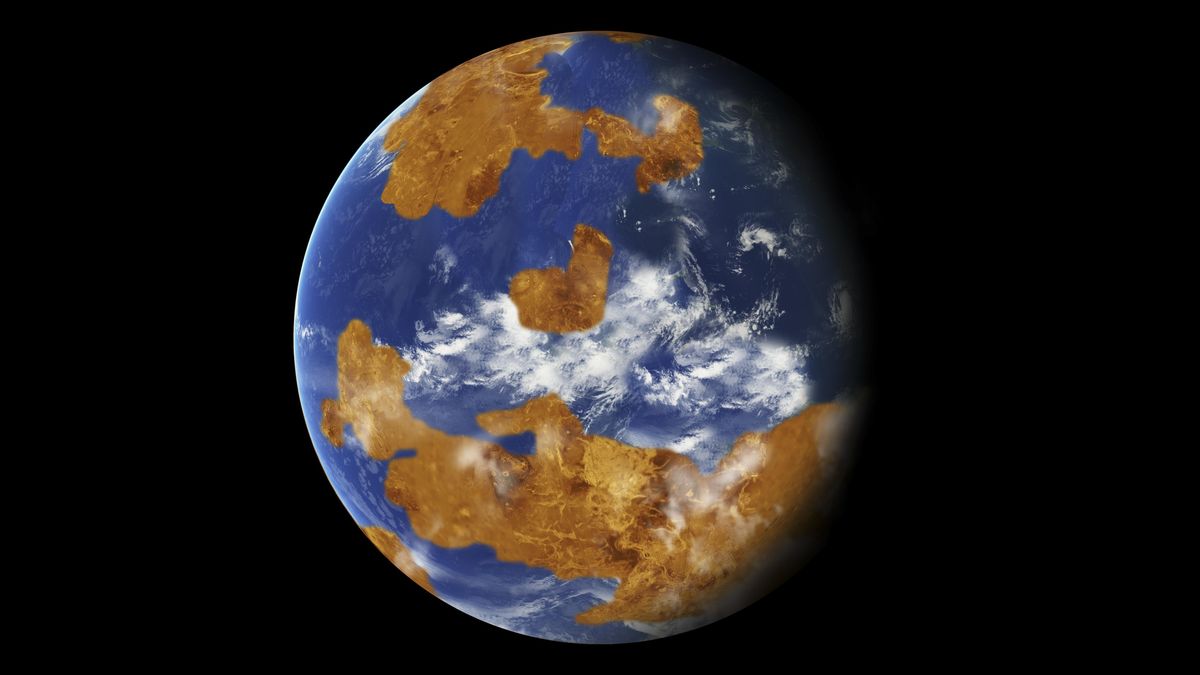
The possibility that Earth and Venus share an ancient, biological connection has long captivated the scientific community. Recent theoretical research exploring the mechanisms of panspermia—the hypothesis that life exists throughout the Universe, distributed by space dust, meteoroids, and asteroids—has reignited discussions regarding whether our planet may have acted as a biological donor to its neighbor. While Venus today is a world of extreme surface temperatures and crushing atmospheric pressure, the prospect that microbial life could have been transported from Earth remains a subject of rigorous astrobiological inquiry.
As we examine these findings, it is essential to distinguish between theoretical modeling and empirical evidence. Current research suggests that the transfer of biological material, or “seeding,” is physically possible under specific conditions, though confirming that this has actually occurred remains a formidable challenge for space agencies like NASA and the ESA. Understanding this process, often referred to as the potential for Earth to seed Venus with life, requires a deep dive into orbital dynamics, atmospheric resilience, and the history of the early solar system.
The Mechanics of Interplanetary Panspermia
Panspermia is not a new concept in planetary science. It posits that life—or at least the essential building blocks of life—can travel between planets via ejecta from significant impact events. When a large asteroid or comet strikes a planet, the resulting debris can be launched into space at velocities exceeding the planet’s escape velocity. If this ejecta contains resilient microorganisms, these “seeds” could theoretically survive the harsh vacuum of space before eventually falling into the gravity well of another world.
The recent academic interest in this phenomenon concerning Venus focuses on the Late Heavy Bombardment, a period roughly 4.1 to 3.8 billion years ago when the inner solar system experienced an unusually high frequency of asteroid impacts. During this era, both Earth and Venus were younger, and their environmental conditions were arguably more conducive to the survival of extremophiles. According to data from NASA’s Solar System Exploration program, Venus may have once possessed liquid water on its surface, potentially providing a habitat for life long before its runaway greenhouse effect took hold.
For life to successfully transition from Earth to Venus, the “biological cargo” must survive three critical stages: the initial ejection event, the transit through the interplanetary medium, and the entry into the Venusian atmosphere. While the surface of Venus is currently uninhabitable for known life forms due to temperatures reaching approximately 464 degrees Celsius (867 degrees Fahrenheit), some scientists, including those involved in the ESA Venus Express mission, have noted that the clouds of Venus—at an altitude of about 50 to 60 kilometers—offer more temperate conditions that could theoretically support microbial life.
Evaluating the Scientific Constraints
It is important for readers to maintain a balanced perspective: there is currently no evidence of life on Venus, past or present. The hypothesis that Earth might have “seeded” Venus is a mathematical and physical model, not a confirmed historical event. The hurdles for such a process are significant. Radiation in space is lethal to most known organisms, and the time required for a rock to travel from Earth to Venus can range from thousands to millions of years, depending on the orbital trajectories involved.
the “seeding” must overcome the harsh reality of Venusian atmospheric entry. Any material entering the atmosphere at high speeds would experience intense friction and heating. However, research into astrobiology suggests that certain bacterial spores are remarkably resilient to both ionizing radiation and extreme temperature fluctuations. The debate often centers on whether these organisms could remain dormant in a state of suspended animation until reaching the more hospitable cloud layers of the target planet.
To advance this field, international space agencies are planning future missions designed to sample the Venusian atmosphere directly. These missions are critical, as they move beyond theoretical modeling and toward direct observation. The NASA DAVINCI mission, for instance, aims to provide high-resolution measurements of the Venusian atmosphere, which will be instrumental in helping scientists understand the planet’s evolutionary history and its potential for harboring life, whether indigenous or imported.
What This Means for Future Exploration
The study of panspermia serves as a vital framework for our broader search for life in the Universe. If life can move between planets within our own solar system, it implies that the distribution of life elsewhere might be more common than we previously estimated. This perspective shifts the focus of planetary science from viewing planets as isolated systems to seeing them as part of an interconnected, chemical, and potentially biological web.
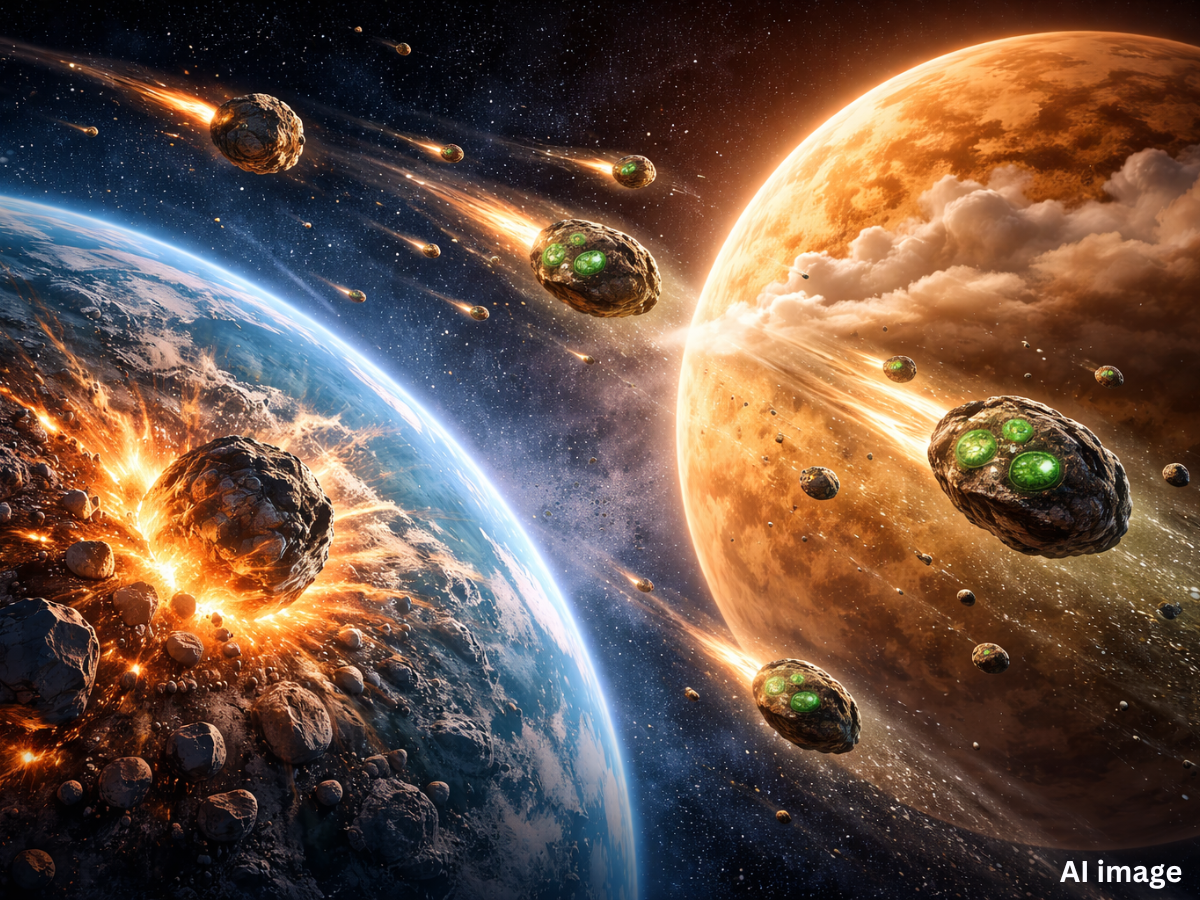 "panspermia Earth to Venus illustration")
Who is affected by these findings? Primarily, the scientific community and the next generation of planetary researchers who are tasked with designing instruments capable of detecting biosignatures in extreme environments. For the general public, these studies provide a humbling reminder of our place in the cosmos—that our planet might not be the only one to have experienced the spark of life, and that our biological heritage might have roots that extend far beyond our own atmosphere.
As we look ahead, the scientific community awaits new data from upcoming missions. The next major milestone in this field will be the deployment of atmospheric probes that can analyze the chemical composition of the Venusian clouds for organic signatures. These missions, currently in development, represent the next logical step in determining whether the “seeding” hypothesis holds any weight.
We encourage our readers to stay informed through official updates from space agencies. As research progresses, the distinction between theory and discovery will become clearer, and we will continue to provide objective analysis on these developments. What are your thoughts on the possibility of interplanetary life? Join the conversation in the comments section below and share this report with those interested in the future of space exploration.
Worth a look
- Hair Loss Care Guide: Expert Solutions from Seoul National University Specialists
- CVS Chief Medical Officer on Rebuilding Vaccine Trust After COVID-19
- Suriya Reveals Radhika Sarathkumar Helped Him When He Had No Bank Balance for Visa (newsdirectory3.com)
- Universal Screening Could Increase CMV Detection in Newborns (archynewsy.com)