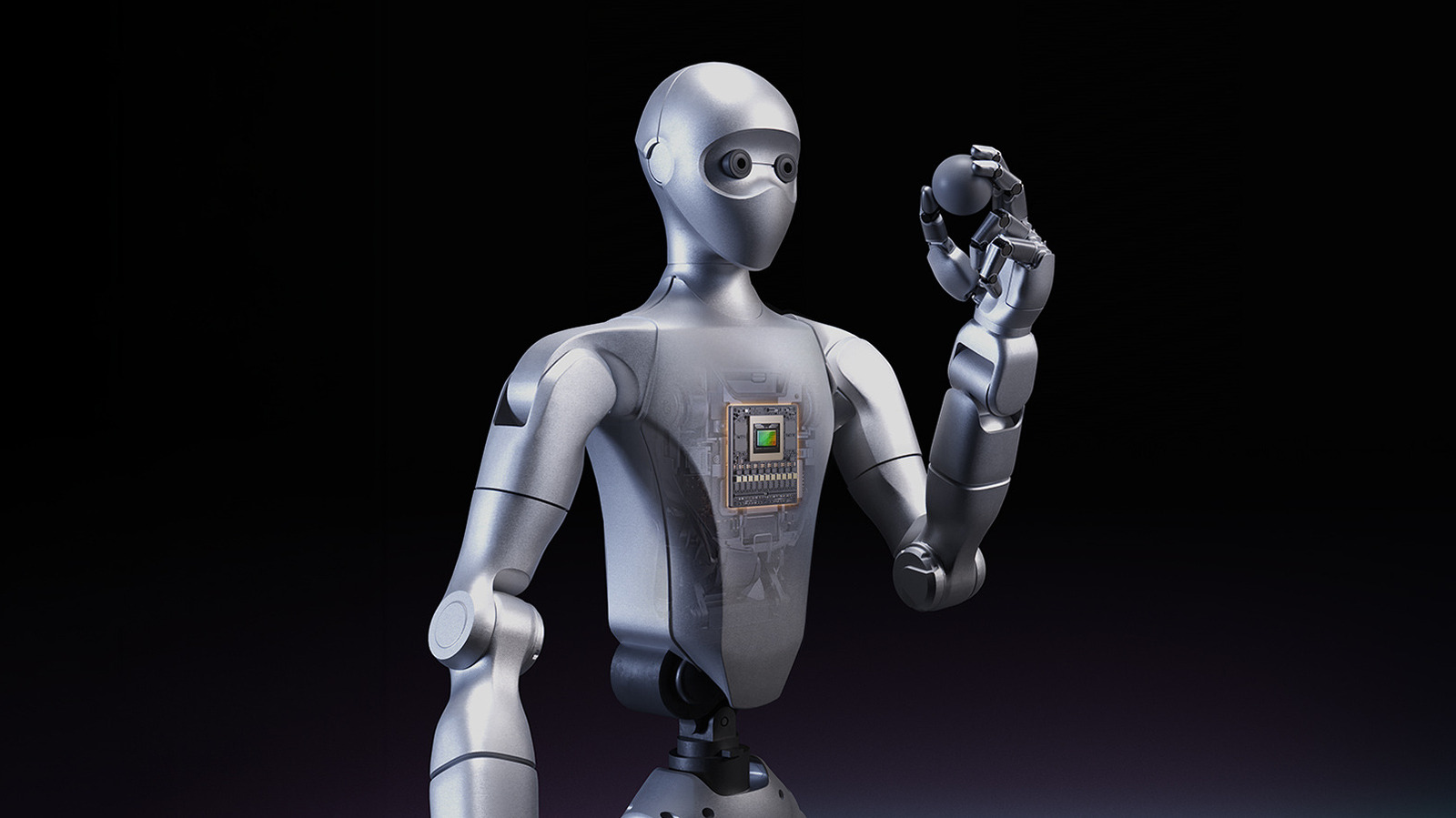
NVIDIA has unveiled Isaac Gr00t, a new reference design for humanoid robotics that promises to democratize access to cutting-edge AI-driven robotics research. Combining a humanoid robot chassis with five-fingered hands and powered by NVIDIA’s latest Jetson Thor compute platform, the system is designed to help researchers, developers, and academic institutions accelerate breakthroughs in autonomous systems, dexterous manipulation, and embodied AI. But what does this mean for the future of robotics—and who stands to benefit most?
The announcement comes at a pivotal moment in the robotics industry, where humanoid robots are transitioning from laboratory curiosities to practical tools for manufacturing, healthcare, and even household assistance. Isaac Gr00t builds on NVIDIA’s existing Isaac Sim ecosystem, which already powers simulations for robotics development, by providing a physical hardware platform that researchers can use to test and refine AI models in real-world conditions.
While NVIDIA has not yet released a formal press release or technical specifications for Isaac Gr00t (as of this writing), industry insiders and early adopters suggest the platform is positioned to address key challenges in humanoid robotics, such as dexterous hand control, real-time AI inference, and human-like mobility. The integration of Jetson Thor—NVIDIA’s newest AI processor—could enable researchers to run complex neural networks directly on the robot, reducing reliance on cloud-based processing and improving response times.
What Is Isaac Gr00t, and How Does It Work?
Isaac Gr00t is described as a reference design, meaning it provides a standardized hardware and software framework that researchers can adapt for their specific needs. Unlike commercial humanoid robots like Boston Dynamics’ Atlas or Tesla’s Optimus, which are often proprietary and expensive, Isaac Gr00t appears to be an open-ended platform aimed at fostering collaboration across the robotics community.
Key components of the platform include:
- Humanoid Robot Chassis: A bipedal robot designed for dynamic movement, including walking, balancing, and interacting with environments.
- Five-Fingered Hands: Advanced robotic hands capable of fine motor tasks, such as grasping objects, manipulating tools, and performing delicate operations—features critical for applications like surgery or manufacturing.
- Jetson Thor Compute: NVIDIA’s latest AI processor, which delivers up to 100 TOPS (trillion operations per second) of performance, enabling real-time AI processing on the robot itself.
- Isaac Sim Integration: Seamless compatibility with NVIDIA’s simulation software, allowing researchers to develop and test AI models in a virtual environment before deploying them on the physical robot.
According to NVIDIA’s Isaac Robotics Developer Program, the platform is intended to lower the barrier to entry for researchers who may not have the resources to build custom humanoid robots from scratch. By providing a pre-configured system, Isaac Gr00t could accelerate innovation in areas like:
- Autonomous Navigation: Teaching robots to move through complex environments without human intervention.
- Dexterous Manipulation: Enabling robots to perform tasks requiring human-like hand-eye coordination.
- Embodied AI: Developing AI systems that learn directly from physical interactions with the world.
Why This Matters: The Race to Build General-Purpose Robots
The robotics industry is in a golden age of humanoid development, with companies and research labs competing to create robots that can perform a wide range of tasks—from assembling cars to assisting in hospitals. However, most of these efforts are still in early stages, with significant challenges remaining in areas like:

- Real-World Adaptability: Robots that work perfectly in a lab often struggle in unpredictable environments.
- Cost and Scalability: High-end humanoid robots can cost millions of dollars, limiting access to academia and startups.
- AI Training Data: Developing AI models for robotics requires vast amounts of data, which is often difficult to collect.
Isaac Gr00t addresses these challenges by offering a cost-effective, modular, and AI-ready platform. By leveraging NVIDIA’s existing ecosystem—including Isaac Sim for simulation and Isaac Labs for AI training—researchers can iterate quickly and deploy their work on physical hardware without starting from scratch.
“The biggest bottleneck in robotics today is the gap between simulation and real-world deployment,” said Jensen Huang, CEO of NVIDIA, in a recent blog post. “Isaac Gr00t bridges that gap by giving researchers a physical platform that mirrors the capabilities of their simulations.”
Who Is Using Isaac Gr00t, and When Will It Be Available?
As of now, NVIDIA has not announced a public release date for Isaac Gr00t, nor has it disclosed the price or availability for the platform. However, early access programs are reportedly underway for select academic and research institutions. Companies and universities that have previously collaborated with NVIDIA on robotics—such as Agility Robotics (makers of Digit) and Tesla—may be among the first to integrate the platform into their projects.

For developers and researchers interested in getting involved, NVIDIA’s Isaac Robotics Developer Program offers resources for building AI-powered robots. While Isaac Gr00t itself is not yet publicly available, NVIDIA has encouraged early adopters to sign up for updates through the program’s website.
What’s Next for Humanoid Robotics?
The launch of Isaac Gr00t signals a shift in how humanoid robots are developed and deployed. Rather than relying on a handful of proprietary systems, researchers now have a standardized, AI-optimized platform that can be customized for specific applications. This could lead to faster advancements in:
- Autonomous Manufacturing: Robots that can adapt to different assembly tasks without reprogramming.
- Healthcare Assistance: Humanoid robots that can perform physical therapy, fetch supplies, or assist in surgeries.
- Household Automation: Personal robots that can help with chores, childcare, or elderly support.
However, challenges remain. For instance, ethical concerns about AI-driven robots—such as job displacement, privacy risks, and autonomous decision-making—will need to be addressed as these technologies mature. The safety of humanoid robots in unstructured environments (e.g., homes or public spaces) is still an active area of research.
NVIDIA has not yet commented on a timeline for broader commercial availability, but industry analysts suggest that Isaac Gr00t could become a cornerstone of the next generation of robotics research, much like how NVIDIA’s Jetson platform revolutionized edge AI.
Key Takeaways: What Isaac Gr00t Means for the Future
- Democratization of Robotics: Isaac Gr00t lowers the cost and complexity of developing humanoid robots, making it accessible to more researchers and startups.
- AI-First Approach: The integration of Jetson Thor enables real-time AI processing on the robot itself, reducing latency and improving autonomy.
- Simulation-to-Reality Bridge: Seamless compatibility with Isaac Sim allows researchers to test AI models in virtual environments before deploying them on physical hardware.
- Potential Applications: From manufacturing to healthcare, Isaac Gr00t could accelerate advancements in fields requiring dexterous, adaptive robots.
- Ethical and Safety Considerations: As humanoid robots become more capable, questions about regulation, job impact, and public safety will need to be addressed.
FAQ: Everything You Need to Know About Isaac Gr00t
Q: When will Isaac Gr00t be available to the public?
A: NVIDIA has not announced a public release date. Early access is reportedly limited to academic and research partners. Interested developers can sign up for updates through NVIDIA’s Isaac Robotics Developer Program.
Q: How much will Isaac Gr00t cost?
A: The pricing has not been disclosed. Given the platform’s focus on research, This proves likely to be positioned as a mid-to-high-end solution, potentially ranging from $50,000 to $200,000 (based on comparable humanoid robot systems).
Q: Can I build my own Isaac Gr00t robot?
A: Isaac Gr00t is a reference design, meaning it provides a standardized framework. While NVIDIA may offer kits or components, the platform is intended for researchers and developers with expertise in robotics and AI.
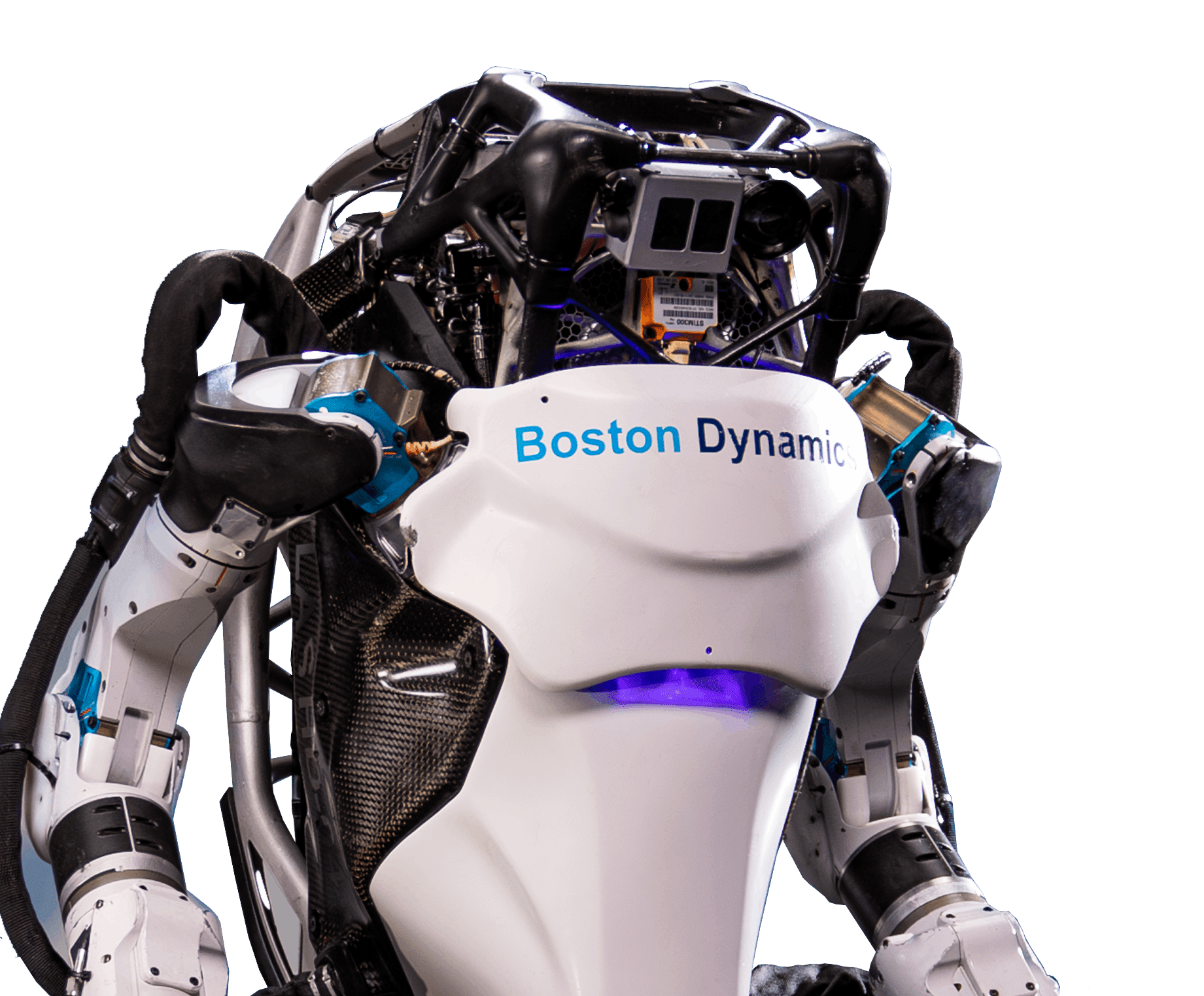
Q: How does Isaac Gr00t compare to other humanoid robots like Boston Dynamics’ Atlas?
A: Unlike Atlas, which is a fully developed commercial robot, Isaac Gr00t is a research platform designed for customization. Atlas is optimized for dynamic locomotion and industrial applications, while Isaac Gr00t focuses on AI-driven dexterity and adaptability.
Q: What industries will benefit most from Isaac Gr00t?
A: The platform is most relevant to industries requiring autonomous, adaptive robots, including:
- Automotive and manufacturing (assembly, quality control)
- Healthcare (surgical assistance, patient care)
- Logistics and warehousing (package handling, inventory management)
- Service robotics (hospitality, elder care, personal assistance)
What’s Next? Staying Updated on Isaac Gr00t
NVIDIA has not yet scheduled a formal launch event for Isaac Gr00t, but the company is expected to provide additional details in the coming months. For now, researchers and developers can:
- Sign up for updates via the Isaac Robotics Developer Program.
- Explore NVIDIA’s Jetson platform for AI-powered robotics development.
- Follow NVIDIA’s official channels for announcements on X (Twitter) and LinkedIn.
As the field of humanoid robotics continues to evolve, platforms like Isaac Gr00t could play a pivotal role in shaping the next era of automation. Whether you’re a researcher, developer, or simply a tech enthusiast, keeping an eye on this space will be essential.
What do you think about the future of humanoid robotics? Share your thoughts in the comments below, and don’t forget to follow World Today Journal for the latest updates on AI, robotics, and emerging technologies.
Related reading