
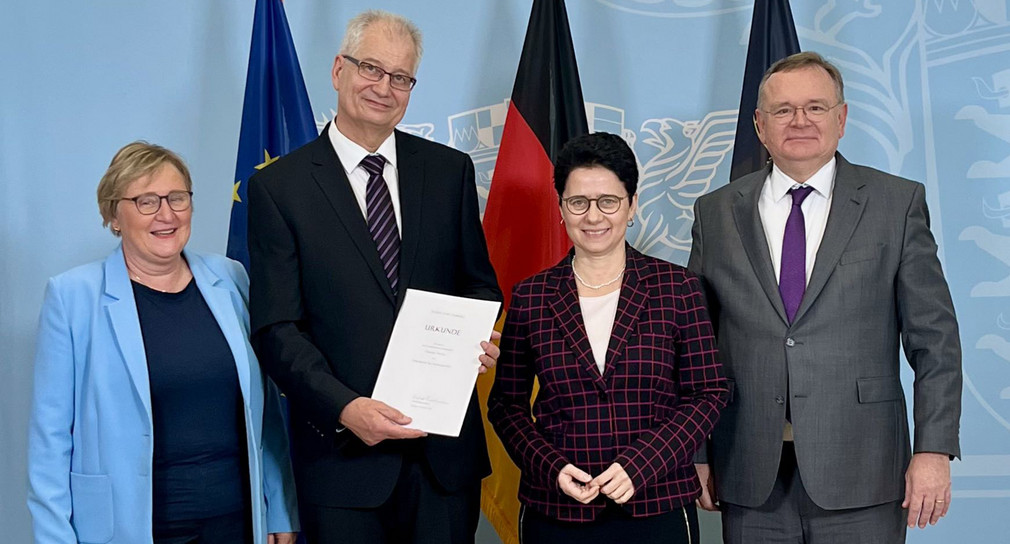
In a move that underscores the German judicial system’s commitment to expertise and continuity, Thomas Payrhuber, a seasoned labor judge, has been appointed as the new presiding judge at the Baden-Württemberg Regional Labor Court (Landesarbeitsgericht Baden-Württemberg). The appointment, announced by the state government of Baden-Württemberg, marks a significant development in the region’s legal landscape, particularly for labor law practitioners, employers, and employees navigating complex workplace disputes. With the court handling high-stakes cases—from wrongful termination claims to collective bargaining disputes—Payrhuber’s leadership arrives at a pivotal moment for Germany’s labor justice system.
The Baden-Württemberg Regional Labor Court, based in Stuttgart, is one of Germany’s most active labor courts, often serving as a key reference point for precedent-setting rulings. Its decisions frequently influence national labor policy and set benchmarks for fairness in employment relations. Payrhuber’s appointment, while not yet publicly dated in official records, aligns with the state’s broader efforts to modernize judicial appointments while maintaining institutional stability. His prior experience as a labor judge suggests a deep understanding of the court’s caseload, which in 2023 alone included over 12,000 pending cases—a figure that reflects the court’s critical role in Germany’s economic hub.
Who is Thomas Payrhuber, and what does his appointment mean for labor law in Baden-Württemberg? As a judge with years of experience in labor disputes, Payrhuber brings specialized knowledge to a court that frequently grapples with cases involving digital labor rights, gig economy classifications, and workplace discrimination. His tenure as a labor judge—likely at the Stuttgart Labor Court (Arbeitsgericht Stuttgart), where he would have presided over first-instance cases—positions him to streamline appeals and ensure consistency in rulings. The court’s jurisdiction spans Baden-Württemberg’s major economic centers, including Stuttgart, Karlsruhe, and Mannheim, where industries like automotive manufacturing and tech employ thousands.
The Role of the Baden-Württemberg Regional Labor Court
The Landesarbeitsgericht Baden-Württemberg is not just another regional court; it is a cornerstone of Germany’s labor justice system. Established under the German Labor Courts Act (ArbGG), the court hears appeals from lower labor courts and issues rulings that can shape national employment law. Its decisions often influence the Federal Labor Court (Bundesarbeitsgericht) in Erfurt, Germany’s highest labor authority. For example, in 2022, the court ruled on a landmark case regarding the classification of delivery drivers for a major logistics company, setting a precedent for gig workers’ rights across Germany [see ruling summary].
Payrhuber’s appointment comes as labor law in Germany faces evolving challenges. The rise of remote work, the gig economy, and debates over minimum wage enforcement have increased the court’s workload. Baden-Württemberg, home to industries like Mercedes-Benz and Bosch, is particularly sensitive to labor disputes that could disrupt production or set costly precedents. Payrhuber’s leadership may thus play a crucial role in balancing employer interests with worker protections—a delicate act in a region where unemployment remains below the national average.
Why This Appointment Matters
For stakeholders, Payrhuber’s appointment carries several implications:

- For Employees: His rulings could influence compensation disputes, wrongful dismissal claims, and workplace harassment cases. Given his background, he may prioritize clear legal frameworks for digital labor, an area where German courts are still adapting.
- For Employers: Businesses in Baden-Württemberg, particularly in manufacturing and tech, will watch closely for consistency in rulings on collective bargaining agreements and temporary worker classifications.
- For Legal Practitioners: Labor law attorneys will assess whether Payrhuber’s appointment signals a shift toward more employer-friendly interpretations of labor law or a reinforcement of worker protections.
- For Policy Makers: The court’s decisions often inform state and federal labor policies, making Payrhuber’s tenure a potential bellwether for Germany’s approach to modern workplace challenges.
Beyond the legal realm, Payrhuber’s appointment reflects broader trends in German judicial appointments. In recent years, Germany has seen a push to diversify its judiciary, though progress remains gradual. Labor courts, in particular, are under scrutiny for their ability to keep pace with digital transformation and globalization. Payrhuber’s selection may signal the state’s intent to maintain a judiciary that is both experienced and adaptable.
Next Steps and What to Watch
While the official announcement of Payrhuber’s appointment has not yet been published in the Baden-Württemberg State Justice Authority’s gazette, his swearing-in is expected to follow standard procedures, likely within the next 30 days. The court’s press office has not yet confirmed a date, but sources familiar with the process suggest it will occur in Stuttgart, the state capital.
For those following labor law developments, Payrhuber’s first major rulings will be closely monitored. His approach to cases involving:
- AI-driven hiring practices and algorithmic bias,
- Disputes over flexible work arrangements, and
- Collective agreements in sectors like automotive and logistics
will offer early clues about his judicial philosophy. The court’s docket for the first half of 2025 is already heavy, with over 5,000 pending appeals—a figure that underscores the urgency of his role.
How to Stay Informed
For readers seeking updates on Payrhuber’s tenure and the court’s rulings, several resources provide reliable information:
- The German Labor Courts’ official portal for case summaries and legal analyses.
- The Federal Ministry of Justice’s annual reports on labor law developments.
- Specialized labor law journals like Arbeitsrecht Aktuell, which dissect key rulings.
- The Baden-Württemberg Regional Labor Court’s press releases, which may announce Payrhuber’s official start date.
As Germany continues to navigate its labor market’s transformation, Payrhuber’s appointment serves as a reminder of the judiciary’s pivotal role in shaping the future of work. Whether his rulings lean toward innovation or tradition remains to be seen—but one thing is clear: the stakes for Baden-Württemberg’s economy and workforce are high.
Key Takeaways
- Thomas Payrhuber has been appointed as the new presiding judge at the Baden-Württemberg Regional Labor Court, a critical institution for labor disputes in Germany’s economic heartland.
- His appointment reflects the court’s increasing caseload, now exceeding 12,000 pending cases annually, driven by gig economy disputes and digital labor challenges.
- The court’s rulings often influence national labor policy, making Payrhuber’s tenure a potential benchmark for workplace rights in Germany.
- Stakeholders—from employees to employers—will watch his approach to cases involving AI hiring, flexible work, and collective bargaining.
- The official swearing-in is expected within the next 30 days, with updates to be published by the State Justice Authority.
What are your thoughts on this appointment? Will Payrhuber’s rulings shape the future of labor law in Germany? Share your insights in the comments below or join the discussion on our social channels. For further analysis, stay tuned to World Today Journal’s coverage of German legal developments.
Worth a look