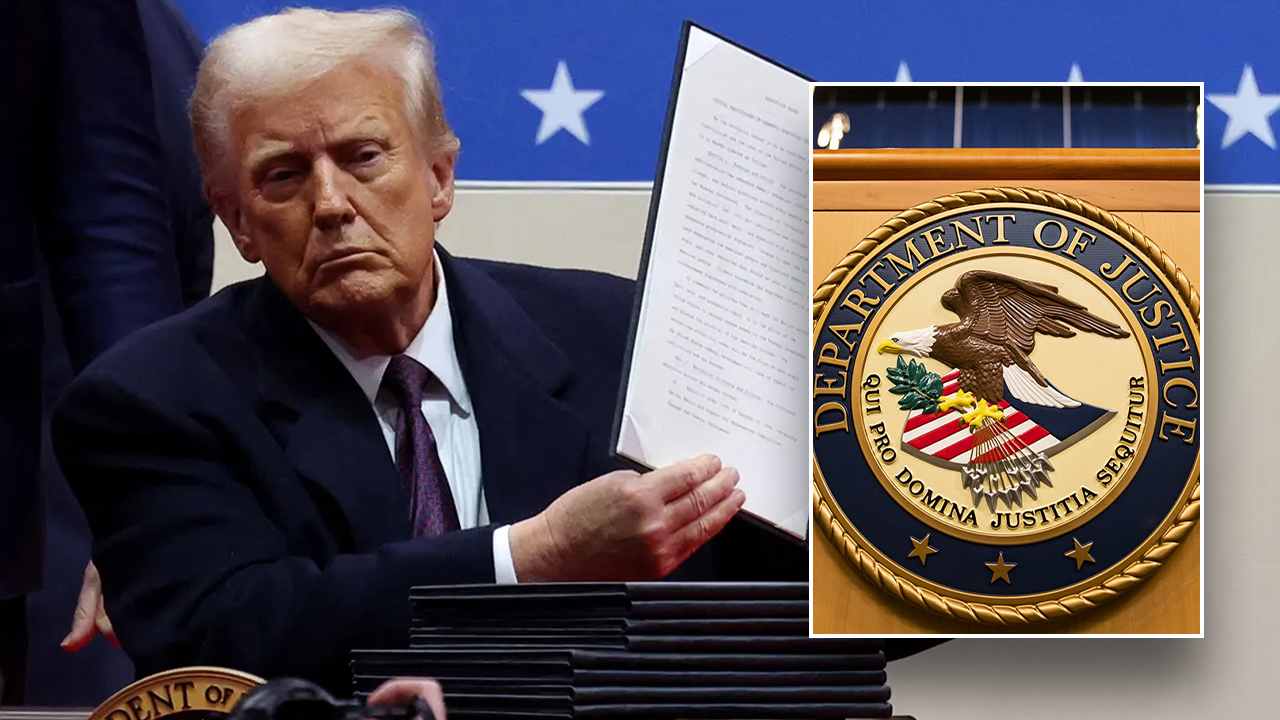
WASHINGTON — The Trump administration’s $1.8 billion “anti-weaponization” fund, designed to counter foreign efforts to undermine U.S. Military and technological superiority, is now on the brink of collapse after a federal court order temporarily paused payments and Republicans in Congress signaled they would no longer support it. The Justice Department’s abrupt compliance with the ruling—coupled with mounting legal scrutiny and bipartisan skepticism—has left the fund’s future uncertain, even as officials scramble to clarify its legal standing and political viability.
The fund, established under executive authority in late 2023 to “disrupt adversarial efforts to weaponize critical technologies,” has become a lightning rod in Washington. Critics, including some conservative lawmakers, argue it lacks clear congressional authorization and risks overreach by the executive branch. Meanwhile, legal challenges have intensified, with at least three separate lawsuits alleging the fund violates the Constitution’s Appropriations Clause by diverting funds without explicit legislative approval.
As of this week, the Justice Department confirmed it would halt disbursements pending a resolution of the legal disputes. The move follows a federal judge’s ruling in late May that temporarily blocked further funding allocations, citing “serious constitutional questions.” The decision has sent shockwaves through the administration, where officials had previously framed the fund as a cornerstone of national security strategy.
Why the Fund’s Existence Is Now in Question
The $1.8 billion fund—officially dubbed the “Countering Foreign Weaponization Initiative”—was announced in December 2023 as part of a broader effort to counter China’s and Russia’s efforts to acquire advanced U.S. Technology, including semiconductors, AI, and biodefense research. The initiative was justified under emergency authorities granted by Congress in 2022, but legal experts and lawmakers have increasingly questioned whether those authorities apply.
“This fund was always a legal stretch,” said Josh Chafetz, a constitutional law professor at Georgetown University. “The executive branch can’t just redefine national security to justify spending billions without Congress. The courts are now forcing them to confront that reality.”
Key developments in the unfolding crisis include:
- Legal Pause: A federal judge in Washington, D.C., issued a temporary injunction on May 28, freezing all fund allocations pending a full hearing on its constitutionality. The DOJ complied within 48 hours, marking the first time the fund’s operations have been halted.
- Republican Retreat: GOP leaders, including House Speaker Kevin McCarthy and Senator Ted Cruz, have signaled they will no longer support the fund unless it receives explicit legislative approval. Cruz called the fund “a blatant power grab” and vowed to block any future funding requests.
- White House Scramble: Administration officials, including Office of Management and Budget Director Shalanda Young, have held closed-door meetings with legal teams to assess options, including whether to appeal the court ruling or seek emergency congressional action. Sources indicate the White House is considering a scaled-back version of the fund, focusing only on “high-priority” technologies.
Who Stands to Lose—and Who Might Benefit?
The fund’s collapse would have ripple effects across multiple sectors:
- Defense Contractors: Companies like Lockheed Martin and Northrop Grumman, which had been positioned to receive contracts under the fund, could face delays in projects tied to countering foreign tech acquisition. A Defense One analysis estimates that up to $500 million in planned contracts could be at risk.
- Tech and Semiconductor Firms: The fund’s original mandate included investments in U.S. Semiconductor manufacturing and AI research to prevent foreign entities from accessing cutting-edge technology. Companies like Intel and NVIDIA had expressed interest in participating, but the pause could derail those plans.
- Legal Precedent: If the courts strike down the fund entirely, it could set a precedent limiting the executive branch’s ability to redirect funds under emergency authorities—a move that could embolden future legal challenges to similar initiatives.
The Road Ahead: What Happens Next?
The next critical checkpoint is a June 15 hearing before the U.S. District Court for the District of Columbia, where lawyers for the plaintiffs—including the Heritage Foundation and a coalition of conservative think tanks—will argue that the fund violates the Constitution’s Appropriations Clause. The DOJ is expected to defend the fund’s legality, citing national security imperatives.
In parallel, the White House is reportedly drafting a legislative proposal to seek retroactive approval for the fund’s spending, though lawmakers have already signaled skepticism. “We’re not going to rubber-stamp an executive overreach just because it’s convenient,” said Rep. Mike Walsh (R-CA), a staunch critic of the fund.
If the court upholds the injunction, the fund’s $1.8 billion could be permanently frozen, forcing the administration to reallocate funds through traditional congressional channels—a process that could take months. Alternatively, if the White House appeals and wins, the fund could resume operations, though with significantly reduced political support.
Key Takeaways
- The $1.8 billion “anti-weaponization” fund is legally paused after a federal court ruling and Republican opposition.
- The DOJ has halted all disbursements pending a June 15 hearing on its constitutionality.
- GOP leaders, including Speaker McCarthy and Senator Cruz, have abandoned support for the fund.
- Defense and tech contractors face uncertainty over $500 million+ in planned contracts.
- The White House is exploring legislative fixes but lacks congressional backing.
What Which means for National Security—and the 2024 Election
The fund’s demise would mark a rare defeat for the Trump administration’s national security agenda, particularly as it seeks to contrast its approach with President Biden’s. However, the crisis also exposes deeper tensions within the GOP over executive power and congressional oversight—a dynamic that could resurface in the 2024 election debates.

For now, the focus remains on the June 15 hearing. Should the court rule against the fund, the administration’s options would narrow dramatically, potentially forcing a complete overhaul of its foreign tech countermeasures strategy. Alternatively, if the fund survives, it would set a dangerous precedent for future executive actions—one that could be exploited by either party in the years ahead.
As the legal battle intensifies, one thing is clear: The “anti-weaponization” fund’s fate will not only determine billions in spending but also shape the contours of U.S. National security policy for years to come.
For updates on the June 15 hearing, monitor the U.S. District Court for D.C.. To track legislative developments, visit Congress.gov. Share your thoughts in the comments below—will this fund’s collapse reshape U.S. National security policy?