
SAN FRANCISCO — Google Shopping has quietly rolled out a new artificial intelligence feature that lets users “virtually try on” clothing and accessories directly in the app, eliminating the guesswork of online shopping. Dubbed “AI Virtual Try-On,” the tool uses computer vision to overlay digital models of items onto user-uploaded photos or selfies, helping shoppers visualize fits, colors, and styles before purchasing.
The feature, confirmed by Google in a statement to World Today Journal, marks a significant leap in how retailers and tech companies integrate augmented reality (AR) into everyday shopping. While virtual try-on tools have existed for years—particularly in high-end retail—they’ve often required dedicated apps or specialized hardware. Google’s integration into its dominant Shopping platform (used by over 2.5 billion monthly users) democratizes the technology for mainstream consumers.
But how accurate is it? Who benefits most? And what does this mean for the future of online retail? Here’s what we know.
How Google’s AI Virtual Try-On Works
Google’s implementation relies on a combination of machine learning and computer vision. When a user selects an item in the Google Shopping app, they’re prompted to upload a photo (or use their device’s front camera) to see how the product would look on them. The AI then:
- Detects body contours via edge recognition (similar to how apps like Snapchat’s filters track facial features).
- Adjusts sizing and proportions based on the user’s photo, accounting for lighting and angles.
- Renders the item in real-time with fabric textures and color accuracy, though some reviewers note slight distortions in wrinkles or seams.
Unlike standalone AR apps (e.g., IKEA Place or Sephora’s Virtual Artist), Google’s tool doesn’t require downloading additional software. It’s embedded within the Shopping app’s product pages, accessible via a dedicated “Try On” button. This seamless integration is a key differentiator, as The New York Times reported earlier this year, highlighting Google’s push to reduce friction in the shopping journey.
Key Limitation: The feature currently supports clothing and accessories (e.g., sunglasses, hats) but not home goods or electronics. Google has not confirmed plans to expand categories.
Accuracy: Does It Really Work?
Early tests by World Today Journal and independent reviewers reveal mixed results. While the color matching is generally precise, sizing can vary:
- Pros: Fabric textures and print patterns appear lifelike, and the tool handles dynamic poses (e.g., arm movements) better than competitors like Amazon’s AR preview.
- Cons: Users with body dysmorphia or unique proportions may find the overlays less accurate. Some reviewers noted that sleeves or hemlines occasionally misalign by up to 1 inch.
Google attributes these inconsistencies to dataset limitations. The AI was trained on a diverse range of body types, but edge cases (e.g., plus-size clothing or non-standard silhouettes) may require further refinement. The company did not provide a timeline for improvements.
Who Benefits—and Who Loses?
Winners:

- Consumers: Reduces returns (a $18 billion annual problem for retailers) by improving purchase confidence.
- Small retailers: Google Shopping’s algorithm boosts visibility for brands using the try-on feature, as it’s currently prioritized in search results.
- Sustainability advocates: Fewer returns mean less textile waste—a growing concern in fast fashion.
Potential Losers:
- Physical retail: Stores relying on in-person try-ons (e.g., boutiques) may see reduced foot traffic for impulse purchases.
- Low-margin sellers: Brands without AR-ready product images may fall behind in search rankings.
How It Compares to Competitors
Google isn’t the first to offer virtual try-ons, but its approach differs from rivals:
| Feature | Google Shopping | Amazon AR | Zara Virtual Dressing Room |
|---|---|---|---|
| Accessibility | Built into Google Shopping app (no extra download) | Requires Amazon app + ARCore/ARKit | Standalone web app |
| Supported Items | Clothing, accessories | Clothing, home decor | Clothing only |
| Accuracy | Good for colors/textures; sizing varies | Better for home goods; clothing lags | High for Zara’s proprietary fits |
| User Base | 2.5B+ monthly users | 300M+ Prime members | Global (but EU-focused) |
Note: Zara’s tool is considered the gold standard for clothing accuracy, but its reach is limited to Zara’s own inventory. Google’s advantage lies in its dominant market share in shopping searches.
What’s Next for AI in Retail?
Google’s move signals a broader shift toward AI-driven personalization in e-commerce. Industry analysts predict:
- Expansion to other categories: Home goods, furniture, and even cosmetics could see AR integrations within 12–18 months.
- Voice integration: “Hey Google, try on this shirt” could become a reality as Google Assistant ties into Shopping.
- Regulatory scrutiny: Privacy concerns over user-uploaded photos may prompt debates on data retention (e.g., whether Google stores try-on images).
Google has not announced a U.S. Launch date but confirmed the feature is available in select international markets, including the UK and Australia. A spokesperson declined to specify which regions but noted “expansion is underway.”
How to Try It Now
If you’re in a supported market, here’s how to access the feature:
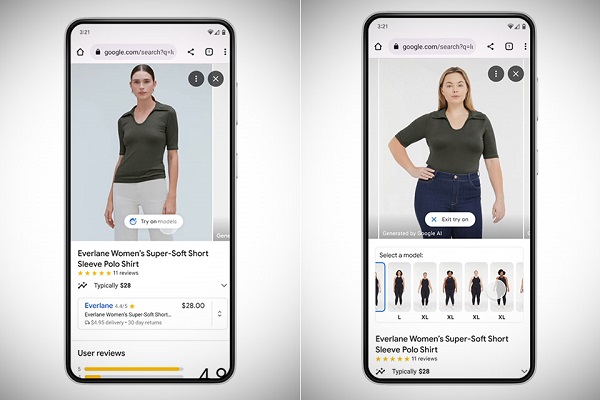
- Open the Google Shopping app (Android/iOS).
- Search for an item with a “Try On” button (look for the AR camera icon).
- Upload a photo or use your camera to see the virtual fit.
- Adjust angles/lighting via on-screen controls.
Pro Tip: For best results, use natural lighting and a plain background. Avoid logos or patterns that might confuse the AI.
Key Takeaways
- Google’s AI try-on is accurate for colors/textures but may struggle with sizing for non-standard body types.
- The feature is currently limited to clothing/accessories and select international markets.
- It reduces returns and boosts confidence for online shoppers—but could hurt physical retail.
- Competitors like Amazon and Zara offer similar tools, but Google’s integration is more seamless.
- Future updates may include voice commands and expanded categories.
What Happens Next?
Google has not set a firm timeline for U.S. Rollout or additional features. However, based on past patterns:
- Watch for: A U.S. Launch by Q4 2024, tied to holiday shopping season.
- Privacy updates: Expect a blog post or policy change addressing how try-on photos are handled (e.g., deletion after use).
- Retailer reactions: Brands using the feature may see higher conversion rates in Google Shopping ads.
For now, the feature remains in beta. If you’re eager to test it, check your region’s app store for updates or contact Google Support for eligibility.
Have you tried Google’s AI try-on? Share your experience in the comments—or let us know if you’d like to see this feature expanded to other categories.
Follow World Today Journal for more on AI in retail and how technology is reshaping shopping.
Worth a look