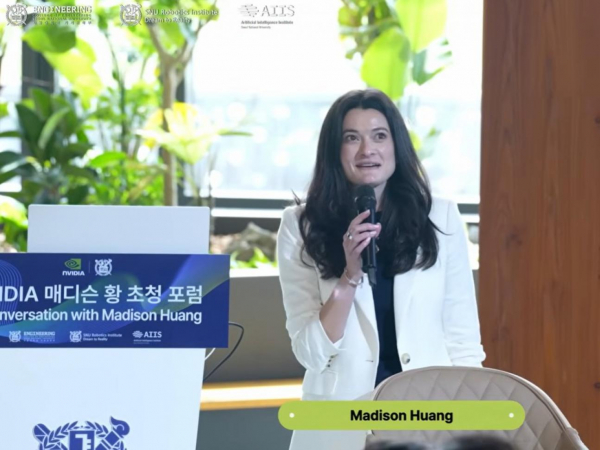
In the high-stakes, hyper-competitive corridors of Silicon Valley, the trajectory of a tech titan’s offspring is often perceived as a predetermined path. For the daughter of NVIDIA CEO Jensen Huang, the expectation might have been a seamless transition from the classroom to the boardroom of the world’s most influential semiconductor company. However, the career journey of Madison Huang—also known as Minshan Huang—has become a compelling study in personal agency and the rejection of industry trends in favor of individual passion.
While her father oversees an empire driving the global artificial intelligence revolution, Madison Huang has navigated a markedly different professional landscape. Her story, which involves a significant pivot from the rigorous world of electrical engineering to the sensory-driven discipline of culinary arts, offers a rare glimpse into the parenting philosophy of one of the technology sector’s most prominent figures. We see a narrative that challenges traditional notions of success and highlights a growing cultural conversation regarding the importance of vocational fulfillment over social or economic momentum.
A Departure from the Expected Path
For many children of high-profile tech executives, the “default” setting is often a degree in computer science or electrical engineering. Madison Huang initially followed this conventional route, enrolling in electrical engineering studies. This field, which serves as the foundational bedrock for the hardware that powers modern computing, is a prestigious and demanding discipline that aligns closely with her father’s professional legacy.
However, the transition from analyzing circuits and electromagnetic fields to mastering the delicate chemistry of pastry was not a move born of academic struggle, but rather one of intentional redirection. Huang eventually pivoted away from the engineering track to attend culinary school, focusing her studies on the intricate world of pastries and culinary arts. This shift represents more than just a change in major; it signifies a departure from the “trend-following” behavior that often characterizes career choices in the digital age.
The Philosophy of Passion Over Trends
The catalyst for this significant career pivot was reportedly a single piece of advice from Jensen Huang. In a departure from the high-pressure educational expectations often seen in both Silicon Valley and many traditional Asian households, the NVIDIA chief encouraged his daughter to prioritize her own interests over the prevailing momentum of the industry.

The core of this guidance centered on the idea that pursuing one’s true interests is more vital than following the current professional “trends.” In an era where artificial intelligence and engineering are viewed as the ultimate markers of prestige and stability, Huang’s decision to support his daughter’s move toward the culinary arts has been noted by observers as an example of progressive, autonomy-focused parenting. This philosophy suggests that long-term professional success is more sustainable when built upon a foundation of genuine interest rather than the pressure to conform to a lucrative or “fashionable” sector.
This approach highlights a significant cultural tension. In many global contexts, the pressure on children of successful professionals to maintain a family “legacy” in a specific field can be immense. By validating her choice to pursue a different discipline, Jensen Huang has signaled a belief that professional identity should be self-defined rather than inherited or dictated by market cycles.
Bridging the Digital and the Physical
While culinary arts and semiconductor engineering may appear to be polar opposites, the intersection of these two worlds is becoming increasingly relevant in the context of modern technological evolution. As the tech industry moves toward what is often termed “Physical AI”—systems that interact with and understand the tangible, sensory world—the insights gained from non-traditional backgrounds become invaluable.
The expertise required to master culinary arts—precision, timing, temperature control, and an understanding of material transformations—shares a surprising amount of conceptual DNA with high-level engineering. As AI continues to move out of the digital cloud and into physical environments (such as automated kitchens, robotic sensory systems, and advanced food science), the ability to bridge the gap between technical logic and physical, sensory experience becomes a unique professional asset.
Huang’s background offers a unique perspective on this convergence. Her journey from the study of electrical systems to the study of culinary textures and flavors positions her at a potential crossroads where technology meets the human experience. This cross-disciplinary approach is increasingly recognized as a key driver of innovation, as the next generation of technology seeks to integrate more seamlessly into the physical nuances of daily life.
Key Takeaways: The Impact of Autonomy in Career Development
- Rejection of Trend-Following: Madison Huang’s transition from electrical engineering to culinary school serves as a case study in choosing personal interest over high-growth industry trends.
- Parental Influence: Jensen Huang’s encouragement to “follow your love” represents a shift away from traditional dynastic career expectations in the tech sector.
- Cross-Disciplinary Value: The intersection of technical engineering knowledge and sensory-based culinary arts reflects the growing importance of “Physical AI” and human-centric technology.
- Redefining Success: The narrative challenges the notion that success is strictly tied to staying within a specific professional or familial lineage.
As the global workforce continues to evolve, the story of Madison Huang serves as a reminder that the most profound innovations often come from those who refuse to be confined by the expectations of their environment. Whether in the laboratory or the kitchen, the pursuit of mastery remains a universal endeavor, regardless of the tools employed.
There are no further official updates scheduled regarding Madison Huang’s professional affiliations at this time. We will continue to monitor developments in the intersection of technology and sensory sciences.
What are your thoughts on the balance between following industry trends and pursuing personal passion? Share your views in the comments below and share this article with your network.
Worth a look