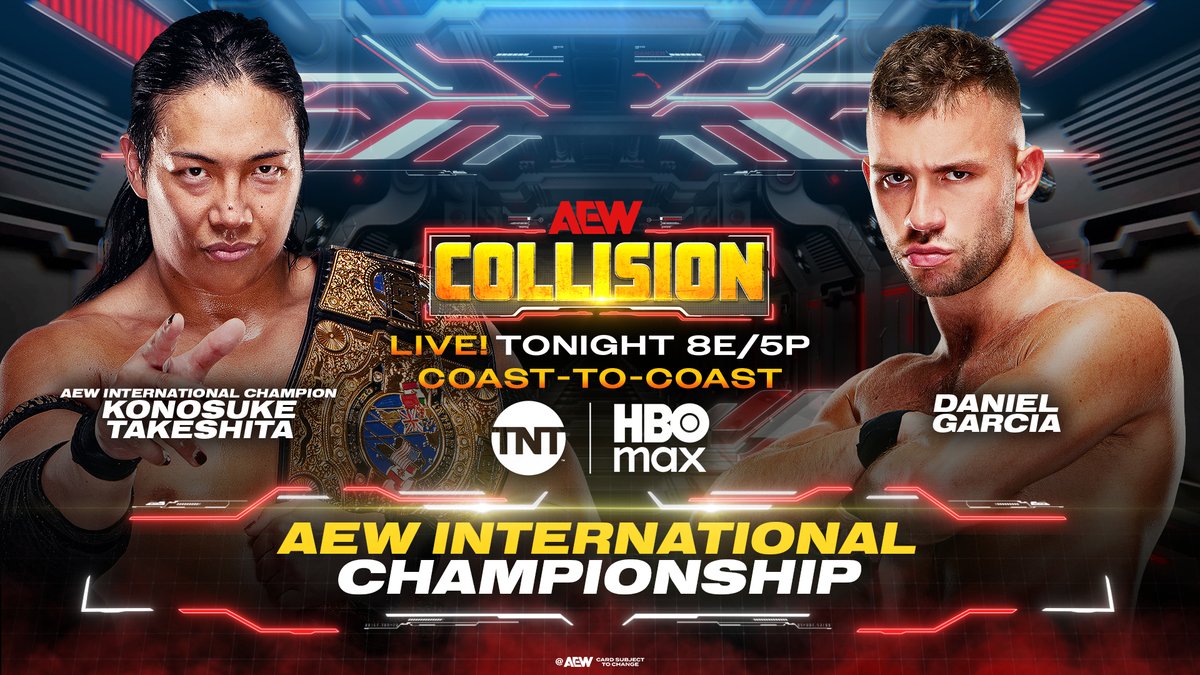
In the landscape of modern sports and entertainment, the battle for viewership supremacy remains a high-stakes endeavor. Recently, All Elite Wrestling’s (AEW) Saturday night program, AEW Collision, encountered significant headwinds, reflecting the brutal reality of competing against major league sporting events. For television executives and industry analysts, these fluctuations are more than just numbers; they represent the ongoing challenge of maintaining a dedicated audience in an increasingly crowded media ecosystem.
The latest broadcast of AEW Collision on TNT faced a formidable challenge, airing directly opposite the decisive Game 7 of the NBA Western Conference Finals. According to industry tracking data, the wrestling program drew an average of 360,000 viewers, a figure that highlights the difficulty of retaining a core audience when blockbuster sports programming dominates the cultural conversation. This performance marked a notable downturn for the series, which has been navigating a complex schedule throughout the spring season.
Understanding these ratings requires looking at the broader context of cable television performance. The 18-49 demographic, which remains the primary benchmark for advertisers, saw the show record a 0.05 rating. As reported by Nielsen, which provides the standard metrics for television viewership, such figures are frequently impacted by the presence of live sports, which consistently draw the largest portions of the linear television audience during the postseason.
The Impact of Live Sports Competition
The decision to air wrestling content against high-profile NBA playoff games is a strategic gamble that often yields predictable outcomes. When a major event—such as a Game 7, which carries immense narrative weight and fan interest—is broadcast on a major network, niche programming across cable often sees a measurable dip. The 360,000 viewer total for the May 30th airing of AEW Collision serves as a case study in how sports scheduling dictates the flow of the cable landscape.

When comparing this performance to previous weeks, the volatility becomes apparent. The program had seen stronger engagement in late May, but the specific pressure of the Western Conference Finals created a unique hurdle. The 18-49 rating of 0.05, while consistent with some of the lower-performing windows for the show this year, stands in contrast to the more robust numbers achieved during weeks when the sports calendar was less congested.
For those tracking the industry, it is essential to remember that AEW operates within the broader Warner Bros. Discovery portfolio, which also holds rights to significant portions of NBA coverage. The internal competition for eyeballs is a reality that network programmers manage with careful deliberation. Further information on the current television landscape and the impact of sports rights can be found through the Sports Business Journal, which frequently covers the intersection of media and live athletics.
Analyzing the Trends in Wrestling Viewership
Beyond the immediate impact of the NBA, the 10-week average for AEW Collision provides a clearer picture of the show’s health. While the most recent episode fell below the typical performance thresholds, the show has maintained a consistent, if fluctuating, base of support. The challenge for the production team remains the same: cultivating a loyal Saturday night audience that persists even when the competition is fierce.
Industry experts often point to “audience fragmentation” as the primary driver for these shifts. As viewers transition between streaming platforms, social media highlights, and traditional linear television, the concept of a “must-watch” live event becomes more difficult to achieve. For the wrestling industry, the path forward involves balancing the needs of a hardcore fan base with the necessity of attracting casual viewers who might otherwise be watching a basketball game.
To put the recent numbers into perspective, the following table outlines the recent performance metrics for the program:
| Date | 18-49 Rating | Total Viewership |
|---|---|---|
| May 9, 2026 | 0.05 | 342,000 |
| May 16, 2026 | 0.06 | 384,000 |
| May 20, 2026 | 0.06 | 413,000 |
| May 27, 2026 | 0.08 | 498,000 |
| May 30, 2026 | 0.05 | 360,000 |
Note: Figures are derived from standard industry reporting on cable television performance.
What Lies Ahead for AEW Collision
Looking toward the remainder of the year, the primary objective for the promotion will be to stabilize its reach. The return of more consistent scheduling, away from the direct shadow of the NBA Finals, will provide a more accurate assessment of the show’s growth potential. As the summer months approach, viewership patterns often shift as fans spend more time away from their television sets, a trend that all cable networks must account for in their programming strategies.
Transparency in reporting, as provided by organizations such as the Wrestling Observer, helps fans and stakeholders understand the business side of the sport. While the numbers from the May 30th broadcast were undoubtedly lower than the company’s recent peaks, they are part of a larger, complex narrative of audience retention. The ability of the brand to pivot and innovate will be the true test as they continue to build their identity in the competitive Saturday night slot.
We invite our readers to share their thoughts on the shifting landscape of professional wrestling. Do you believe Saturday nights can remain a viable home for high-tier wrestling programming, or is the competition from live major sports simply too overwhelming? Join the conversation in the comments section below and let us know your perspective on the future of the industry.
Worth a look