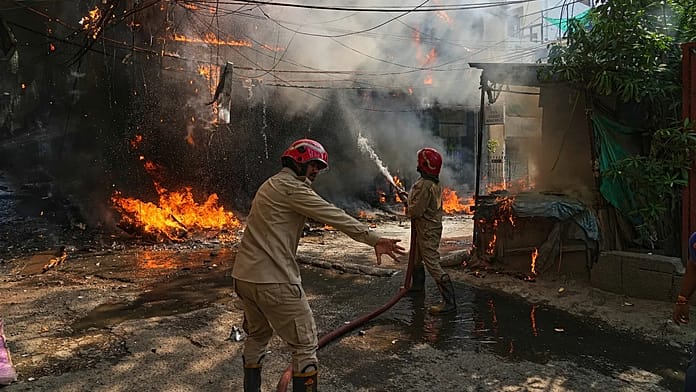
NEW DELHI — A devastating fire has broken out at a hotel in New Delhi, leaving at least 21 people dead, according to preliminary reports from local police. The incident, which has sent shockwaves through the capital, appears to have disproportionately affected foreign nationals, according to initial accounts from news agencies.
The Press Trust of India (PTI) has reported that several of those killed were foreigners, with a significant number originating from Central Asia and Africa, citing unnamed officials involved in the immediate aftermath of the blaze. While emergency services worked to contain the fire and rescue survivors, the scale of the loss of life has prompted an urgent call for investigations into the safety protocols of the establishment.
As of the current hour, official confirmation of the identities of the deceased remains pending. Local authorities have cordoned off the area, and forensic teams are expected to arrive to determine the exact cause of the ignition. For the business community and urban planners in India, the incident raises critical questions regarding the regulatory oversight of budget accommodations and the safety of transient populations in high-density urban centers.
Preliminary Reports and Emergency Response
The fire reportedly erupted in a building used for hospitality services, a sector that often operates on razor-thin margins in the crowded districts of New Delhi. According to initial police statements, the death toll stands at a minimum of 21, though officials have cautioned that this number could rise as search and recovery operations continue within the charred remains of the structure.
The Press Trust of India reported that the victims include a notable number of migrants from Central Asia and Africa. While the specific identities of the deceased have not been released to protect the privacy of the families, the demographic profile suggests that the hotel may have been a frequent residence for foreign nationals seeking low-cost accommodation in the city.
First responders, including the Delhi Fire Service, were deployed to the scene to combat the blaze. Witnesses described a rapid spread of flames, which may have been exacerbated by the building’s architecture or a lack of adequate fire suppression systems. The exact time the fire was reported and the speed at which it escalated are currently being scrutinized by investigators.
The Vulnerability of Migrant Populations in Urban Hubs
The tragedy highlights a growing concern regarding the living and lodging conditions of foreign nationals and migrants in major Indian metropolitan areas. In New Delhi, specific neighborhoods have become hubs for international travelers, students, and migrant workers from across the African continent and Central Asia. These individuals often rely on budget guest houses and small-scale hotels that may not adhere to the same rigorous safety standards as international hotel chains.
This demographic often resides in high-density areas where narrow streets can impede the movement of large emergency vehicles, such as fire engines. The reliance on “informal” or semi-regulated lodging creates a significant gap in safety accountability. When these establishments lack proper fire exits, working smoke detectors, or certified fire extinguishers, the residents—who may be unfamiliar with local emergency procedures—are placed at extreme risk.
The concentration of Central Asian and African nationals in these specific lodging sectors underscores a need for more inclusive safety outreach and specialized regulatory monitoring to ensure that language barriers and transient status do not become factors in preventable mass-casualty events.
Regulatory Oversight and the Hospitality Sector
From a business and economic perspective, the New Delhi hotel fire serves as a grim case study in the risks associated with regulatory non-compliance in the hospitality industry. The Indian hospitality sector is a massive driver of economic activity, yet the “budget” and “guest house” segments often operate in a regulatory gray zone.
Under the National Building Code (NBC) of India, all commercial lodging must meet strict fire safety, structural integrity, and emergency egress requirements. However, the enforcement of these mandates in densely populated urban zones remains a significant challenge for municipal authorities. The cost of compliance—including the installation of advanced sprinkler systems, regular fire drills, and structural retrofitting—can be prohibitive for small-scale entrepreneurs, leading to a systemic temptation to bypass essential safety investments.

For the broader hospitality industry, such tragedies carry heavy reputational risks. Beyond the immediate human cost, incidents of this scale can lead to:
- Increased Regulatory Pressure: Sudden, stringent enforcement waves that can disrupt the operations of legitimate small businesses.
- Rising Insurance Premiums: A spike in the cost of liability and property insurance for all operators in high-risk urban zones.
- Shifts in Consumer Confidence: A potential decline in international travelers opting for budget accommodations due to perceived safety risks.
The incident will likely trigger a review of how the Delhi government and the Ministry of Tourism oversee the licensing and safety inspections of budget-tier accommodations, particularly those catering to international demographics.
Key Takeaways: The New Delhi Hotel Fire
- Casualty Count: At least 21 people are reported dead, according to preliminary police statements.
- Demographics: A significant portion of the victims are reported to be foreign nationals from Central Asia and Africa.
- Primary Source: Initial details regarding the nationality of the victims were provided by the Press Trust of India (PTI) citing unnamed officials.
- Core Issue: The tragedy underscores systemic vulnerabilities in fire safety compliance within the budget hospitality sector.
- Economic Impact: Potential for increased regulatory scrutiny and rising operational costs for small-scale hotel owners in New Delhi.
As the investigation continues, the focus will shift from immediate rescue to a forensic analysis of the building’s safety infrastructure. The findings will be pivotal in determining whether this was an isolated accident or the result of criminal negligence regarding fire safety mandates.
Next Steps: Official confirmation of the victim identities and the formal release of the preliminary cause of the fire by the Delhi Fire Service and local police are expected in the coming days.
Dr. Olivia Bennett will continue to monitor this developing story. We invite our readers to share their insights on urban safety regulations and migrant protections in the comments below.
Keep reading