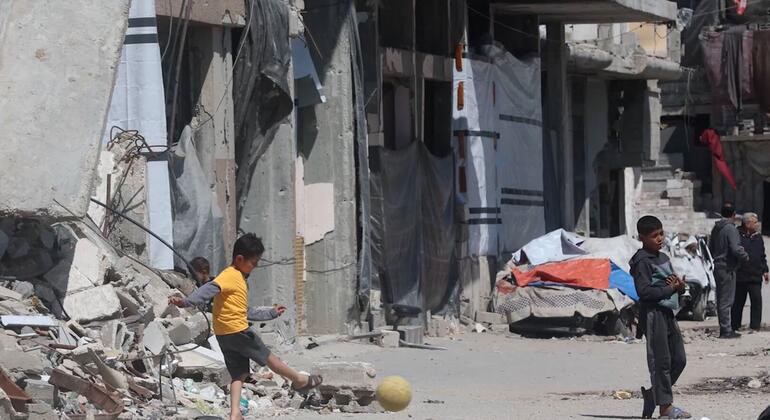
The operational landscape for Gaza’s civil administration has faced profound disruption as the conflict continues to evolve, with recent reports highlighting an increase in strikes targeting public servants. According to findings from the United Nations Office of the High Commissioner for Human Rights (OHCHR), the systematic targeting of police officers and other essential civil personnel has created significant obstacles for the maintenance of public order and the facilitation of humanitarian aid delivery within the enclave.
For international observers and economic analysts, the erosion of local governance structures represents a critical bottleneck for post-conflict reconstruction. As the humanitarian situation remains dire, the ability of local authorities to secure distribution routes and manage essential infrastructure—such as water, sanitation and waste management—is directly linked to the safety and functionality of the public workforce. The UN has underscored that the depletion of these personnel complicates the logistical challenges of providing aid to a population facing widespread displacement and food insecurity, as reported by the Integrated Food Security Phase Classification (IPC).
The Impact on Civil Governance and Aid Logistics
The functionality of Gaza’s public sector is not merely a matter of administrative preference; it is a foundational requirement for any viable recovery strategy. When police officers and civil servants are targeted, the immediate consequence is a vacuum in law enforcement, which often leads to the breakdown of civil society and the looting of humanitarian supplies. International aid agencies have repeatedly noted that without a secure environment, the delivery of food, medicine, and fuel becomes exponentially more dangerous and inefficient.
The United Nations Relief and Works Agency (UNRWA) has consistently highlighted that its own staff, alongside local public servants, operate under extreme risk. The loss of these individuals—who often serve as the primary point of contact for community health and safety—strips the local population of the basic support systems necessary for survival. As of mid-2024, the cumulative impact of these losses has led to a near-total collapse of standard municipal services, according to assessments by the World Bank.
Economic Consequences of Institutional Erosion
From an economic perspective, the targeting of civil infrastructure and the personnel who maintain it is a significant setback for long-term development. Reconstruction efforts rely on the existence of a functioning bureaucracy capable of planning, coordinating, and executing large-scale projects. When the institutional memory and workforce of the civil service are depleted, the “cost of entry” for international donors and reconstruction firms increases significantly due to heightened security risks and a lack of reliable local partners.
The systemic nature of these strikes raises complex questions regarding International Humanitarian Law (IHL), particularly concerning the distinction between combatants and non-combatants. While the Israeli government maintains that its military operations are directed solely at militant groups, the UN and various human rights organizations have raised concerns about the broad classification of personnel involved in civil administration. These legal debates are currently monitored by the International Court of Justice (ICJ) as part of ongoing proceedings regarding the conflict.
Humanitarian Coordination and Future Outlook
Looking ahead, the restoration of essential services will require a coordinated effort between international stakeholders and local actors. The primary challenge remains the lack of a stable security environment, which is prerequisite for any meaningful reconstruction. The United Nations Security Council continues to hold periodic sessions to discuss the implementation of resolutions calling for a ceasefire and the unimpeded access of humanitarian aid.
For those tracking the region’s economic and humanitarian trajectory, the following developments are critical:
- Ongoing ICJ Proceedings: The court continues to deliberate on the application of the Genocide Convention in the context of the conflict in Gaza.
- Humanitarian Access Updates: The UN Office for the Coordination of Humanitarian Affairs (OCHA) provides daily updates on the status of aid convoys and the operating conditions for humanitarian personnel on their official dashboard.
- Reconstruction Planning: International donor conferences are expected to be scheduled once a durable cessation of hostilities is established, though no specific dates have been finalized by the UN or major regional powers.
The situation remains fluid, and the safety of civil servants continues to be a point of contention in diplomatic negotiations. As the international community seeks a path toward stabilization, the protection of the individuals tasked with maintaining the fabric of society will remain a central, if under-discussed, pillar of the broader peace process.
We invite our readers to share their perspectives on the role of civil governance in conflict zones in the comments section below. For the latest verified updates, please consult the official reporting channels of the UN and relevant intergovernmental bodies.