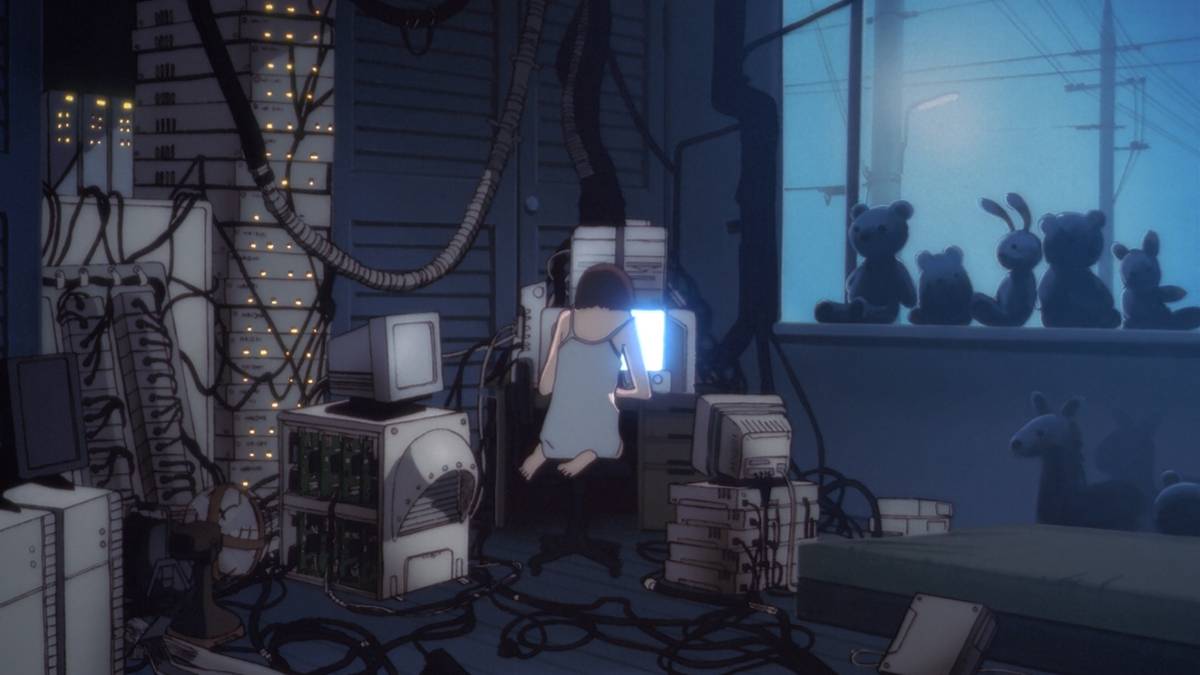
In the vast, often sterile landscape of 1990s animation, few works dared to stare into the abyss of the nascent internet with the same haunting intensity as Serial Experiments Lain. Premiering in 1998, the series—directed by Ryutaro Nakamura and written by Chiaki J. Konaka—remains a seminal touchstone for anyone who has ever felt the disorienting, recursive pull of the digital age. Much like Alice tumbling into the surreal depths of Lewis Carroll’s Wonderland, the protagonist, Lain Iwakura, finds her reality fracturing as she navigates the “Wired,” a global communications network that serves as a precursor to our modern, hyper-connected existence.
Watching Serial Experiments Lain today, more than two decades after its initial broadcast on TV Tokyo between July and September 1998, feels less like a retrospective and more like a prophecy. While many cyberpunk works of the era focused on neon-drenched cities and high-octane action, this series chose a more intimate, psychological path. It is a story about the dissolution of the self, the blurring of boundaries between physical presence and digital identity, and the existential dread that accompanies the realization that we are all, in some capacity, tethered to a machine. For those interested in the evolution of anime as a medium for philosophical inquiry, the official production history and staff details provide a clear window into how such a visionary project was realized during the infancy of the World Wide Web.
As an entertainment journalist who has spent years covering the intersection of technology and culture, I find that Serial Experiments Lain still feels like falling down an internet rabbit hole—a descent that is as terrifying as it is intellectually stimulating. The series does not hold the viewer’s hand. instead, it demands a level of engagement that mirrors the complexity of the internet itself. It is a masterclass in atmosphere, utilizing a stark, minimalist aesthetic to convey the isolation inherent in being “plugged in.”
The Architecture of an Existential Digital Landscape
At its core, the series explores the “Wired,” a concept that mirrors the contemporary internet but with a more metaphysical weight. In the world of the show, the Wired is not just a tool for communication; it is an extension of the human consciousness. This blurring of lines between the individual and the network is perhaps the most prescient element of the narrative. When Lain begins to explore the deeper, more clandestine layers of the Wired, she is forced to confront the reality that her own identity is fluid, fragmented, and potentially omnipresent.
This thematic exploration aligns with what scholars often refer to as the “post-human” condition. The show’s production was heavily influenced by the contemporary academic discourse regarding the internet and its potential to reshape human interaction. As detailed in the archived records of early internet culture studies, the late 90s were a period of intense speculation regarding how digital connectivity would impact the social fabric. Serial Experiments Lain captured this anxiety perfectly, presenting the Wired as a place where the “real” world and the “digital” world are not just competing, but are actively merging.
The visual language of the show—characterized by its use of negative space, the persistent hum of power lines, and the iconic, glowing blue eyes of the characters—serves to heighten the sense of unease. It is an aesthetic that has aged remarkably well, standing in stark contrast to the often overly cluttered CGI landscapes of modern streaming content. By stripping away the superfluous, the creators forced the audience to confront the core of the human experience in a technological age.
Why the “Rabbit Hole” Still Resonates
The comparison to Alice’s journey is not merely a stylistic choice; it is fundamental to the structure of the narrative. Like Alice, Lain is an unwitting participant in a world that operates on its own, often inscrutable, logic. She encounters “characters” that defy traditional definitions of being—be they digital ghosts, manifestations of collective subconscious, or literal manifestations of code. The way the show handles these encounters mirrors the erratic, often nonsensical nature of the early internet, where one could stumble from a benign forum into a dark, complex subculture with a single click.
For modern viewers, the series serves as a mirror to our current “always-on” culture. We now live in the world that Serial Experiments Lain predicted. Our identities are curated across multiple platforms, our privacy is a shifting variable, and our sense of reality is often mediated through screens. The show’s exploration of “the collective unconscious” via the Wired resonates deeply in an era of viral trends, echo chambers, and the constant, overwhelming influx of information.
the series remains a subject of intense academic and fan analysis. According to the metadata and critical reception archives on IMDb, the show continues to maintain a high rating among genre enthusiasts, reflecting its enduring status as a cult classic that refuses to fade into obscurity. This longevity is a testament to the fact that the questions it asks—about the nature of existence, the value of human connection, and the risks of total integration—are more relevant today than they were in 1998.
Navigating the Digital Void: A Retrospective
If you are looking to revisit Serial Experiments Lain or experience it for the first time, it is best approached not as a traditional narrative but as an experience. It is a puzzle box that rewards patience and repeated viewings. The pacing is deliberate, the dialogue is sparse, and the answers are rarely given freely. This, however, is precisely what makes it feel so authentic to the experience of navigating the internet—a space that is vast, often lonely, and fundamentally decentralized.
The impact of the series extends far beyond its initial release. It has influenced countless creators, from game designers to filmmakers, who have sought to capture that same sense of digital displacement. Its influence can be seen in the way we now tell stories about technology, moving away from simple “man vs. Machine” tropes toward more nuanced, internal examinations of what it means to be a person in a world of data.
Key Takeaways for the Modern Viewer
- The Fluidity of Identity: The series challenges the notion of a static, singular self, exploring how digital platforms allow for multiple, simultaneous identities.
- Technological Determinism: It examines how our tools, once adopted, fundamentally alter our perception of reality and our ability to relate to one another.
- The Search for Connection: Despite its cold, digital aesthetic, the series is ultimately about a profound, human desire for intimacy and understanding in an increasingly alienated world.
- A Pre-Social Media Lens: Viewing the show provides a unique perspective on the internet as it was envisioned before the dominance of centralized social media platforms.
As we continue to navigate our own digital rabbit holes, works like Serial Experiments Lain serve as essential guideposts. They remind us that while the tools we use may change, the fundamental questions about who we are and what we are becoming remain constant. Whether you are a long-time fan or a newcomer to the Wired, the series offers a profound look into the heart of the digital age.
For those interested in the ongoing preservation and discourse surrounding classic anime, the Library of Congress digital collections and various international film archives periodically host retrospectives and screenings that highlight such influential works. The next major industry-wide discussion on the legacy of 90s experimental animation is expected to take place during the upcoming international anime film festival circuit, where curators are increasingly looking to re-examine the foundations of the cyberpunk genre.
I would love to hear your thoughts on how Serial Experiments Lain has shaped your view of the internet or if you have any favorite “rabbit hole” media that keeps you up at night. Please join the conversation below and share your perspectives on this timeless masterpiece.
Related reading