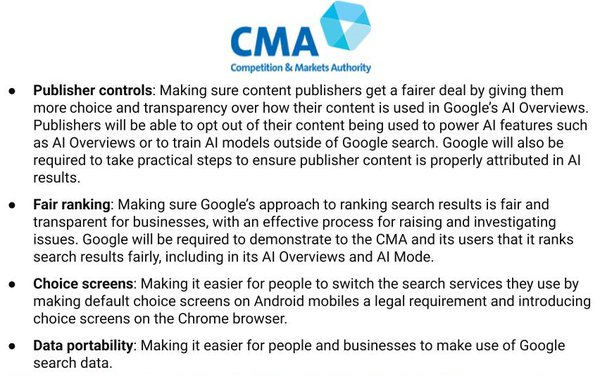
The United Kingdom’s Competition and Markets Authority (CMA) has issued a significant regulatory directive, requiring Google to grant publishers the ability to opt out of having their content utilized in AI-powered search features. This development follows the CMA’s formal designation of Google as having “strategic market status” in general search services, a classification that provides the regulator with the authority to impose specific conduct requirements on the tech giant. As the digital landscape evolves, this mandate marks a pivotal moment in the ongoing tension between search engine providers and the content creators who power the open web.
Under the new order, Google must implement mechanisms allowing publishers to decline the inclusion of their material in AI Overviews and other generative AI search responses. Crucially, the mandate ensures that this opt-out capability does not force a site to be removed from traditional, organic search results. This distinction addresses a long-standing grievance among publishers, who previously faced an “all-or-nothing” scenario: blocking Google’s crawlers to stop AI training and summarization meant sacrificing visibility in standard search index listings entirely. The CMA’s decision is designed to provide publishers with greater leverage in future commercial negotiations with the company.
Regulatory Requirements and Compliance Timelines
The CMA has established a clear timeline for these changes, granting Google nine months to reach full compliance. Throughout this transition, the company is required to submit progress reports to the regulator every six months during the first year of the mandate. These reports are intended to ensure transparency as the tech giant integrates the necessary controls into its existing search infrastructure. According to official CMA case documentation regarding search and ad tech investigations, these measures are part of a broader effort to protect competition and innovation in the digital economy.

Beyond the opt-out mechanism for search summaries, the order specifies that publishers must also be able to prevent their content from being used to fine-tune Google’s artificial intelligence models. This secondary control addresses the intellectual property concerns of media organizations and independent content creators alike. The regulator has stipulated that Google must ensure all material used in AI-generated responses is properly attributed through clear, accessible links. By requiring this level of transparency, the CMA aims to preserve the value of original reporting and creative work within an increasingly automated search environment.
The Publisher’s Dilemma: Visibility vs. Traffic
For many publishers, the ability to opt out of AI-generated summaries introduces a complex strategic trade-off. While AI Overviews are designed to provide users with immediate answers, they have been criticized for potentially cannibalizing referral traffic. A 2025 report from the Pew Research Center highlighted that users were significantly less likely to click through to original sources when AI-generated summaries were present, a finding that has fueled industry concerns regarding the impact on advertising revenue and subscription-based business models.
However, opting out is not without its risks. By removing content from AI-powered search features, publishers may lose the visibility and impressions associated with those surfaces. As the digital ecosystem shifts, media owners must weigh the potential for increased direct traffic against the risk of becoming invisible in the next generation of search interfaces. Google, for its part, has maintained that its generative AI features are intended to assist users and that the choice to opt out will not negatively impact a website’s traditional organic search rankings.
Current Testing and Future Outlook
Google has stated that it is already in the process of testing new controls for UK-based website owners via Search Console. These tests allow a select group of publishers to manage their content’s appearance in AI Overviews, AI Mode, and AI Overviews in Discover. The company is also rolling out new insights within Search Console, providing site administrators with data on when and where their pages appear in these generative AI features. These tools are intended to help publishers make informed decisions about their digital presence as the regulatory environment in the UK continues to take shape.

While these requirements are currently limited to the United Kingdom, they represent a significant precedent for international tech regulation. The question of whether similar mandates will be enacted in other jurisdictions remains an open area of discussion for policymakers globally. As the nine-month implementation window progresses, the industry will be watching closely to see how these tools function in practice and whether they sufficiently address the concerns regarding the sustainability of the digital publishing model.
The CMA is expected to provide further guidance as the implementation period continues. For publishers and tech stakeholders, monitoring the official updates from the Competition and Markets Authority will be essential for understanding the long-term implications of these rules. We encourage our readers to share their thoughts on these changes in the comments section below as we continue to track this developing story.