
New observational research suggests that women using GLP-1 receptor agonists—the class of medications including Ozempic and Wegovy—may face a significantly lower risk of developing breast cancer. While the findings indicate a potential 30% reduction in risk, medical experts caution that these results are currently correlative and do not yet prove that these drugs can prevent cancer. This development has prompted researchers to begin planning dedicated clinical trials to determine if the link is causal.
The study, which analyzed data from a large cohort of women, highlights a growing interest in the oncological implications of metabolic medications. As the global use of GLP-1 drugs for weight management and type 2 diabetes continues to surge, the medical community is looking closely at whether these treatments offer secondary protective benefits against various forms of malignancy, particularly those linked to metabolic health and obesity.
For millions of patients currently using medications like semaglutide or tirzepatide, these findings offer a promising glimpse into the broader therapeutic potential of their treatment. However, the transition from observing a statistical trend to prescribing a drug for cancer prevention requires rigorous, controlled testing that is only now being organized.
The Potential Link: Understanding the 30% Reduction
The core of the recent findings lies in the observed statistical difference between women who were prescribed GLP-1 drugs and those who were not. According to the data, women in the medication group showed a roughly 30% lower incidence of breast cancer diagnoses during the study period. This figure is significant enough to shift the scientific focus from purely metabolic benefits to potential long-term oncological advantages.
It is vital to distinguish between the different medications within this class. The drugs mentioned in the research include semaglutide, which is the active ingredient in Ozempic (used for type 2 diabetes) and Wegovy (indicated for chronic weight management), as well as tirzepatide, which is found in Mounjaro and Zepbound. While these drugs share similar mechanisms, they interact with different hormonal pathways, which may influence how they affect cancer risk.
Researchers note that the 30% reduction is an observation of “lower likelihood” rather than a guaranteed outcome. In large-scale observational studies, researchers look at patterns across thousands of patients to see if a specific group—in this case, GLP-1 users—exhibits a different health outcome than a control group. While the pattern is striking, it does not account for every variable that might influence breast cancer development.
How GLP-1 Drugs Might Protect Against Breast Cancer
To understand why these drugs might lower cancer risk, scientists are investigating two distinct pathways: the indirect effect through weight loss and the direct effect through metabolic signaling. Both pathways are deeply intertwined with the biology of breast cancer.
The Indirect Pathway: Weight and Hormonal Balance
The most established link between obesity and breast cancer is hormonal. Adipose tissue, or body fat, is not just a storage site for energy; it is an active endocrine organ. In postmenopausal women, fat tissue becomes a primary source of estrogen through a process called aromatization. High levels of circulating estrogen are a well-documented risk factor for many types of breast cancer.
Because GLP-1 drugs are highly effective at promoting significant weight loss, they may indirectly lower breast cancer risk by:
- Reducing the total volume of adipose tissue, thereby lowering systemic estrogen production.
- Decreasing chronic low-grade inflammation, which is often elevated in individuals with obesity and can promote tumor growth.
- Improving insulin sensitivity, as hyperinsulinemia (high insulin levels) can act as a growth factor for certain cancer cells.
The Direct Pathway: Metabolic Signaling and Tumor Microenvironments
Beyond weight loss, researchers are exploring whether GLP-1 receptors—which are found in the gut and pancreas—are also present in breast tissue or within the tumor microenvironment. If GLP-1 receptors exist in these locations, the medication might interact directly with the biological processes that allow cancer cells to grow or spread.
Some preliminary laboratory studies suggest that GLP-1 signaling may influence cell proliferation and apoptosis (programmed cell death). If these drugs can modulate how cells respond to growth signals, they could potentially inhibit the early stages of tumor development. However, this direct mechanism remains theoretical in humans and requires much more evidence than the current observational data provides.
Correlation vs. Causation: Why We Aren’t There Yet
In medical science, a correlation—two things happening at the same time—is vastly different from causation—one thing causing the other. The fact that women on GLP-1 drugs have lower rates of breast cancer does not automatically mean the drugs are the cause of that protection.
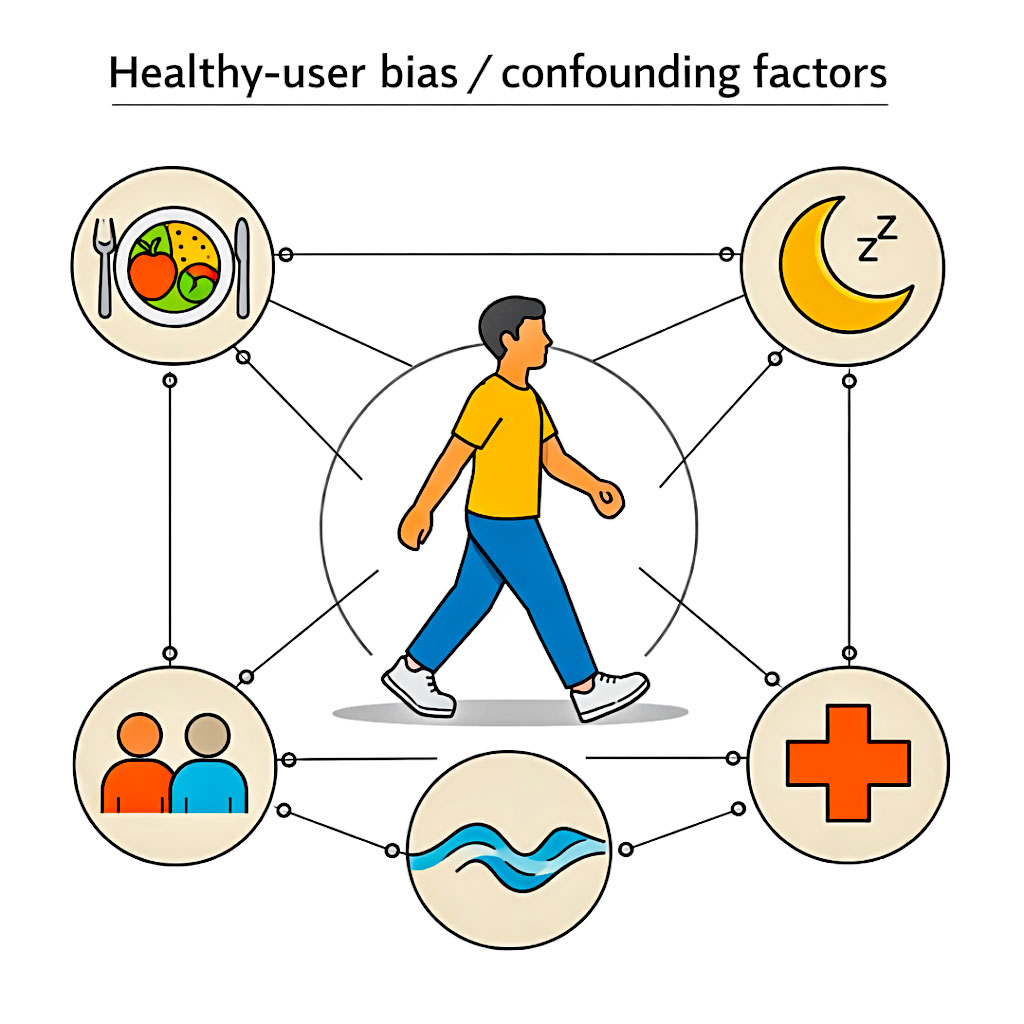
Several confounding factors could explain this observation:
Healthy User Bias: Patients who are prescribed and strictly adhere to GLP-1 regimens may also engage in other health-seeking behaviors. They might follow more nutritious diets, exercise more frequently, or have better access to regular medical screenings, all of which could contribute to lower cancer rates.
Baseline Health Profiles: The individuals prescribed these drugs may have different metabolic profiles or lifestyle habits compared to the general population, which could influence their baseline cancer risk.
The Role of Weight Loss: It is difficult to determine if the protection comes from the drug’s chemical properties or simply from the fact that the patients lost a significant amount of weight. If weight loss is the primary driver, then any effective weight-loss method might yield similar results, whereas if the drug has a direct effect, it would be unique to the GLP-1 class.
The Landscape of GLP-1 Medications
As this research gains traction, it is helpful to understand the specific medications that are central to the discussion. While they all target the incretin system, they have different pharmacological profiles.
| Medication Name | Active Ingredient | Primary FDA Indications | Mechanism |
|---|---|---|---|
| Ozempic | Semaglutide | Type 2 Diabetes | GLP-1 Receptor Agonist |
| Wegovy | Semaglutide | Chronic Weight Management | GLP-1 Receptor Agonist |
| Mounjaro | Tirzepatide | Type 2 Diabetes | Dual GLP-1 & GIP Agonist |
| Zepbound | Tirzepatide | Chronic Weight Management | Dual GLP-1 & GIP Agonist |
The distinction between a “single agonist” like semaglutide and a “dual agonist” like tirzepatide is particularly important. Tirzepatide also targets the glucose-dependent insulinotropic polypeptide (GIP) receptor. Some researchers believe that the addition of GIP activation may enhance metabolic benefits or offer different protective pathways, which could be a key area of investigation in future cancer-focused studies.
What Happens Next: The Move to Clinical Trials
The next critical step in this scientific journey is the transition from observational studies to randomized controlled trials (RCTs). In an RCT, researchers would take a large group of women and randomly assign them to either receive a GLP-1 medication or a placebo. This randomization is the only way to eliminate the “healthy user bias” and determine if the drug itself is responsible for the reduction in cancer risk.
Planned clinical trials will likely focus on several key objectives:
- Establishing Causality: Determining if the 30% risk reduction holds true when all other lifestyle variables are controlled.
- Identifying Direct Effects: Using advanced imaging and biomarkers to see if the drugs interact directly with breast tissue or tumor cells.
- Defining Optimal Dosing: Understanding if specific doses are more effective for metabolic health versus oncological protection.
- Long-term Safety: Ensuring that while these drugs may reduce cancer risk, they do not introduce other long-term health complications.
While we wait for these trials to conclude, clinicians are advised to continue managing breast cancer risk through established methods, such as regular mammography, healthy lifestyle choices, and weight management through all medically approved means.
Frequently Asked Questions
Does this mean I should take Ozempic to prevent breast cancer?
No. These medications are currently indicated for the treatment of type 2 diabetes and obesity. You should never use these drugs for cancer prevention without a direct prescription and medical supervision for an approved condition. The current findings are observational and do not constitute a recommendation for cancer prophylaxis.

Are these drugs safe for long-term use?
GLP-1 drugs have been studied extensively for diabetes management, which involves long-term use. However, the specific long-term effects on cancer prevention and the potential for other side effects are still being studied as part of the broader medical understanding of these drugs.
Can weight loss alone reduce breast cancer risk?
Yes. There is a strong, established link between obesity and increased risk for several types of breast cancer, particularly in postmenopausal women. Managing weight through any healthy, sustainable method is a recognized way to help mitigate these risks.
Will these drugs be approved for cancer prevention in the future?
That depends entirely on the results of upcoming clinical trials. Regulatory bodies like the FDA only approve drugs for specific indications based on rigorous evidence of safety and efficacy. Until then, “cancer prevention” is not an approved use for GLP-1 medications.
The scientific community is now looking toward the results of the first wave of planned clinical trials, which are expected to provide the definitive answers needed to move this from a promising observation to a clinical reality.
Next Checkpoint: Watch for official announcements regarding the registration and commencement of large-scale, randomized clinical trials specifically investigating GLP-1 receptor agonists and oncological outcomes.
What are your thoughts on this emerging research? Do you believe metabolic health is the key to future cancer prevention? Share your comments below and share this article to keep your network informed.