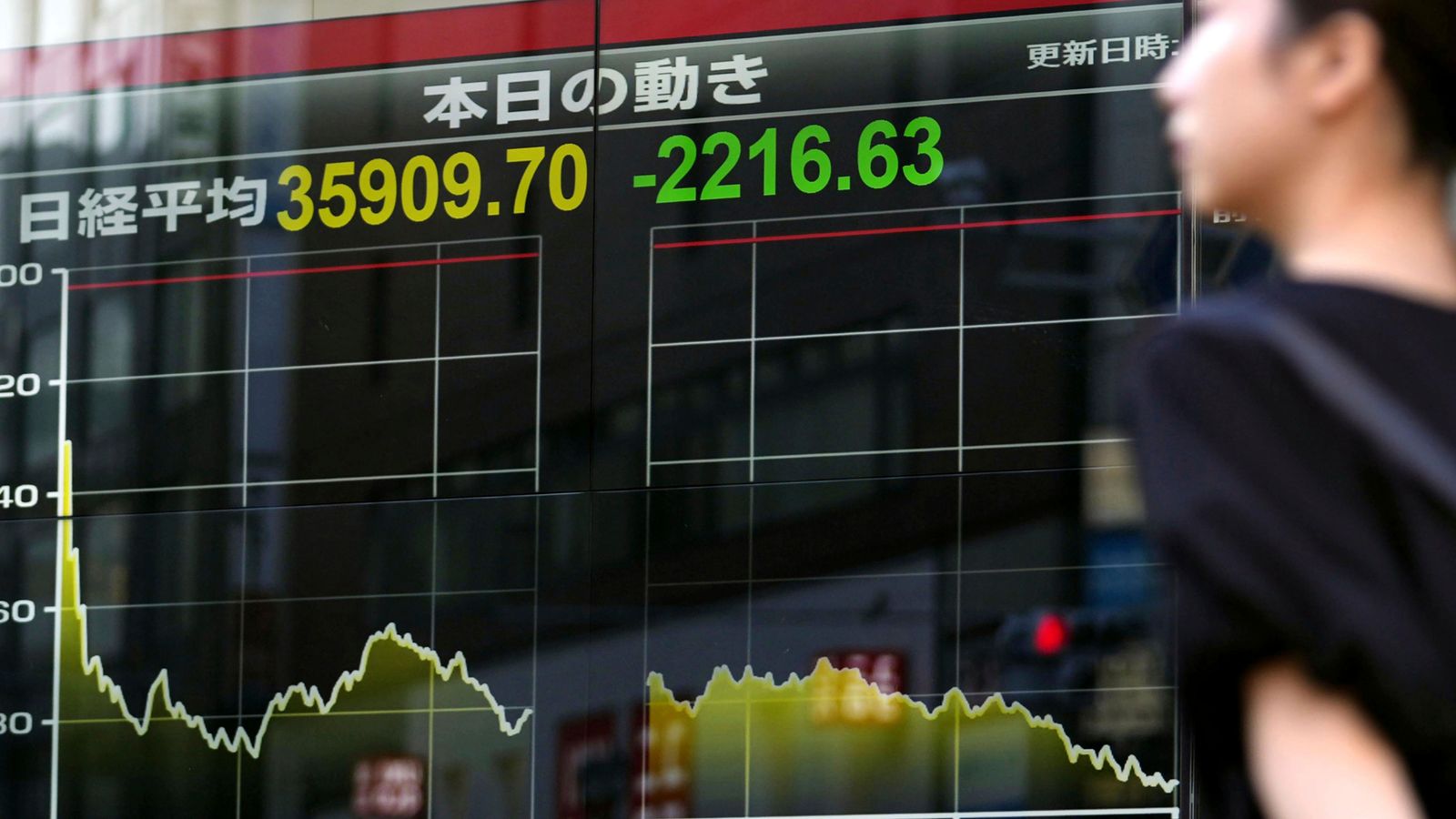
Tokyo’s financial markets experienced a significant downturn on Monday, June 8, 2026, as the Nikkei 225 index faced a sharp decline, with losses exceeding 3,100 points during the morning session. This drop, which marked the largest single-day decline for the index in 2026, reflects a broader global retreat in equity markets driven by concerns over U.S. interest rate policies and a cooling of investor enthusiasm for artificial intelligence-related stocks.
The Nikkei 225 index closed the morning session at 64,040, down 2,547 points, or 3.83%, from the previous trading day. The volatility was triggered by the release of U.S. employment data, which outperformed expectations and fueled speculation that the Federal Reserve may maintain or increase interest rates. Higher interest rates typically weigh on high-growth technology stocks, which have seen their valuations climb significantly throughout the current market cycle.
Investor Sentiment and Interest Rate Concerns
The sell-off in Tokyo was largely a reactive move to developments in the United States. According to market analysts, the stronger-than-expected U.S. employment report prompted a reassessment of the interest rate outlook. When interest rates rise, the relative appeal of stocks—particularly those in the high-growth AI and semiconductor sectors—often diminishes as investors seek safer yields in fixed-income assets. This shift in sentiment led to a wave of selling, turning the recent AI-driven rally into a moment of caution for global traders.
The impact was widespread across the Tokyo Stock Exchange. Major technology and AI-linked firms, which had previously led the market to record highs, saw their share prices retreat. The market’s reaction underscores the sensitivity of current equity valuations to macroeconomic indicators, specifically those originating from the U.S. labor market, which serve as a primary gauge for Federal Reserve policy.
Sectoral Volatility and Trading Dynamics
The scale of the decline on June 8, 2026, was notable for its intensity. While the index reached a 52-week high of 68,786.49 earlier in the period, the downward pressure on Monday pushed the index toward its lower range, with the day’s low hitting 63,406.66 according to market data from the Business Insider Nikkei 225 index tracker. This volatility highlights the fragility of the recent market surge, as investors moved quickly to lock in profits or mitigate potential losses following the U.S. data release.

The sell-off was not limited to a single sector but was particularly pronounced among companies with high exposure to global semiconductor and artificial intelligence supply chains. These firms, often valued on long-term growth prospects, are acutely sensitive to the discount rates used to calculate their current value. As the prospect of higher-for-longer U.S. interest rates became more apparent, these growth-oriented stocks bore the brunt of the market’s correction.
A Global Trend in Equity Markets
The decline in Tokyo mirrored a broader trend of simultaneous global stock price adjustments. Following the U.S. market’s own significant decline at the end of the previous week, international investors shifted their portfolios, leading to a ripple effect that affected major indices across Asia and Europe. The interconnectedness of these markets means that U.S. labor statistics, once considered primarily a domestic issue, now serve as a catalyst for immediate, large-scale movements in markets as distant as Japan.

Looking ahead, market participants will be closely monitoring upcoming commentary from central bank officials and further economic data releases to determine if this correction represents a temporary consolidation or a more sustained shift in market direction. Investors are advised to refer to official filings and updates from the Japan Exchange Group for the most accurate information regarding market operations and index constituents.
As the market continues to recalibrate, the focus remains on whether the fundamental growth drivers—specifically in the technology and AI sectors—can withstand the pressure of a shifting interest rate environment. We will continue to track these developments as they unfold. Please share your thoughts or questions in the comments section below.