
Former President Donald Trump faced a notably hostile reception during a high-profile appearance at a New York Knicks game, where the atmosphere shifted from sporting excitement to vocal public disapproval. As the 45th president made his way to his courtside seats at Madison Square Garden, his presence triggered a wave of jeers and chants from sections of the crowd, highlighting the deep political polarization that has often followed him in Democratic-leaning strongholds. The incident, which occurred during a high-stakes NBA matchup, underscored the persistent friction between the former president and segments of the New York City electorate.
While NBA games are traditionally spaces for leisure and entertainment, the intersection of high-profile political figures and live sports has increasingly become a venue for public protest. Observers noted that the reaction from the crowd was swift and audible, contrasting sharply with the cheers usually reserved for celebrities or athletes. This event serves as a significant case study in how public figures, regardless of their status, navigate the unpredictable environment of large-scale, public-facing events in the current political climate.
The Atmosphere at Madison Square Garden
The scene inside the arena reflected a broader trend of public confrontations involving Donald Trump. When the former president appeared on the stadium’s “jumbotron,” the reaction was immediate and predominantly negative. According to reports from the New York Times, such public displays of disapproval have become a recurring feature of his visits to professional sporting events, dating back to his time in office. While sports venues are meant to be neutral ground, they have frequently served as barometers for the president’s popularity in urban centers.
Protesters gathered outside the arena prior to the game, reflecting a coordinated effort to voice opposition to his policies and rhetoric. These demonstrations were not confined to the streets; they carried over into the arena, where the intensity of the crowd’s reaction became the primary narrative of the evening. The juxtaposition of a high-energy basketball game against the backdrop of political tension highlights the ongoing difficulty for political figures in managing public optics in volatile, unscripted environments.
Political Polarization in Urban Centers
New York City, a traditional Democratic stronghold, has long been a site of significant political friction for Donald Trump. The reaction at the Knicks game is consistent with the broader political landscape in New York, where public opposition to his administration’s policies was frequently vocalized. Analysts often point to the contrast between his support base in rural and suburban areas and the intense scrutiny he faces in major metropolitan hubs like New York City, according to polling data tracked by the Pew Research Center regarding urban versus rural political divides.
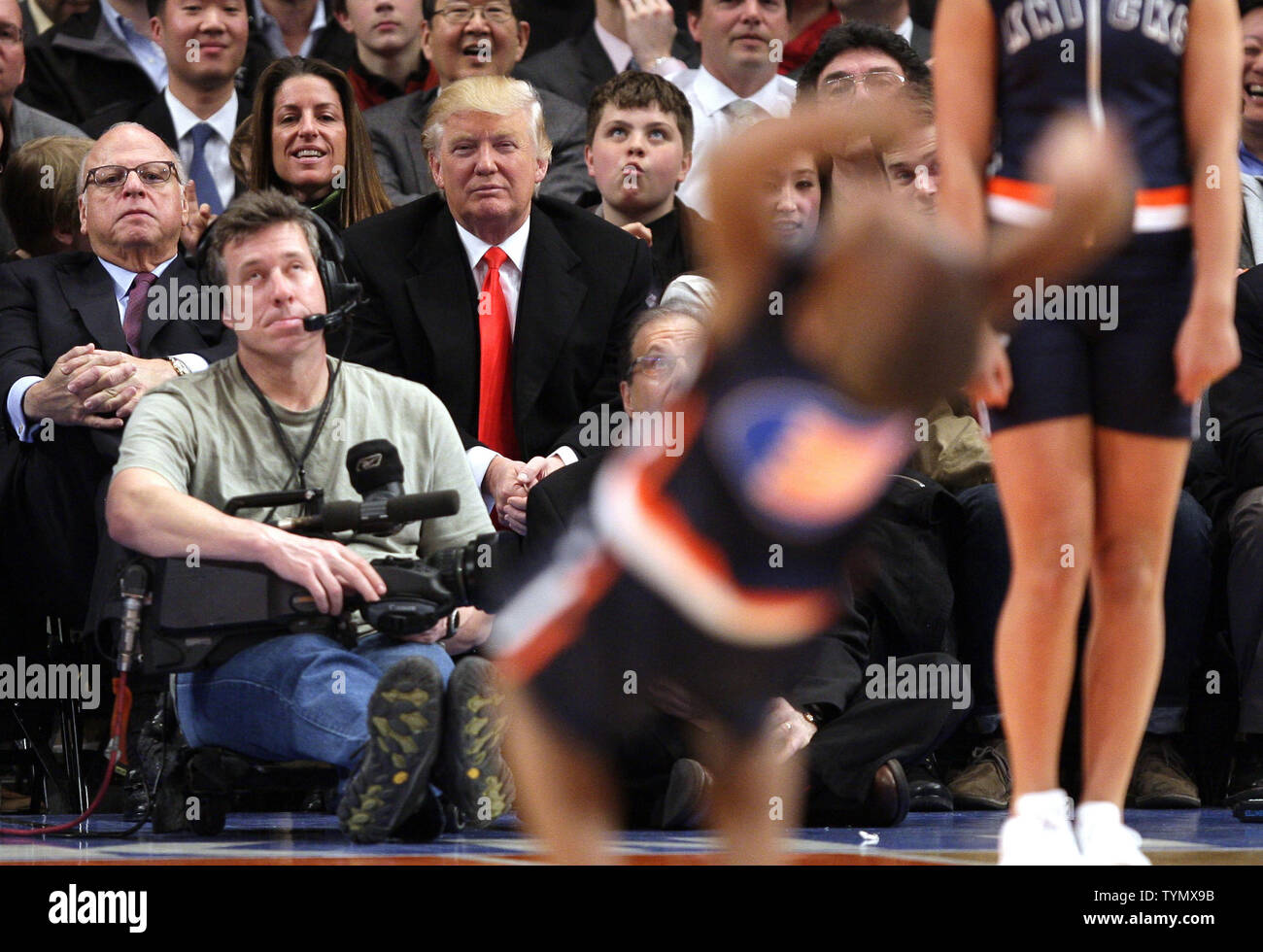
This incident is not an isolated occurrence but rather part of a documented pattern. When public figures attend massive sporting events, they are exposed to a cross-section of the public that may not align with their political base. The “frosty” reception, as characterized by many in attendance, reflects the reality of a nation where political identity is often displayed with as much fervor as team loyalty. The event also raises questions about the security and logistical planning required for such appearances, as the Secret Service must balance the need for public access with the volatile nature of large, politically charged crowds.
Media Coverage and Public Perception
The framing of this event varied across the media landscape, reflecting the broader challenges of reporting on political figures in non-political settings. Some outlets focused on the intensity of the boos as a sign of declining support, while others highlighted the presence of supporters who remained quiet or were drowned out by the noise. Understanding these variations is essential for a global audience attempting to gauge the true temperature of the American electorate.
According to the Reuters archive on similar events, the focus of the news cycle often shifts quickly from the athletic performance on the court to the political signaling in the stands. For the reader, it is important to distinguish between organized protest and organic crowd reactions. While the chants heard at the Garden were spontaneous, they were fueled by a pre-existing, well-organized protest movement that sought to capitalize on the president’s high-profile appearance.
What Happens Next
As the political calendar progresses, observers expect to see more of these intersections between high-profile campaigns and public venues. The next major checkpoint for political analysts will be upcoming election cycles, where both parties will assess the impact of these public interactions on voter turnout and sentiment. There are no current formal hearings or legislative actions directly resulting from this specific game-day incident, as it remains a matter of public expression rather than legal dispute.

For those interested in the ongoing dynamics of American politics, monitoring official statements from campaign offices remains the best way to track how these events are interpreted by the candidates themselves. As of now, neither the Trump campaign nor the NBA has issued a formal statement regarding the specific security protocols or the crowd’s behavior at this event. We encourage our readers to continue following these developments and share their perspectives in the comments section below, as we continue to provide updates on the shifting landscape of global and domestic affairs.
Related reading
- Bulgaria’s Budget Deficit Shrinks to 1.7% of GDP Following EU Recovery Funds Inflow
- Migration and Child Upbringing: Challenging Stereotypes
- BP Q2 Profit Hits $5.7 Billion Amid Trump Criticism of Big Oil Windfalls (time.news)
- Trump Administration Begins Systematic Appropriation of Japanese Manga (newsdirectory3.com)