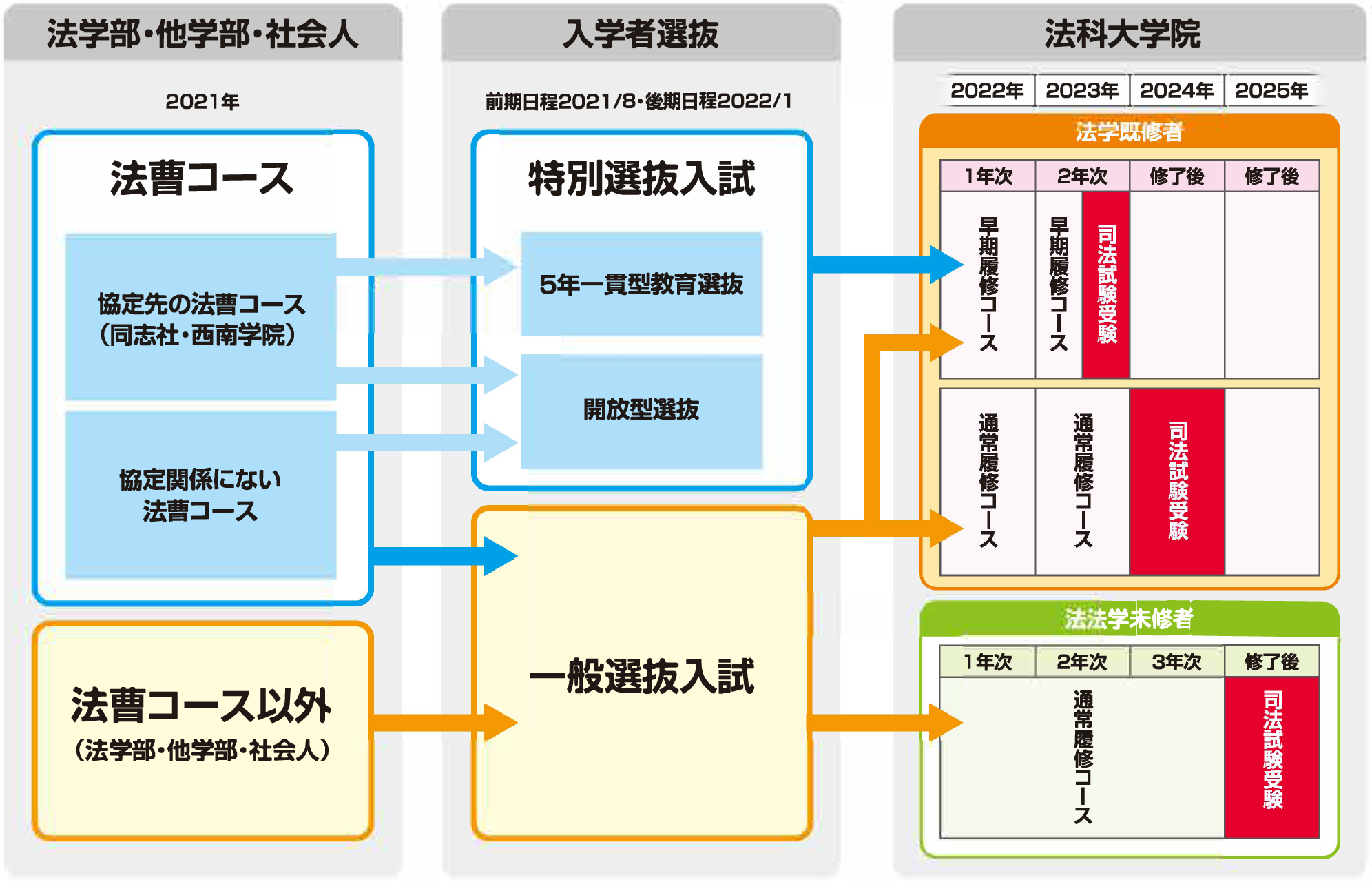
Students currently enrolled in specialized legal training programs in Japan—known as hosō courses—often face significant uncertainty when navigating the transition to graduate-level law school. For those students who receive negative feedback from faculty regarding their suitability for the legal profession, the path forward often involves re-evaluating academic trajectories and professional goals. According to the Ministry of Education, Culture, Sports, Science and Technology (MEXT), the Japanese legal education system is designed to integrate undergraduate legal studies with graduate-level professional training to ensure candidates possess the necessary analytical rigor for the bar examination.
The core of the issue lies in the recommendation process for law school admissions. When a faculty member suggests that a student lacks the “aptitude” for a legal career, it often stems from a holistic assessment of the student’s academic performance, logical reasoning skills, and ability to handle the high-pressure environment of the national bar examination. However, such feedback is subjective and does not constitute an official or final determination of a student’s legal capacity or their right to pursue further education independently.
Understanding the Recommendation Process
In the context of Japanese higher education, a recommendation letter for a law school application serves as a formal endorsement of a candidate’s potential to succeed in a rigorous, three-year Juris Doctor program. Faculty members in law school preparation courses evaluate students based on standardized criteria, including cumulative grade point averages and performance in specialized seminars. As noted by the Japan Federation of Bar Associations (JFBA), the transition to graduate law school is a selective process, with admissions committees prioritizing candidates who demonstrate both intellectual depth and professional resilience.
If a student is told that they lack the “aptitude” for the profession, it is crucial to distinguish between a faculty member’s personal opinion and the formal admission requirements of individual law schools. While a negative recommendation can complicate the application process, it does not legally bar a student from applying through general entrance examination routes. Many universities offer multiple pathways for admission, including open entrance exams that do not rely exclusively on faculty endorsements.
Evaluating Professional Aptitude
The term “aptitude” (tekisei) in Japanese legal education is often linked to the Legal Education and Bar Admissions Council’s benchmarks for professional readiness. This includes the ability to process complex statutes, identify legal issues in hypothetical case studies, and articulate arguments within the constraints of strict time limits. For students facing criticism, the most constructive approach is to request specific, actionable feedback regarding which areas of their legal reasoning require improvement.
According to data from the Ministry of Justice, the success rate for the bar examination remains highly dependent on the quality of preparation during graduate law school. Consequently, faculty members often act as gatekeepers, aiming to steer students toward career paths where their specific skills might be better utilized. However, students who remain committed to the legal profession often seek external tutoring, participate in study groups, or enroll in additional preparatory courses to address identified weaknesses in their legal analysis.
Alternative Pathways and Next Steps
For those who encounter resistance in their current academic environment, it is necessary to conduct a thorough review of alternative law school programs. Not all institutions place the same weight on internal recommendations. Prospective applicants are encouraged to review the official admission guidelines of their target law schools directly, as these documents outline the mandatory requirements versus the optional supporting documentation.
Students should consider the following steps to regain control of their professional path:
- Consult the official MEXT guidelines regarding legal education reform and entrance procedures.
- Request a formal meeting with the academic advisor to understand the specific criteria used in the assessment of their aptitude.
- Research the “General Admission” (ippan nyushi) procedures for prospective law schools, which often focus on written entrance exam scores rather than subjective faculty recommendations.
- Review past bar examination success rates for various law schools to ensure the chosen program provides a supportive environment for students with diverse academic backgrounds.
The decision to continue or abandon a pursuit of the legal profession is a significant personal choice that should be based on a comprehensive assessment of one’s own capabilities and commitment. While faculty feedback is a valuable resource, it is only one component of a broader admissions landscape. The next official period for law school entrance examination applications typically commences in late summer and early autumn; students are advised to consult the websites of their preferred law schools for specific deadlines and documentation requirements for the upcoming academic cycle.
If you have questions regarding the application process or have experienced similar challenges, please share your thoughts or professional insights in the comments section below.
Related reading