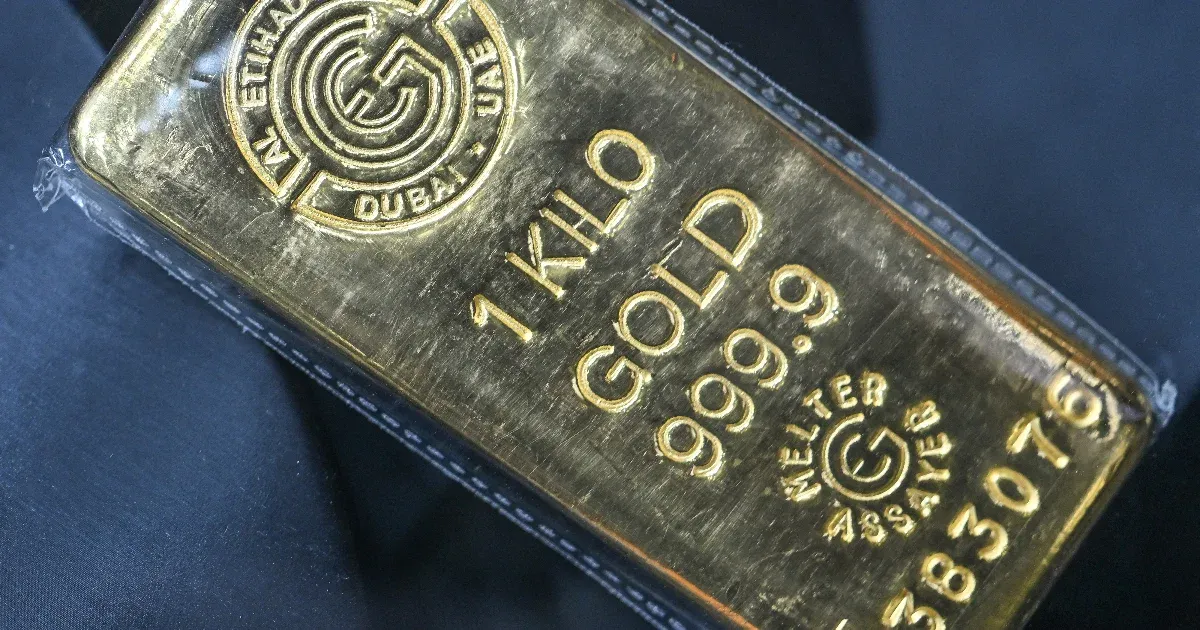
Gold prices have retreated to six-month lows as investors adjust portfolios in response to shifting global monetary policy and a strengthening U.S. dollar. The decline in the precious metal’s valuation reflects a broader trend of capital rotation, as market participants weigh the impact of persistent interest rate environments on non-yielding assets. According to data tracked by the World Gold Council, price volatility in the precious metals sector is currently being driven by real interest rate expectations and the performance of major fiat currencies.
The recent downward pressure on gold, which has seen the commodity trade at its lowest levels since earlier this spring, comes as the U.S. Federal Reserve maintains a restrictive stance on its benchmark interest rates. Higher rates typically increase the opportunity cost of holding gold, which provides no dividend or interest income. Financial analysts observe that when the U.S. dollar strengthens, gold becomes more expensive for holders of other currencies, dampening demand in international markets. This dynamic has been compounded by a recent shift in investor sentiment, as many pivot toward higher-yielding government bonds and equity markets that have shown resilience throughout the current fiscal quarter.
Drivers of Market Volatility
Market analysts attribute the current price correction to a combination of macroeconomic factors, primarily the resilience of the U.S. labor market and subsequent inflation data. When economic indicators remain robust, central banks are less likely to initiate rapid monetary easing. According to reports from the U.S. Federal Reserve, the path of future interest rate adjustments remains data-dependent, creating an environment of uncertainty that often triggers sell-offs in speculative and safe-haven assets alike.
Furthermore, the strengthening of the U.S. dollar against a basket of currencies has acted as a significant headwind. Because gold is priced in dollars on global exchanges, a stronger currency makes the metal less attractive to foreign investors. Market participants are currently monitoring the Bank for International Settlements updates for further indicators on how global liquidity may tighten in the coming months, which could exert additional pressure on commodity prices.
Investor Sentiment and Portfolio Adjustments
The shift away from gold is particularly evident in the outflows from gold-backed Exchange Traded Funds (ETFs). Institutional investors often use these vehicles to gain exposure to the metal without physical delivery. As yields on Treasury bills and other fixed-income securities reach levels not seen in years, the relative utility of holding gold as a hedge against inflation has been questioned by some fund managers.
Retail investors, meanwhile, face a more complex landscape. In regions where local currencies have recently appreciated against the dollar, the domestic price of gold has seen even sharper declines. Financial advisors suggest that for long-term investors, gold remains a component of portfolio diversification, though the immediate price action reflects a departure from the bullish sentiment that dominated the earlier half of the year. The International Monetary Fund has noted that geopolitical uncertainty remains a factor that could, in the long term, support gold demand despite short-term price fluctuations.
Market Outlook and Future Checkpoints
Looking ahead, market participants are closely watching the next scheduled meeting of the Federal Open Market Committee (FOMC) for clues regarding the trajectory of interest rates. The decisions made during these sessions are critical, as they dictate the cost of capital and, by extension, the attractiveness of non-yielding assets like gold.
Official updates regarding inflation metrics and employment figures will be released by the U.S. Bureau of Labor Statistics in the coming weeks. These reports are expected to serve as the primary catalyst for the next phase of market movement. Investors are encouraged to monitor these official government disclosures to better understand the macroeconomic environment influencing asset valuations. We welcome your thoughts on these market shifts—please share your perspective or questions in the comments section below.