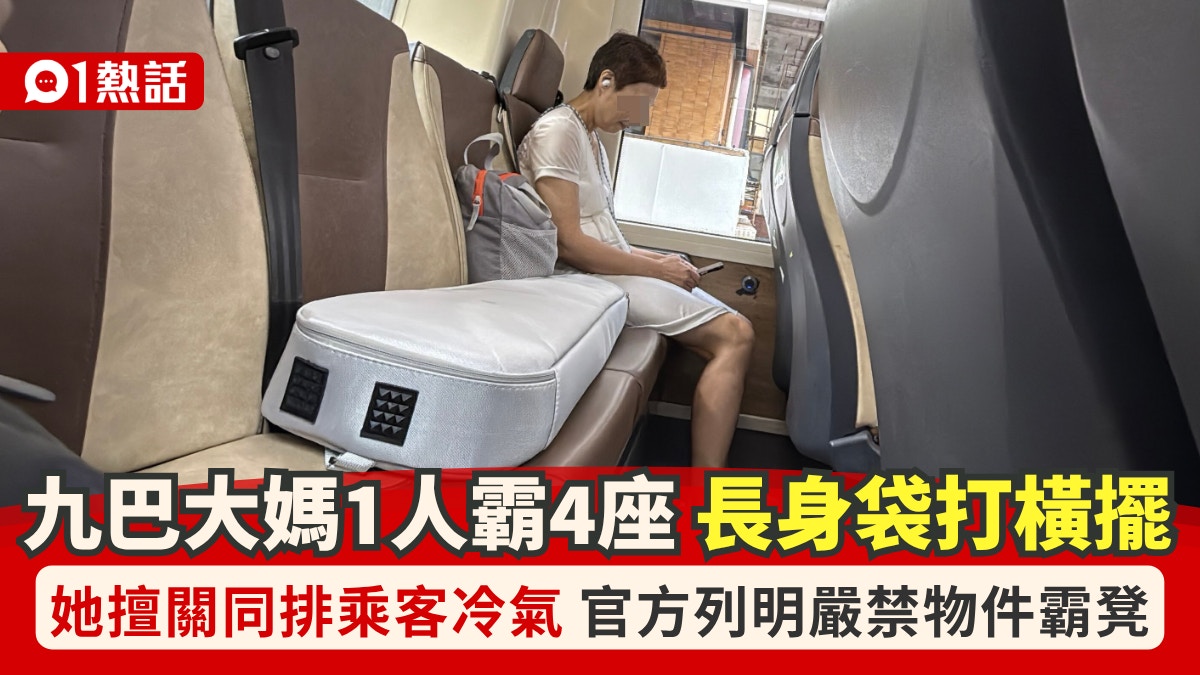
A passenger on a Kowloon Motor Bus (KMB) vehicle in Hong Kong recently drew public attention after reportedly occupying four seats and adjusting the air conditioning vents of surrounding passengers without their consent. The incident, which circulated widely on social media platforms, highlights ongoing debates regarding public transport etiquette and the enforcement of passenger conduct regulations within the city’s dense transit network.
According to reports verified through local social media monitoring, the incident took place on a KMB bus, where a female passenger was observed occupying the rear bench seat. The individual allegedly placed a long, oversized bag horizontally across the seats, effectively blocking space for other commuters. Further accounts suggest that the passenger reached over to close the air conditioning vents directed at neighboring seats, a move that prompted criticism from fellow travelers regarding personal space and shared environment control.
Public transport etiquette and KMB regulations
The Kowloon Motor Bus Company (1933) Limited operates under strict guidelines governed by the Public Bus Services Regulations (Cap. 230A) of the Laws of Hong Kong. While these regulations primarily focus on safety and obstruction, they provide a framework for the conduct expected of passengers. Under the Public Bus Services Regulations, passengers are prohibited from interfering with the comfort or convenience of others, though specific enforcement regarding the adjustment of air conditioning vents often falls under the discretion of bus captains and the company’s internal service guidelines.

Observers have noted that the behavior of occupying multiple seats with personal belongings is a recurring point of friction in Hong Kong’s transit system. Transit operators frequently remind passengers that the priority of space is for commuters, and that luggage should not obstruct seating or aisles. KMB has historically encouraged passengers to be considerate of others, citing the need to maintain a hospitable environment for all riders during peak and off-peak hours.
The role of passenger conduct in Hong Kong
Incidents involving disruptive behavior on public transport often trigger broader discussions about social norms in high-density urban environments. When passengers occupy extra seats with belongings, it limits the available capacity of the vehicle, which can lead to disputes during busy periods. The act of closing others’ air conditioning vents is frequently cited by social commentators as a breach of communal etiquette, as it imposes one individual’s preference on the physical comfort of others.
For those interested in the official policies regarding bus travel, the KMB official website provides detailed guidance on passenger conduct and luggage restrictions. While the company does not have a specific bylaw banning the touching of air conditioning vents, they emphasize the importance of mutual respect. In instances where a passenger feels harassed or inconvenienced, KMB advises individuals to seek assistance from the bus captain, who holds the authority to intervene if the situation escalates to a breach of peace or a safety concern.
What happens when disputes arise on buses
When disagreements occur on public transit, the primary point of contact is the bus captain. Under the Transport Department guidelines, bus captains are responsible for the safe operation of the vehicle and the maintenance of order on board. If a passenger’s behavior is deemed disruptive, the captain may issue a verbal warning or, in extreme cases, request that the individual disembark.
In this specific case, the lack of formal intervention by transport authorities suggests that the incident remained a social dispute rather than a legal one. Passengers are encouraged to report persistent issues to the bus company’s customer service hotline. Keeping a record of the bus route, the time of the incident, and the specific vehicle number—often found on the bus interior—is essential for any formal report to be processed by the operator.
As the conversation regarding shared space continues, commuters are reminded that public transport is a shared resource. Future updates regarding any changes to passenger conduct policies will be posted on the official channels of the Transport Department of Hong Kong. Readers are invited to share their experiences with transit etiquette in the comments section below to contribute to the ongoing discussion on maintaining order in the city’s public transit network.
Related reading