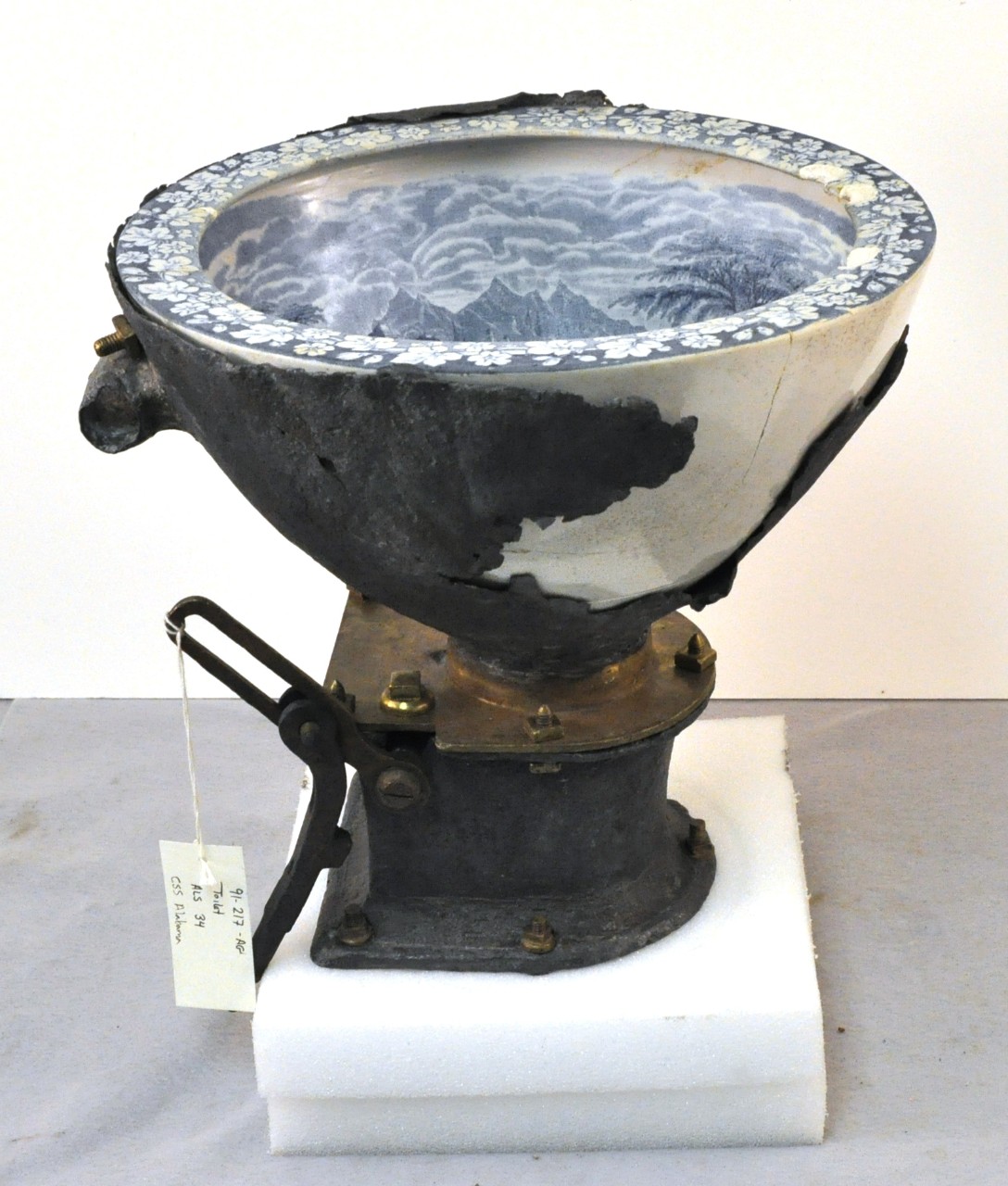
Maritime archaeology has provided a unique window into the daily lives of 19th-century sailors, with the recovery of specialized artifacts such as the plumbing fixtures found on the CSS Alabama. As a sports editor who has spent over a decade documenting the precise mechanics of human performance and the evolution of equipment, I find the intersection of naval engineering and historical material culture particularly revealing. The recovery of the Alabama’s commode offers more than just a curiosity; it serves as a tangible link to the sophisticated, albeit often overlooked, sanitation technology aboard commerce raiders during the American Civil War.
The CSS Alabama, a screw sloop-of-war built in 1862 at the Laird Brothers shipyard in Birkenhead, England, remains one of the most famous commerce raiders in naval history. According to the Naval History and Heritage Command, the vessel captured or destroyed over 60 Union merchant ships before its eventual sinking off the coast of Cherbourg, France, on June 19, 1864. The wreck was discovered in 1984 by a French Navy minesweeper, leading to a series of underwater archaeological investigations that cataloged the ship’s internal structure and the personal effects of its crew.
Sanitation at Sea: The Engineering of the Alabama
Life aboard a mid-19th-century warship was defined by cramped quarters and the constant challenge of maintaining hygiene for a crew of over 100 men. The presence of a flushing toilet—or “water closet”—on a vessel of this era represents a significant technological standard for the time. Historical records indicate that these systems relied on manual pumps and seawater intake valves, a stark contrast to the gravity-fed systems found in contemporary land-based architecture. The Naval History and Heritage Command notes that artifacts recovered from the Alabama include various personal and operational items that demonstrate the vessel’s high-specification construction, intended for long-range oceanic deployment.
The commode, often constructed of copper or lead-lined wood, was an essential component of the ship’s head—the nautical term for the latrine. Unlike the rudimentary “head” facilities on older wooden sailing ships, which often consisted of a simple wooden seat placed over an open grating, the Alabama featured more advanced, enclosed plumbing. This evolution reflects the broader shift in maritime design during the transition from sail to steam, where internal space management became critical to crew health and operational efficiency.
Archaeological Significance of Shipwreck Artifacts
The preservation of such artifacts is a testament to the rigorous efforts of the French and American teams who surveyed the wreck. Because the Alabama was sunk in relatively shallow, protected waters, the site has remained a protected underwater cultural heritage zone. Research published by the Institute of Nautical Archaeology highlights that the recovery of everyday items, including galley equipment and plumbing fixtures, allows historians to reconstruct the ship’s internal environment with a degree of accuracy impossible through logs alone.

These objects are not merely relics; they are data points in the study of naval logistics. For instance, the durability of materials like copper and brass in a marine environment has allowed these fixtures to survive over 120 years on the seafloor. Analyzing these components helps researchers understand how the ship’s builders balanced the need for modern, comfortable facilities against the harsh realities of a warship designed for speed and combat.
What Remains for Future Research
While the wreck of the CSS Alabama continues to be studied, the focus has shifted toward long-term preservation and the digitization of the recovered artifact catalog. The Naval History and Heritage Command maintains strict oversight regarding the handling and display of these items to ensure they remain available for public education and academic inquiry. Future missions, if approved, will likely prioritize non-invasive mapping of the remaining hull structure to better understand how the vessel withstood the engagement with the USS Kearsarge.
As we continue to analyze the material culture of the 19th century, the humble commode of the Alabama remains a poignant reminder of the human element in naval warfare. It underscores that even in the midst of global conflict, the fundamental requirements of daily life dictated the design of the most advanced machinery of the day. For those interested in the ongoing conservation of these artifacts, the official project portal provides the most current updates on site conditions and recovered collections.
If you have insights or historical documentation regarding 19th-century maritime technology, please share your thoughts in the comments section below. We encourage our readers to engage with this history as we continue to track the preservation efforts surrounding the world’s most significant maritime archaeological sites.
Keep reading