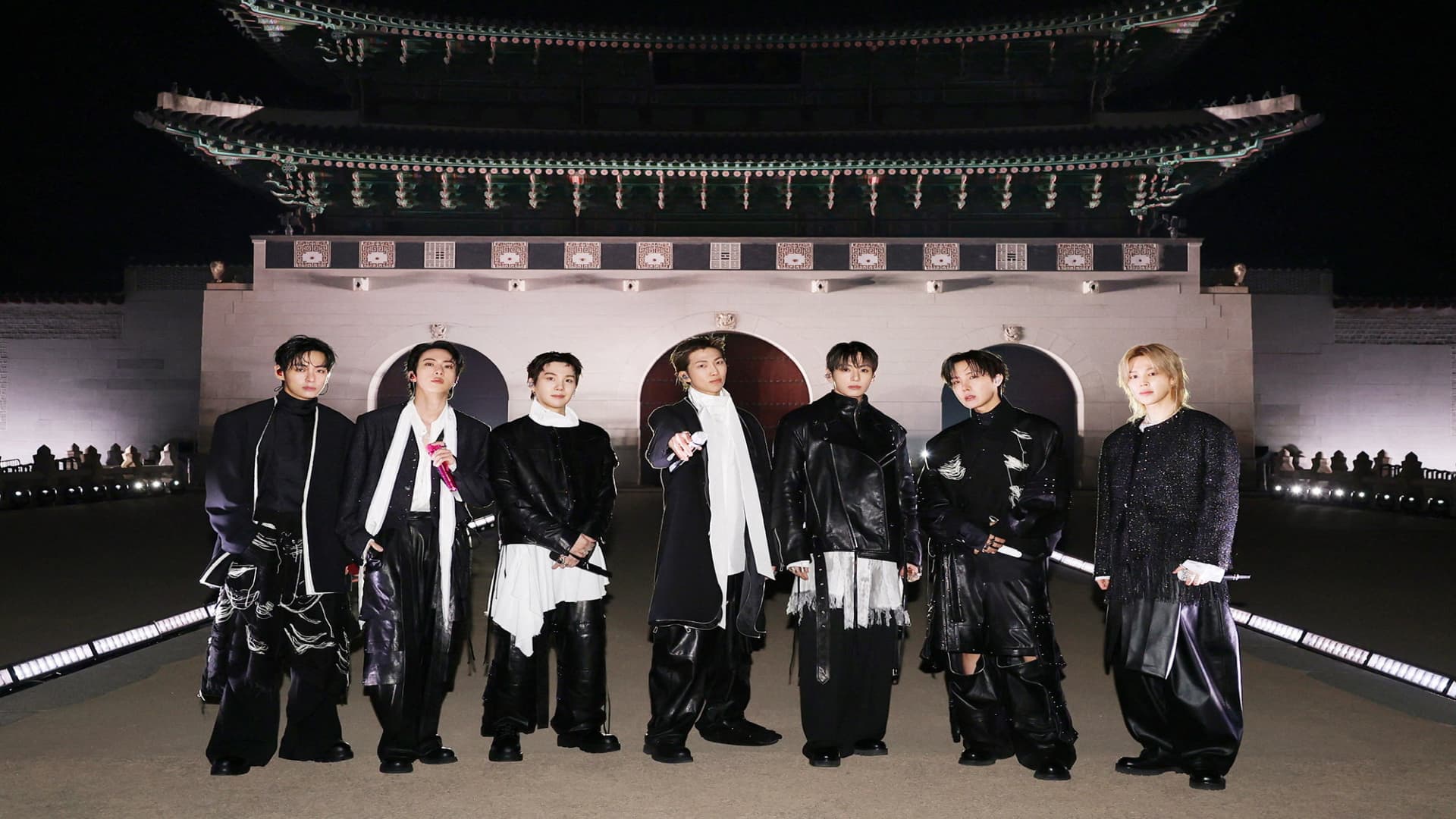
BTS drives significant economic growth in South Korea through massive global music sales, increased international tourism, and heightened demand for Korean consumer goods. According to economic analyses, the group’s influence extends beyond the music industry, acting as a primary catalyst for the expansion of the “Hallyu” or Korean Wave across global markets.
The economic footprint of the seven-member group, comprising RM, Jin, Suga, j-hope, Jimin, V, and Jungkook, has evolved from a musical phenomenon into a structural component of South Korea’s soft power strategy. While the members have largely been focused on mandatory military service, the financial infrastructure they built continues to support various sectors of the national economy.
How does BTS drive South Korea’s GDP?
The direct financial impact of BTS is most visible through the performance of their agency, HYBE Co. Ltd. The company has seen substantial revenue growth driven by the group’s album sales, digital streaming, and large-scale touring. According to financial reports from HYBE Co. Ltd., the company has transitioned from a single-label agency into a multi-label powerhouse, largely supported by the capital and global brand recognition generated by BTS.

Beyond the agency’s direct earnings, the Hyundai Research Institute has previously estimated that BTS contributes billions of dollars annually to the South Korean economy. This includes the “value-added” impact of their global presence, which stimulates domestic consumption and increases the nation’s foreign exchange reserves. The group’s ability to command attention on global stages like the Grammy Awards and the United Nations General Assembly provides a level of visibility that traditional advertising cannot replicate.
The direct economic impact is often measured by the group’s ability to trigger “fan spending” that transcends digital files. This includes physical merchandise, high-priced concert tickets, and specialized fan experiences. As of 2023, the global K-pop market continued to expand, with BTS remaining a central figure in the industry’s ability to secure international investment.
What is the “halo effect” on Korean consumer exports?
Economists often refer to the “halo effect” of BTS, where the group’s popularity creates a secondary wave of demand for unrelated South Korean products. This phenomenon is particularly evident in the K-beauty, K-food, and K-fashion sectors. When members of the group are seen using specific skincare products or eating certain traditional Korean foods, international search interest and sales often follow immediately.
The Korea Tourism Organization (KTO) has noted that K-pop culture is a primary driver for inbound tourism. Fans frequently travel to Seoul to visit locations associated with the group, such as music video filming sites, agency headquarters, or restaurants frequented by the members. This influx of “cultural tourists” provides a direct boost to the hospitality, transportation, and retail industries in South Korea.
In the consumer goods sector, the impact is quantifiable through export data. The global demand for Korean cosmetics (K-beauty) and processed foods (K-food) has seen a correlation with the rising popularity of Hallyu stars. For example, the popularity of Korean snacks and instant noodles has surged in North America and Southeast Asia, often cited by industry analysts as being bolstered by the visibility of Korean idols in global media.
The following table compares the different sectors influenced by the BTS phenomenon:
| Economic Sector | Primary Driver | Type of Impact |
|---|---|---|
| Music & Entertainment | Album sales, streaming, and touring | Direct Revenue |
| Tourism | Pilgrimage to filming sites and K-pop landmarks | Service Sector Growth |
| Consumer Goods | K-beauty, K-food, and K-fashion trends | Export Growth |
| Soft Power | Global brand recognition of South Korea | Geopolitical Influence |
How will the military service hiatus affect economic momentum?
The mandatory military service of the BTS members has created a transitional period for the group’s direct economic activity. Since 2022, members have been entering the South Korean military, leading to a temporary reduction in group-wide activities such as world tours and collective album releases. This hiatus has required HYBE and other stakeholders to diversify their revenue streams through solo projects and the promotion of other artists under the label.
However, the “hiatus” has not resulted in an economic standstill. Individual members have released solo albums that have achieved significant commercial success, proving that the individual brands of the members remain potent. For instance, Jin, the eldest member, completed his military service on June 12, 2024, and has since begun re-engaging with public activities, signaling the start of a gradual return to the group’s full operational capacity.
Industry analysts expect a significant economic surge when the remaining members complete their service. The group is projected to reunite in 2025, a timeline that has already fueled anticipation and speculative investment in the entertainment sector. The “comeback” is expected to trigger a massive wave of consumer spending, ranging from renewed tourism to a spike in global music consumption.
What role does the South Korean government play in cultural exports?
The South Korean government treats the “Hallyu” wave not just as a cultural asset, but as a strategic national industry. Through the Ministry of Culture, Sports and Tourism, the state provides support for the development of content, helps facilitate international cultural exchange, and works to protect the intellectual property of Korean creators.
This state-backed approach aims to institutionalize the success of groups like BTS, ensuring that the economic benefits are not limited to individual artists but are distributed across the broader creative economy. By investing in infrastructure for digital content and supporting small-to-medium enterprises (SMEs) that produce cultural goods, the government seeks to maintain South Korea’s competitive edge in the global “soft power” landscape.
This synergy between private enterprise and government policy has turned South Korea into a global hub for cultural technology. The goal is to create a self-sustaining ecosystem where music, television, gaming, and fashion work in concert to promote the nation’s image and economic interests simultaneously.
Key Economic Drivers of the BTS Phenomenon:
- Direct Music Revenue: High-volume sales of physical albums and digital streaming rights.
- Tourism Influx: Increased international arrivals seeking cultural and musical experiences in Seoul.
- Brand Exportation: Global demand for Korean cosmetics, fashion, and food products.
- Institutional Support: Government initiatives to scale the cultural content industry.
The next major milestone for the group is the expected full reunion of all seven members in 2025, which is anticipated to mark a new chapter in the group’s economic and cultural influence.
What do you think about the long-term economic impact of K-pop on global markets? Share your thoughts in the comments below and share this article with your network.
Related reading