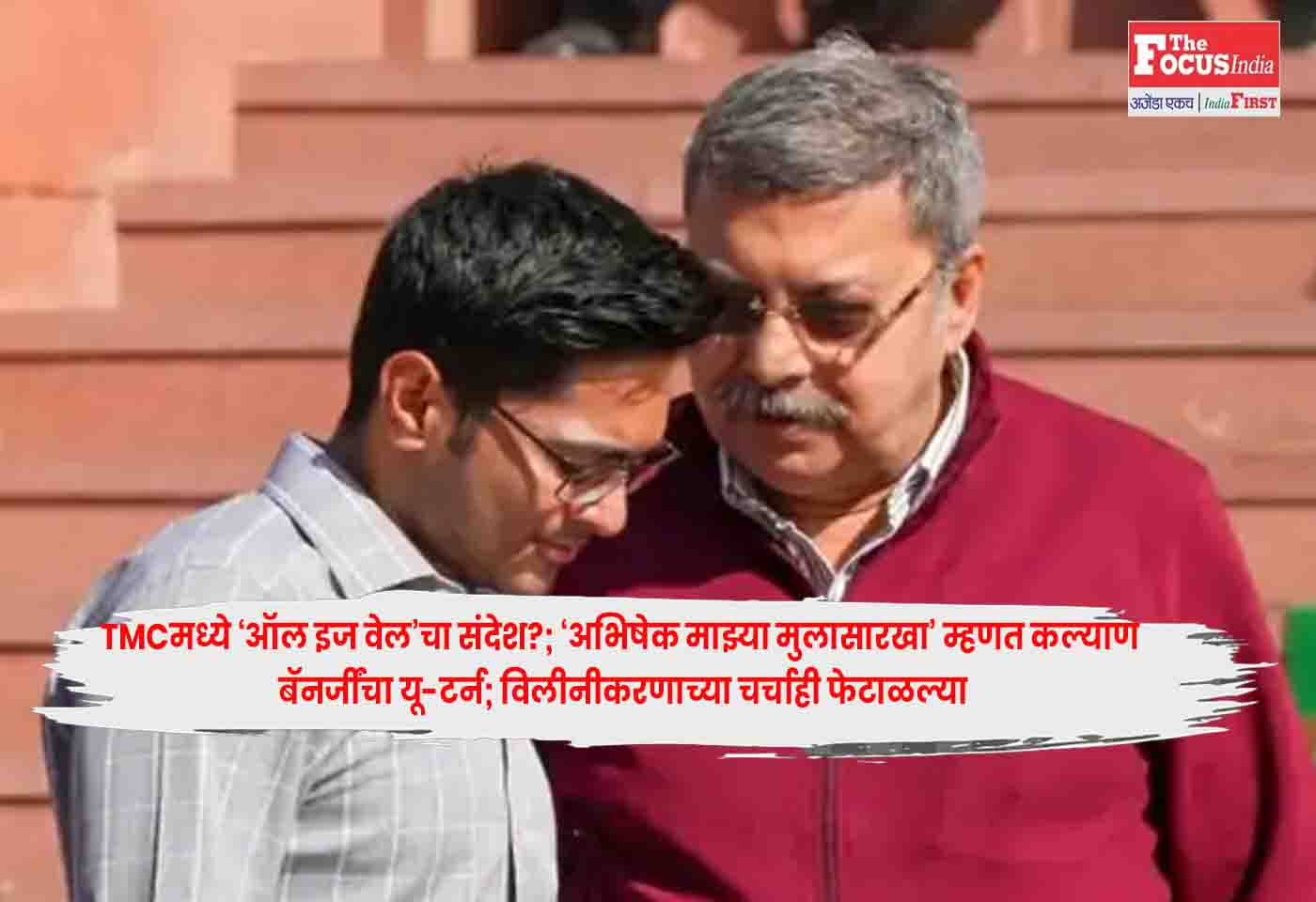
Senior Trinamool Congress (TMC) leader and Member of Parliament Kalyan Banerjee has publicly signaled a reconciliation within the party’s internal hierarchy, describing his relationship with party General Secretary Abhishek Banerjee as one akin to a father and son. This statement, delivered in West Bengal, comes following a period of intense public speculation regarding internal friction and differences in opinion within the party’s leadership structure.
The remarks, which have been widely interpreted as an attempt to project a unified front, were intended to address ongoing reports of discord among senior party figures. According to reports from The Hindu, Kalyan Banerjee’s recent comments serve as a clear directive to party cadres to move past rumors of factionalism. The veteran parliamentarian, who has represented the Sreerampur constituency in the Lok Sabha since 2009, emphasized that his loyalty remains firmly with the party’s central leadership and the broader vision of West Bengal Chief Minister Mamata Banerjee.
Context of the Alleged Internal Friction
The narrative surrounding TMC internal dynamics often focuses on the perceived divide between the party’s “old guard” and the younger leadership cohort represented by Abhishek Banerjee. For several months, political analysts have tracked public statements made by veteran members that appeared to contrast with the policy directions championed by the party’s national general secretary. These tensions were particularly visible during administrative reshuffles and election management strategies, as noted by NDTV.
Kalyan Banerjee, a seasoned legal professional and a prominent face for the TMC in the lower house of the Indian Parliament, has previously been involved in high-profile debates that drew media attention to his distinct political stance. However, his latest intervention appears aimed at neutralizing these narratives. By framing the relationship with the younger Banerjee as a familial bond, he seeks to recast professional disagreements as constructive internal dialogue rather than existential conflict.
Impact on TMC’s Political Strategy
The Trinamool Congress, which maintains a dominant position in West Bengal state politics, operates under a structure that balances regional grassroots influence with a centralized command. The party’s ability to manage its internal communications is vital as it prepares for future electoral cycles and navigates its opposition role at the national level. As reported by the Times of India, party leadership has consistently maintained that there is no formal division within the organization, characterizing the media coverage of the alleged rift as speculative.

For the party faithful, these statements are significant because they reduce the risk of voter confusion regarding the party’s stability. When senior figures like Kalyan Banerjee—who holds considerable weight in the Hooghly district—publicly align themselves with the party’s current trajectory, it minimizes the space for opposition parties to exploit internal narratives. The effectiveness of this strategy will be tested during upcoming municipal and regional administrative activities, where party cohesion is a prerequisite for effective governance.
What Happens Next for the Party Leadership
The immediate focus for the Trinamool Congress will be the consolidation of its organizational structure ahead of the next major legislative session. While Kalyan Banerjee’s comments have provided a temporary cessation to the speculation of a rift, observers are looking toward the next meeting of the party’s core committee to see if this sentiment of “all is well” translates into unified public appearances by both the veteran and younger wings of the party.

The party’s next major milestone involves internal reviews of its outreach programs, which are scheduled to continue throughout the current quarter. For stakeholders and political observers, the primary indicator of stability will be the degree to which senior members continue to echo the party line on key legislative and social issues. As of this report, there are no scheduled leadership changes, and the party continues its standard operations under the leadership of Mamata Banerjee and the core committee.
Readers interested in further developments regarding the TMC’s organizational updates can monitor the party’s official communications portal for press releases and verified policy statements. We invite our readers to share their perspectives on the evolving political climate in West Bengal in the comments section below.
Related reading