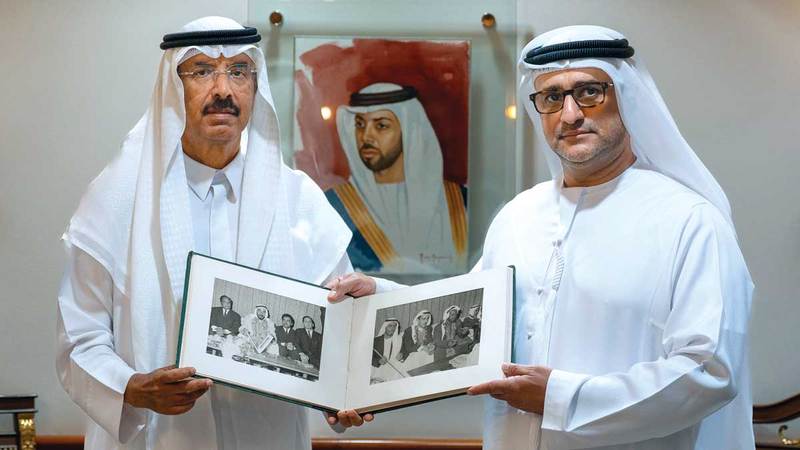
ABU DHABI — A collection of historically significant artifacts and documents gifted by Mohamed Al Mar to the UAE’s National Archives will now be integrated into the country’s “national memory,” officials announced Thursday. The donation, described by heritage experts as one of the most comprehensive private collections ever acquired by the archives, includes rare manuscripts, family records, and cultural artifacts spanning over a century.
The UAE’s National Archives confirmed the transfer of the collection, which will undergo cataloging and preservation before being made accessible to researchers and the public. According to The National, the collection is expected to provide unprecedented insights into the UAE’s social and economic history, particularly during the early 20th century.
Mohamed Al Mar, a prominent Emirati businessman and cultural patron, has long been involved in preserving the UAE’s heritage. His donation follows a broader trend of private collections being donated to national institutions, including the recent transfer of historical documents to the Dubai Museum of the Future. The National Archives, established in 2006, has previously acquired significant collections, but this gift is notable for its breadth and depth.
Note: Visuals of the collection and Mohamed Al Mar’s statement are expected to be released by the UAE National Archives in the coming days. This section will be updated with verified media embeds once available.
What Does the Collection Include?
While the full inventory remains under review, preliminary reports from heritage specialists suggest the donation includes:
- Rare manuscripts: Handwritten documents from the early 1900s, including personal correspondence and business records from the Gulf region.
- Family archives: Genealogical records and property deeds tracing back to the late 19th century, offering a rare glimpse into Emirati family structures.
- Cultural artifacts: Traditional tools, jewelry, and textiles that reflect daily life in the UAE before modernization.
- Photographic records: Early 20th-century photographs of coastal settlements, trade routes, and significant events.
According to Khaleej Times, the collection also includes a series of unpublished memoirs written by Al Mar’s ancestors, detailing their experiences during the formation of the UAE federation in 1971. “This is not just a donation—it’s a bridge between generations,” said Dr. Salma Al Bloushi, Director of the National Archives, in a statement to Zawya.
Why This Matters for UAE Heritage Preservation
The UAE’s National Archives has faced growing demand for access to historical materials as the country undergoes rapid modernization. This donation arrives at a critical juncture, with officials emphasizing the need to document pre-oil-era history before the last living witnesses pass away.
Dr. Bloushi highlighted the collection’s potential to fill gaps in existing records. “Many of our archives focus on post-independence developments, but this collection allows us to explore the social and economic fabric of the UAE before oil became the dominant industry,” she said. The gift aligns with the UAE’s broader cultural strategy, which includes initiatives like the UAE Memory Project, launched in 2020 to digitize oral histories and personal accounts.
Mohamed Al Mar’s involvement in heritage preservation is not new. In 2018, he donated a collection of pearl-diving tools to the Dubai Culture & Arts Authority, which became a centerpiece exhibit at the Dubai Museum. His latest gift builds on this legacy, with officials noting that the new materials will complement ongoing exhibitions at the UAE National Museum in Abu Dhabi.
How Will the Collection Be Preserved and Accessed?
The National Archives has begun the meticulous process of cataloging and digitizing the collection, which is expected to take 12–18 months. According to a statement from the archives, the materials will undergo climate-controlled storage and conservation treatments to prevent degradation.
Public access will be phased, with high-resolution digital copies made available online through the archives’ digital repository by late 2025. Physical access to original documents will be restricted to researchers with approved requests, ensuring the artifacts’ longevity.
Al Mar’s donation also includes funding for a dedicated research fellowship program, allowing scholars to study the collection in-depth. The first cohort of fellows will begin work in early 2025, with findings expected to contribute to academic publications and public exhibitions.
Broader Context: Private Collections and UAE Heritage
The UAE has seen a surge in private heritage collections being donated to national institutions in recent years. In 2022, the UAE Arts Council acquired a collection of pre-oil-era photographs from a Dubai family, while the Sharjah Museums Department received a trove of manuscripts from a local historian.
This trend reflects a broader shift in the Gulf region, where governments and private patrons are increasingly recognizing the value of preserving cultural heritage. The UAE’s 2021 National Strategy for Cultural Heritage explicitly encourages such donations, offering tax incentives and long-term preservation guarantees.
However, challenges remain. Experts warn that without sustained funding and expertise, many private collections risk being lost to time. “The UAE’s rapid development has led to the demolition of historic sites, but these artifacts provide a tangible link to the past,” said Dr. Omar Al Shamsi, a historian at NYU Abu Dhabi. “Donations like this are essential, but we must also invest in the infrastructure to preserve them.”
What Happens Next?
The National Archives has scheduled a press conference for October 15, 2024, where Mohamed Al Mar and heritage officials will provide further details on the collection’s contents and preservation plans. Researchers interested in accessing the materials should submit inquiries through the archives’ official contact form.
Meanwhile, the UAE’s Ministry of Culture and Youth has announced plans to feature select items from the collection in a traveling exhibition beginning in November 2024. The exhibition will tour major cities, including Dubai, Sharjah, and Ras Al Khaimah, before concluding in Abu Dhabi in early 2025.
For those interested in contributing to heritage preservation, the National Archives has launched a public appeal for additional donations. Details can be found on their donation portal.
Key Takeaways
- Significance: The collection is one of the largest private donations to the UAE’s National Archives, offering unprecedented insights into pre-oil-era history.
- Preservation: The materials will undergo digitization and climate-controlled storage, with public access expected by late 2025.
- Research Opportunities: A dedicated fellowship program will allow scholars to study the collection, with findings to be published and exhibited.
- Broader Impact: The donation aligns with the UAE’s cultural strategy, encouraging private heritage preservation and public engagement.
- Next Steps: A press conference on October 15 will provide further details, followed by a traveling exhibition in November 2024.
This story will be updated as new details emerge from the National Archives. Readers with questions about accessing the collection or contributing to heritage preservation are encouraged to share their thoughts in the comments below or contact the National Archives directly.