
Supermassive black holes, typically known for their destructive gravitational pull, may also serve as nurseries for massive celestial bodies. New research suggests that millions of Jupiter-sized planets could potentially form in the dense, gas-rich disks surrounding these cosmic giants, challenging long-held assumptions about where planetary systems can emerge in the universe.
According to a study published by researchers at the National Astronomical Observatory of Japan (NAOJ), the extreme environments near the centers of active galaxies—specifically the accretion disks of supermassive black holes—provide the necessary conditions for “blanets,” or planets born near black holes, to develop. The study, led by Keiichi Wada, indicates that these disks contain enough material to support the formation of thousands to millions of planets, each potentially up to ten times more massive than Jupiter.
The Mechanics of Planet Formation in Extreme Environments
The conventional model of planet formation, such as the core accretion theory, typically requires a stable protoplanetary disk around a young star. However, the environment near a supermassive black hole is vastly different, characterized by intense radiation, extreme tidal forces, and high-velocity gas flows. Despite these conditions, the research published in the Astrophysical Journal posits that the sheer density of dust and gas in the accretion disk allows for rapid grain growth.
As these dust grains collide and stick together, they form larger aggregates within the cold, outer regions of the accretion disk. Because the gas density is so high, the process of forming a planetary core is significantly accelerated compared to the conditions found in our own solar system. This, according to the National Astronomical Observatory of Japan, suggests that the “snow line”—the distance from the center where volatile compounds like water, ammonia, and methane condense into solid ice grains—is positioned such that it facilitates the rapid accumulation of mass.
Comparing “Blanets” to Conventional Exoplanets
While the term “blanet” remains a theoretical classification, these objects differ fundamentally from the exoplanets currently cataloged by missions like the Transiting Exoplanet Survey Satellite (TESS). Conventional exoplanets orbit stars; in contrast, blanets orbit the central black hole itself. The research highlights that these objects would exist in a state of perpetual darkness, far from the light of a host star, yet they would be subject to the unique gravitational dynamics of the galactic center.
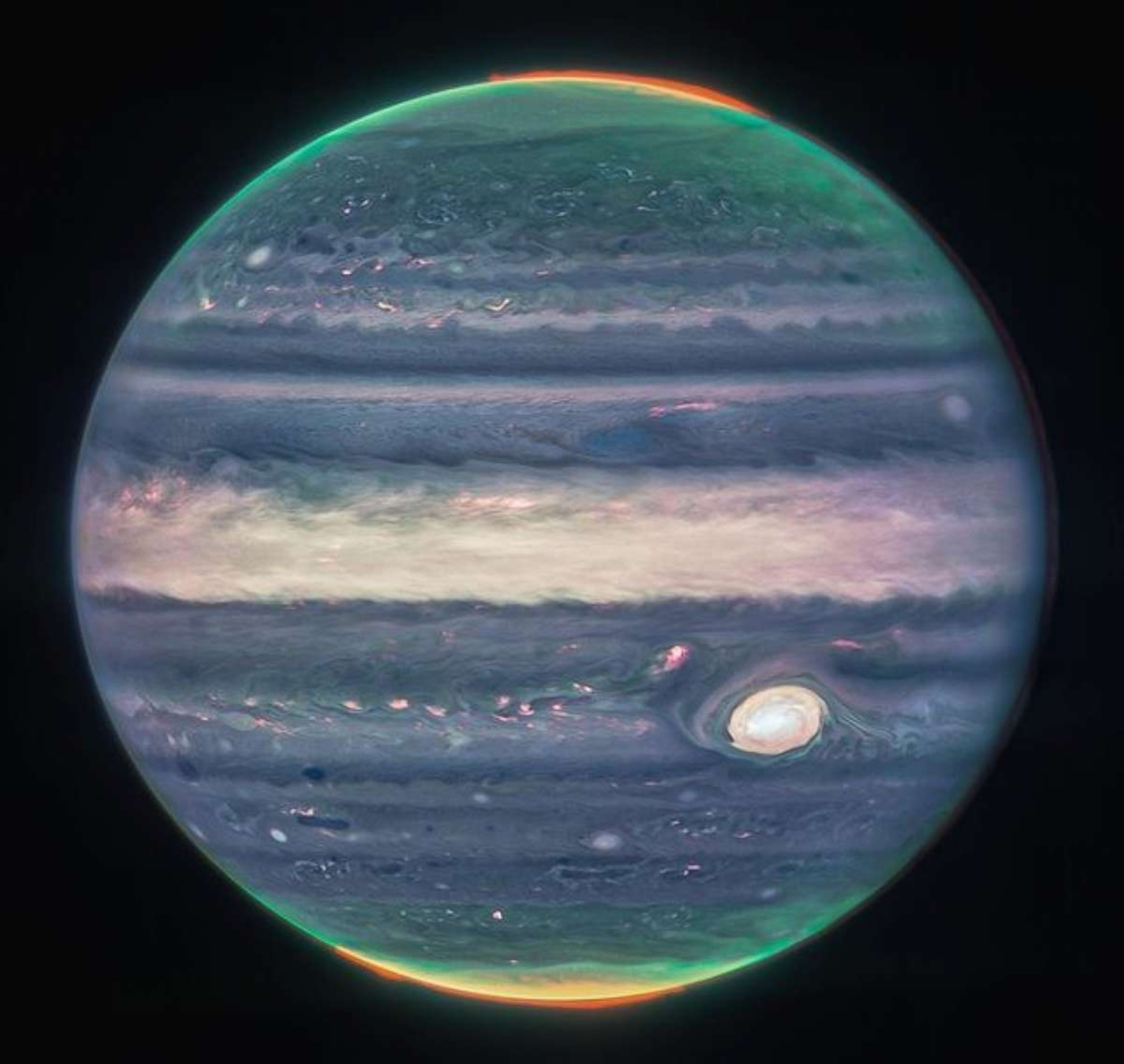
The scale of this phenomenon is perhaps the most striking finding. While a typical star might host a handful of planets, the vast, circular dimensions of an accretion disk could theoretically host tens of thousands of such bodies. This shift in perspective forces astrophysicists to reconsider the “habitable zone” not just as a distance from a star, but as a potential region within the structural architecture of a galaxy’s core.
Why the Galactic Center Remains a Frontier
Understanding the formation of planets in such hostile regions matters because it expands the potential inventory of mass in the universe. If millions of Jupiter-sized objects exist in orbit around supermassive black holes, they could account for a significant portion of the “missing” baryonic matter in galactic centers. Furthermore, identifying these objects remains a major technical challenge, as they do not emit the light signatures typically used by astronomers to detect distant worlds.
Current detection methods rely on transit photometry or radial velocity, both of which are optimized for star-planet interactions. Detecting a blanet would require observing the gravitational microlensing effects or the subtle orbital perturbations of the accretion disk itself. As noted by the NASA Exoplanet Exploration Program, current telescopes are primarily designed to scan the local galactic neighborhood for star-based systems, leaving the deep centers of active galaxies largely unexplored.
What Happens Next for Galactic Research
The next phase of this research involves refining models to determine the long-term stability of these orbits. Astronomers are currently looking toward the next generation of space-based observatories, including the Nancy Grace Roman Space Telescope, to provide higher-resolution data on the structures within distant accretion disks. These instruments may eventually allow for the identification of anomalies in light curves that could signal the presence of massive orbiting bodies near active galactic nuclei.

For now, the existence of these planets remains a sophisticated mathematical prediction based on the dynamics of gas and dust. Researchers continue to publish updates on the Astrophysical Journal regarding the life cycles of accretion disks and the potential for solid-body formation in high-radiation environments. Readers interested in the latest findings can monitor official releases from the NAOJ and international astronomical unions for upcoming peer-reviewed data on galactic center dynamics.
Do you believe these “blanets” could harbor conditions for life, or is the environment near a supermassive black hole too volatile? Share your thoughts in the comments below and join the conversation on the future of planetary science.
Related reading