
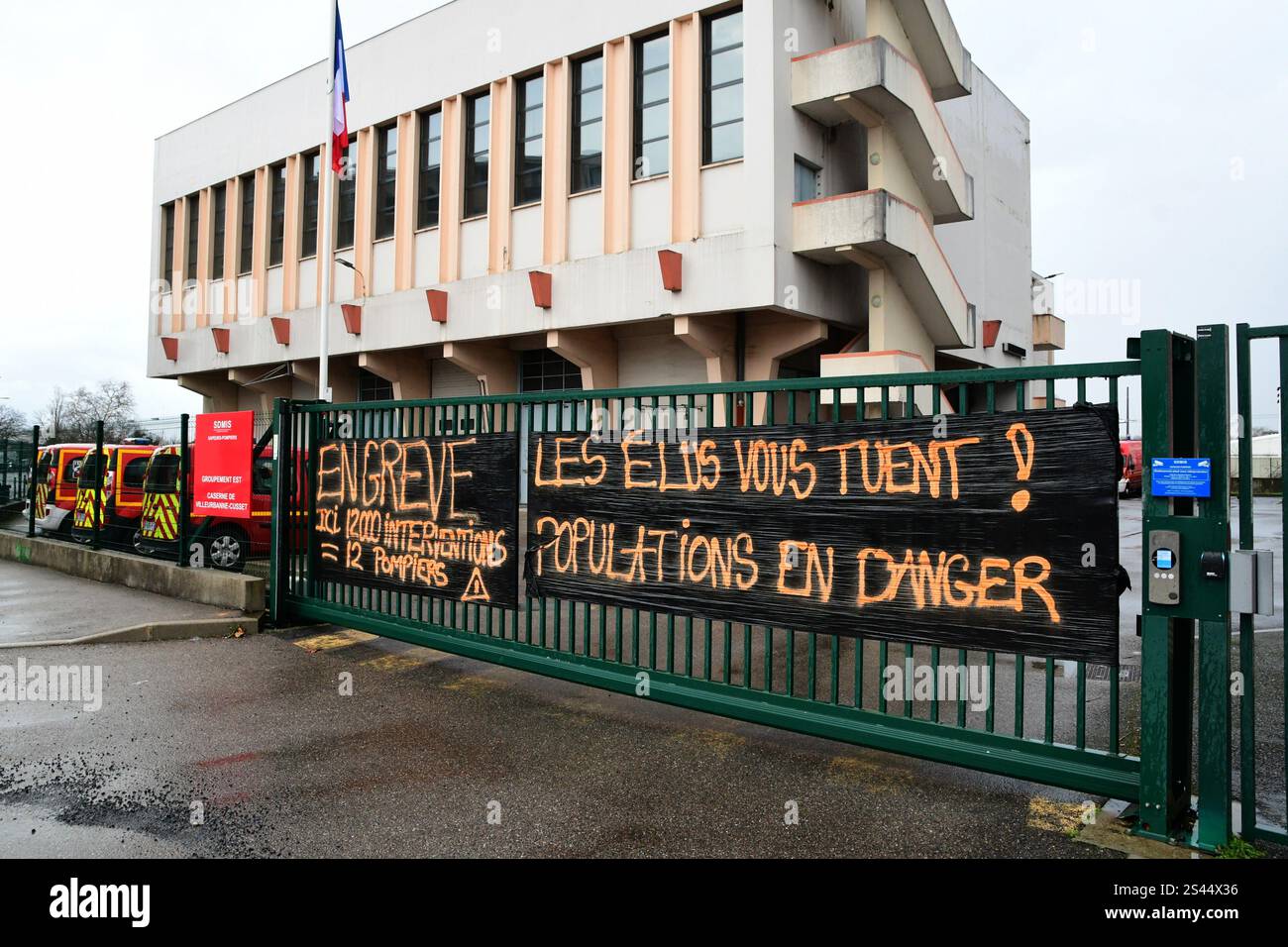
Villeurbanne’s municipal police have begun a coordinated protest campaign, demanding urgent reinforcements to address what they call a “critical” staffing crisis—a move that has put the spotlight on France’s second-largest Lyon suburb and its ability to maintain public order amid rising tensions. According to union representatives and city officials, the protests—spanning pickets, public statements, and potential work slowdowns—follow months of escalating frustration over unfilled vacancies and stretched resources in a city of 163,684 residents (2023 INSEE figures).
The situation comes as Villeurbanne grapples with a 30% shortfall in authorized police personnel, according to the Syndicat des Policiers Municipaux du Rhône (SPMR), the union representing the officers. With only 75% of positions currently filled—down from 92% five years ago—the force is operating at what one union leader described as “a breaking point.”
Why it matters: Villeurbanne’s crisis mirrors broader challenges in French municipal policing, where cities from Marseille to Toulouse have reported similar shortages. But the suburb’s size and proximity to Lyon—France’s third-largest city—make its struggles particularly consequential. The protests raise questions about how local governments will respond, whether federal support will be mobilized, and what this means for public safety in urban areas already under strain.
What Are the Police Demanding—and Why Now?
The SPMR’s demands center on three key points, outlined in a public statement released May 15:

- Immediate hiring freeze reversal: Villeurbanne’s municipal police force has lost 50 officers since 2020, with recruitment stalled due to budget constraints. The union insists the city must prioritize filling 120 vacant positions within six months.
- Resource reallocation: Officers are calling for the redirection of funds from “non-essential” projects—such as certain municipal infrastructure programs—to police salaries and equipment. Current budgets, they argue, leave them under-equipped for modern urban challenges.
- Federal intervention: The SPMR has formally requested that the French Interior Ministry classify Villeurbanne as a “priority zone” for national police support, citing the risk of “growing insecurity” if local forces remain understaffed.
Timing is critical: the protests coincide with Villeurbanne’s municipal elections in March 2025, where public safety will be a dominant issue. City Hall, led by Mayor Cédric Van Styvendael (EELV), has framed the challenges as a “structural” problem tied to France’s broader policing crisis—but union leaders accuse the administration of deliberate underfunding.
How Bad Is the Staffing Crisis—and What Are the Risks?
The numbers paint a stark picture. Villeurbanne’s municipal police force—responsible for local law enforcement, traffic control, and public order—currently operates with fewer officers per capita than the national average for similar-sized cities. Key data points:
- Officers per 1,000 residents: Villeurbanne has 1.2 municipal police officers per 1,000 people, compared to the national median of 1.8 in cities of its size (Interior Ministry data).
- Response times: The SPMR reports that 40% of emergency calls now exceed the legal 15-minute response threshold, up from 12% in 2020.
- Equipment gaps: Only 68% of patrol vehicles are operational, and body cameras—critical for evidence collection—are available for just 30% of officers.
The risks extend beyond daily policing. In a city with a 25% youth unemployment rate and a history of social unrest, stretched municipal forces could struggle to manage protests or minor incidents—leaving room for escalation. “We’re not just talking about paperwork or traffic fines anymore,” said SPMR President Laurent Dubois in an interview with Lyon Capitale. “We’re talking about the ability to intervene in crises before they spiral.”
What Has the City’s Response Been So Far?
Villeurbanne’s municipal government has framed the crisis as a “complex” challenge requiring both short-term fixes and long-term solutions. In a statement released May 14, Mayor Van Styvendael acknowledged the “urgency” of the situation but pointed to constraints:
“We share the concerns of our police officers, who work tirelessly to serve the city. However, our hands are tied by national budgetary rules that limit our ability to hire additional staff. We are exploring all legal avenues to secure reinforcements, including partnerships with regional police forces.”
Critics argue the response has been slow. The SPMR highlights that Villeurbanne has not filled a single municipal police vacancy since January 2023, despite repeated union warnings. Meanwhile, the city has approved €8 million in new spending on urban renewal projects—funds the SPMR argues could be reallocated.
What Happens Next: Key Checkpoints
The next critical phases in this standoff include:
- June 1 Protest Escalation: The SPMR has announced plans for a citywide “silent march” on June 1, where officers will wear black armbands and refuse to respond to non-emergency calls. The union warns this could disrupt daily life, including school zone patrols and public events.
- June 15 City Council Vote: Mayor Van Styvendael’s office has scheduled an emergency session to discuss police funding. The SPMR is pushing for a temporary hiring moratorium waiver under Article 41 of the French Local Government Code, which could fast-track 50 new hires.
- July 15 Federal Deadline: The Interior Ministry has until this date to decide whether to designate Villeurbanne as a “priority zone” for national police support. If granted, the city could receive up to 20 additional officers from the Police Nationale for six months.
- Municipal Elections (March 2025):strong> Public safety will likely dominate campaign rhetoric, with opposition parties already framing the crisis as a “failure of the current administration.”
Broader Context: France’s Municipal Policing Crisis
Villeurbanne’s struggle is part of a national trend. A 2023 Senate report found that 42% of French municipalities report “critical” staffing shortages in their municipal police forces, with cities in départements like the Rhône, Seine-Saint-Denis, and Bouches-du-Rhône most affected. The causes are multifaceted:

- Aging workforce: Nearly 40% of municipal police officers in France are over 50, with retirement rates outpacing recruitment (Interior Ministry).
- Pay disparities: Municipal police earn 15–20% less than their national counterparts, making retention difficult.
- Budget caps: The 2022 Loi de Finances imposed hiring freezes on local governments, directly impacting police forces.
What sets Villeurbanne apart is its size and visibility. As the second-largest suburb of Lyon—a city hosting major events like the 2023 European Games—its policing challenges carry national implications. If the protests succeed in forcing reforms, they could set a precedent for other cities. If they fail, the risk is a “two-tier” policing system, where wealthier municipalities attract officers while urban areas struggle.
How to Follow Updates—and What You Can Do
For residents and stakeholders, here’s how to stay informed:
- Official sources:
- Villeurbanne City Hall (for municipal statements and budget updates).
- French National Police (for federal intervention announcements).
- SPMR Union (for protest schedules and demands).
- Local media: Follow Lyon Capitale, Le Progrès, and Le Monde Lyon for real-time coverage.
- Public feedback: Villeurbanne’s municipal council has opened a public consultation portal for residents to share concerns about policing.
If you’re a resident of Villeurbanne or a nearby area, consider:
- Attending the June 1 protest as an observer (respecting police guidelines).
- Contacting your local councilor to voice concerns about public safety.
- Reporting non-emergency issues to the city’s new digital reporting system, which prioritizes cases based on officer availability.
The next official checkpoint is the June 15 City Council vote on police funding. If no agreement is reached by then, the SPMR has warned of “unprecedented actions,” including potential strikes during the upcoming Lyon Festival of Lights in December—a major economic event for the region.
This story will continue to develop. Share your thoughts or experiences in the comments below, or tag @WorldTodayJrnl with updates from Villeurbanne.
Worth a look