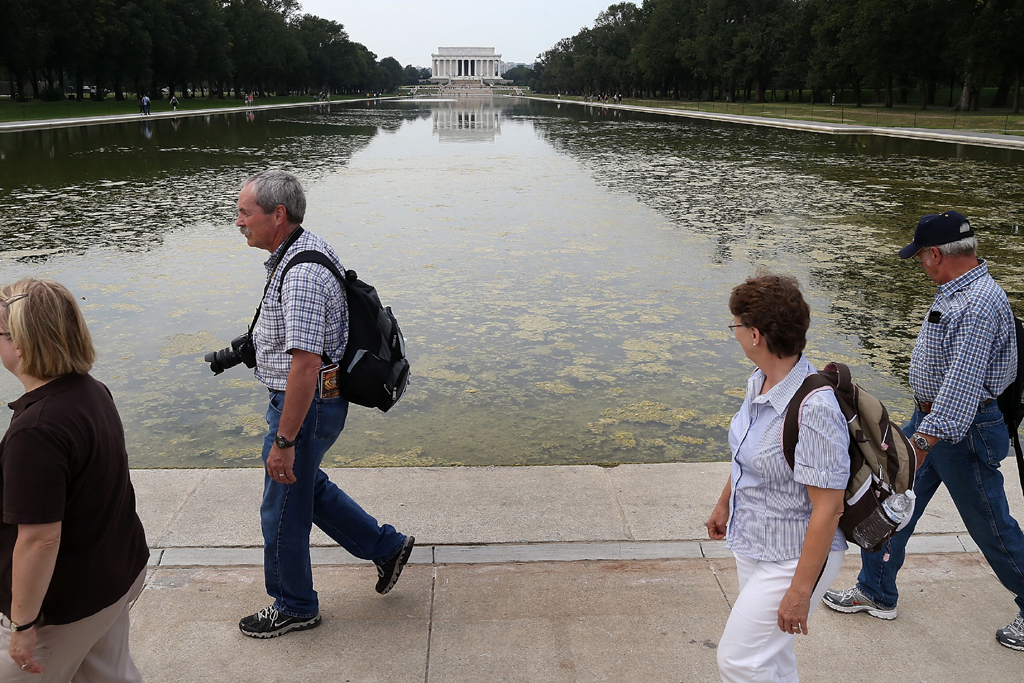
Maintenance crews have begun the process of clearing bright green algae from the Lincoln Memorial Reflecting Pool, just days after the completion of a $14.2 million infrastructure renovation project intended to improve the site’s water quality and structural integrity. The National Park Service (NPS) has characterized the rapid return of the aquatic growth as a residual issue, noting that the pool’s complex filtration system requires ongoing adjustments following the conclusion of the major restoration efforts.
The site, which serves as a central feature of the National Mall in Washington, D.C., underwent extensive repairs to address long-standing issues with leakage and water circulation. According to National Park Service official records, the multi-million dollar project was designed to replace the pool’s aging plumbing and install a more efficient filtration system to prevent the recurring blooms that have plagued the landmark for decades. Despite these efforts, the water’s visible transition to a vibrant green hue has prompted questions regarding the efficacy of the new systems.
Understanding the Maintenance Challenges
The appearance of algae in the Reflecting Pool is a recurring environmental challenge caused by a combination of high nutrient levels, shallow water depth, and fluctuating temperatures in the D.C. metropolitan area. Because the pool is an open-air facility exposed to sunlight and airborne organic matter, it remains highly susceptible to biological growth even after significant mechanical upgrades. The National Park Service maintains that the current “bloom” is being managed through standard chemical treatment and filtration cycles that were part of the post-renovation operational plan.
The $14.2 million renovation was specifically tasked with mitigating the chronic water loss that had necessitated frequent draining and refilling of the pool. By installing a new circulation system, the NPS aims to reduce the stagnation that encourages algae proliferation. However, environmental experts often note that large, shallow bodies of water in urban settings require constant, precise chemical balancing to remain clear, a process that can be disrupted by heavy rain or extreme heat events common to the District of Columbia.
Project Scope and Financial Context
The $14.2 million figure represents a significant investment by the federal government to preserve one of the nation’s most visited monuments. The project focused on replacing the concrete basin floor and upgrading the water intake and outflow pipes, which had suffered from decades of wear. According to Department of the Interior budget documents, these infrastructure improvements are part of a broader, multi-year strategy to address deferred maintenance across the National Mall and Memorial Parks.

The following table outlines the key components of the recent restoration work:
| Feature | Scope of Work |
|---|---|
| Water Circulation | Replacement of aging pipe infrastructure. |
| Structural Integrity | Concrete basin repairs to prevent seepage. |
| Filtration | Installation of modernized water-treatment systems. |
What Happens Next for the Reflecting Pool
The National Park Service has not announced any further construction closures, indicating that the current algae removal is being handled as a routine maintenance task rather than a structural failure. Officials typically adjust the chemical dosing—specifically the levels of chlorine and algicides—as the new filtration system “learns” the environmental demands of the basin. Visitors to the Lincoln Memorial can expect the water to return to its standard appearance as these adjustments take effect throughout the coming weeks.

For those interested in tracking the progress of the site, the National Park Service provides periodic updates regarding the maintenance of monuments on their official current conditions webpage. The agency continues to monitor the water chemistry daily to ensure the pool meets both aesthetic and public safety standards. Readers with questions regarding the maintenance of national monuments are encouraged to follow official NPS social media channels or check the agency’s website for the most recent status reports on the Reflecting Pool.
This report was filed by Jonathan Reed, Editor of the News section at World Today Journal. For more updates on infrastructure projects and national heritage sites, please share this article or leave a comment below.
Worth a look