Crimean-Congo hemorrhagic fever (CCHF) has emerged as a growing public health threat, with cases reported across Europe, Africa, and the Middle East in recent years. The World Health Organization (WHO) classifies it as a “neglected but dangerous” disease, yet its true global burden remains underestimated due to underreporting. In 2023 alone, outbreaks were confirmed in Spain, Greece, and Portugal—countries where the virus was previously rare—raising alarms about its expanding geographic range and seasonal transmission patterns.
Transmitted primarily through tick bites, particularly from Hyalomma species, CCHF can also spread through contact with infected animal blood or bodily fluids. With a case-fatality rate ranging from 10% to 40% depending on the strain and healthcare access, the virus poses a significant risk to both human and animal populations. Experts warn that climate change may further exacerbate its spread by expanding tick habitats into new regions.
This article explores what CCHF is, how it spreads, why its surveillance is increasingly critical, and what travelers, healthcare workers, and at-risk communities should know to protect themselves.
What Is Crimean-Congo Hemorrhagic Fever?
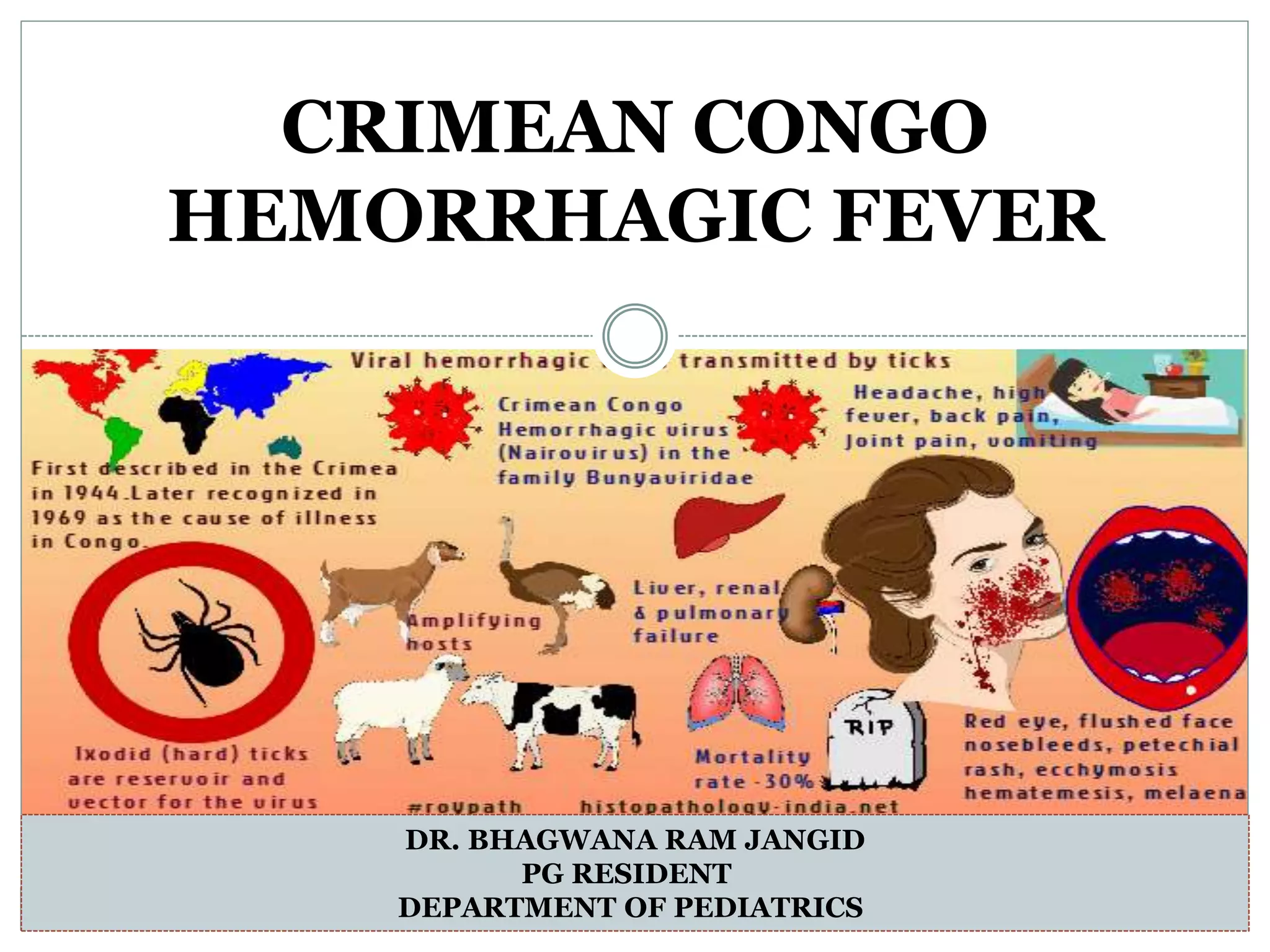
Crimean-Congo hemorrhagic fever (CCHF) is an acute viral disease caused by the Nairovirus genus, part of the Bunyaviridae family. First identified in 1944 during a Crimean outbreak and later in Congo in 1956, the virus has since been detected in over 30 countries across Africa, the Balkans, the Middle East, and parts of Asia. The European Centre for Disease Prevention and Control (ECDC) notes that while the virus has circulated in eastern Europe for decades, recent cases in southern Europe signal a potential shift in its epidemiology.
Symptoms typically appear 1–3 days after infection and may include sudden onset of fever, muscle pain, dizziness, and headache. In severe cases, patients develop hemorrhagic symptoms such as nosebleeds, gum bleeding, or petechiae (tiny red spots on the skin), which can lead to organ failure and death. Unlike Ebola or Marburg viruses, CCHF does not spread between humans through casual contact, but healthcare workers treating infected patients are at high risk of exposure through blood or bodily fluids.
According to the U.S. Centers for Disease Control and Prevention (CDC), there is no approved vaccine or specific antiviral treatment for CCHF. Supportive care—such as intravenous fluids, blood transfusions, and symptom management—remains the primary approach, with ribavirin (an antiviral) sometimes used off-label in severe cases.
How Does CCHF Spread?
The primary transmission route is through the bite of infected ticks, particularly Hyalomma marginatum and Hyalomma rufipes, which are common in pastoral and agricultural regions. Ticks can acquire the virus from infected animals—such as livestock, wild mammals, and birds—and then transmit it to humans. The virus can also spread through contact with the blood or tissues of infected animals during slaughter or veterinary procedures.

Human-to-human transmission is rare but possible in healthcare settings, where unprotected exposure to blood or bodily fluids from infected patients can occur. The WHO Regional Office for Europe emphasizes that strict infection control measures—such as wearing gloves, gowns, and eye protection—are critical in hospitals treating suspected cases.
Seasonal patterns play a key role in transmission. In temperate climates, tick activity peaks during warmer months (spring to autumn), coinciding with increased outdoor exposure. The ECDC reports that most European cases occur between May and October, when ticks are most active and livestock migrations may introduce the virus to new areas.
Why Is Global Surveillance More Important Than Ever?
Three major factors are driving the need for heightened CCHF surveillance:
- Expanding geographic range: Recent outbreaks in Spain (2020–2023) and Greece (2021) have pushed the virus into regions where it was previously absent. The ECDC attributes this to climate change, which is extending the habitat of Hyalomma ticks northward and increasing their survival rates in winter.
- Underreporting and diagnostic gaps: Many countries lack the laboratory capacity to confirm CCHF cases, leading to misdiagnoses or missed cases. The WHO estimates that for every reported case, there may be dozens more that go undetected.
- Zoonotic spillover risks: The virus circulates in wild and domestic animal populations, creating a reservoir that can spill over into humans. In 2023, a study in The Lancet Infectious Diseases highlighted how livestock movements and changing land-use patterns increase human exposure.
The WHO’s Global Outbreak Alert and Response Network (GOARN) has classified CCHF as a priority pathogen due to its potential to cause large-scale outbreaks. In 2022, the organization launched a global surveillance initiative to improve early detection, particularly in high-risk regions like the Balkans, the Middle East, and sub-Saharan Africa.
Recent Outbreaks and Key Cases
While CCHF has long been endemic in parts of Africa and the Middle East, recent years have seen notable outbreaks in previously unaffected areas:
- Spain (2020–2023): The first autochthonous (locally acquired) cases in Europe were reported in the Andalusia region in 2020, with at least 12 confirmed cases by 2023. The Spanish Ministry of Health linked the outbreak to Hyalomma ticks introduced through migratory birds or livestock. Official alerts warned of a “significant risk” to hunters, farmers, and veterinarians.
- Greece (2021–2022): Cases were confirmed in northern Greece, including a fatal infection in a shepherd. The Greek National Public Health Organization (EODY) traced the source to ticks infesting local cattle herds. EODY’s investigation highlighted the need for tick surveillance in pastoral communities.
- Portugal (2023): The first confirmed case in mainland Portugal was reported in July 2023, infecting a man who had handled livestock. The Portuguese Directorate-General for Health (DGS) issued a public alert, advising farmers to wear protective clothing and monitor animals for tick infestations.
These outbreaks underscore the virus’s ability to adapt to new environments. The ECDC’s 2023 report projects that without targeted surveillance, CCHF could establish itself in additional European countries within the next decade.
Who Is at Risk and How Can They Protect Themselves?
High-risk groups include:
- Farmers and livestock workers: Direct contact with ticks or infected animals is the most common exposure route.
- Hunters and outdoor enthusiasts: Spending time in grassy or wooded areas increases tick bite risk.
- Healthcare workers: Those treating patients with suspected CCHF must follow strict infection control protocols.
- Travelers to endemic regions: While rare, tourists visiting rural areas in Africa, the Middle East, or the Balkans should take precautions.
The WHO and ECDC recommend the following preventive measures:
- Tick avoidance: Use insect repellents containing DEET or permethrin, wear long sleeves and pants, and conduct tick checks after outdoor activities.
- Animal health monitoring: Farmers should regularly inspect livestock for ticks and report unusual deaths to veterinary authorities.
- Safe handling of blood: Healthcare workers should use personal protective equipment (PPE) when treating patients with suspected viral hemorrhagic fevers.
- Early medical consultation: Anyone experiencing fever and hemorrhagic symptoms after potential tick exposure should seek immediate care and inform providers of their exposure history.
For travelers, the CDC’s travel health notice advises avoiding rural areas where ticks are prevalent and seeking medical evaluation if symptoms develop within 14 days of return.
What’s Next: Research and Policy Responses
Efforts to combat CCHF are focusing on three key areas:
- Vaccine development: A live-attenuated vaccine has been used in Russia and Bulgaria but is not widely available. The WHO’s 2024 announcement of a global vaccine development partnership aims to produce a safer, more accessible option within five years.
- Tick control programs: The European Union has allocated €5 million to pilot projects testing acaricides (tick-killing treatments) and biological controls in high-risk regions.
- Strengthened surveillance: The ECDC is expanding its early warning system to include CCHF, with a focus on integrating tick monitoring into national health databases.
The next critical checkpoint will be the WHO’s Global Health Security Conference in November 2024, where CCHF will be a key discussion topic. Attendees will review progress on the Global Action Plan for Health Security, which includes CCHF as a priority pathogen for investment in diagnostics and outbreak response.
In the meantime, public health agencies urge communities in at-risk regions to remain vigilant. “CCHF is not a distant threat—it’s here, and it’s spreading,” says Dr. Andrea Ammon, Director of the ECDC. “The tools to prevent it exist, but they require coordination between governments, scientists, and the public.”
Key Takeaways
- CCHF is a tick-borne virus with a high fatality rate, primarily spread through Hyalomma ticks and contact with infected animals.
- Recent outbreaks in Spain, Greece, and Portugal signal an expanding geographic range, likely linked to climate change.
- There is no cure or vaccine, but early diagnosis and supportive care can improve survival rates.
- High-risk groups—farmers, hunters, and healthcare workers—should take preventive measures like tick avoidance and PPE use.
- Global surveillance and vaccine development are critical to preventing future outbreaks.
Have questions about CCHF risks in your region? Share your concerns in the comments below, or visit the WHO’s CCHF page for official updates. For travelers, check the CDC’s travel health notices before visiting endemic areas.
- Why Regular HIV Testing is Essential for Public Health: KCDC Reminds Everyone
- Network for Hope Decertification: Potential Impact on Organ Donation in 4 States
- West Nile Virus Detected in Horse: Risk to Humans Possible (newsdirectory3.com)
- NYC Mosquito Pools Show Near-Double Increase in West Nile Virus (archyworldys.com)